
🔥
8d • DAILY CLASS
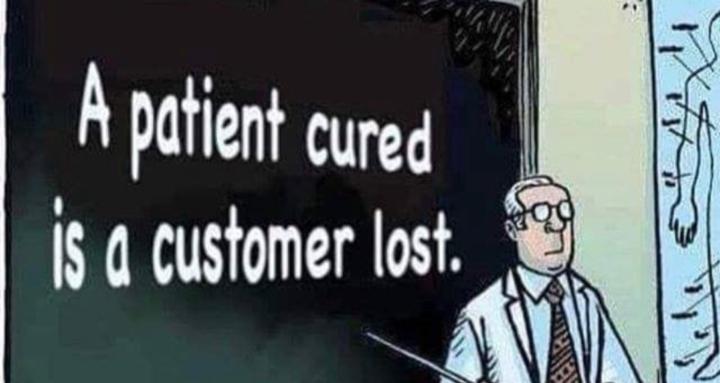
Friday’s Forbidden Question: What If Nothing Is ‘Wrong’ With Us?
As you read this, think about society today, friends, and family members.
We all know one person....
It's a long class but an interesting one and a needed one...
What medicalization means today
Medicalization is the process by which normal human experiences, sadness, shyness, aging, distraction, grief, sexuality, childhood behavior, stress, anxiousness, are increasingly described as symptoms, disorders, or conditions. The key shift is not that suffering is new, but that the interpretation of suffering has changed.
Three forces tend to drive this:
- Cultural expectations that life should be optimized, comfortable, and predictable.
- Scientific and technological expansion, which creates new diagnostic categories and treatments.
- Institutional incentives, including insurance systems, pharmaceutical marketing, and educational accommodations.
How medicalization reshapes identity
When ordinary experiences are framed as disorders, people can begin to see themselves primarily through a clinical lens. This can create:
- Fragile self-concepts: If every discomfort is interpreted as pathology, people may feel less capable of coping or adapting.
- Reduced tolerance for emotional variation: Normal sadness, boredom, frustration, or fear can feel like signs of illness rather than part of being human.
- A sense of permanent “patienthood”: Once someone adopts a diagnostic identity, it can be hard to imagine themselves outside it.
This doesn’t invalidate real conditions; it highlights how diagnostic language can subtly shape how people understand who they are.
How medicalization shifts responsibility
Medicalization often moves responsibility away from social structures and onto individuals.
- Structural problems become personal problems: Overwork, loneliness, poor school design, economic stress, and social isolation get reframed as individual disorders rather than societal failures.
- Institutions avoid change: Schools, workplaces, and communities can rely on diagnoses to “explain” behavior instead of adapting environments to human needs.
- People are expected to self-regulate through treatment: Instead of addressing root causes, individuals are encouraged to manage symptoms through therapy, medication, or self-optimization.
This shift can make people feel responsible for fixing problems they didn’t create.
How medicalization expands markets
Medicalization creates demand for treatments, products, and services.
- Pharmaceutical expansion: More diagnoses mean more medications, often marketed directly to consumers.
- Wellness industry growth: Even non-medical “solutions” (supplements, apps, tests) rely on the idea that something is wrong and needs fixing.
- Insurance-driven incentives: To receive coverage or accommodations, people often need a diagnosis, which encourages more labeling.
This doesn’t imply conspiracy; it shows how economic incentives shape cultural norms.
How medicalization narrows the definition of “normal”
As diagnostic categories expand, the range of acceptable human behavior shrinks.
- Less room for temperament differences: Traits like introversion, high energy, or emotional sensitivity can be pathologized.
- Lower tolerance for discomfort: Everyday stressors are increasingly seen as abnormal.
- Pressure to be optimized: If normal variation is treated as dysfunction, people feel compelled to pursue constant self-improvement.
This can create a culture where being “normal” feels like a medical achievement.
How medicalization affects relationships and community
When struggles are framed medically, people may turn inward rather than outward.
- Reduced reliance on community support: Friends, family, and neighbors may feel less responsible for helping because “professionals handle that.”
- More isolation: People may withdraw, believing their struggles are uniquely clinical rather than shared human experiences.
- Less shared language: Medical terms can replace relational language (“I’m overwhelmed” becomes “I have anxiety”), which can change how people connect.
This can weaken the social fabric that historically helped people cope.
How medicalization influences childhood
Children are especially vulnerable to being labeled.
- Behavior becomes pathology: Energy, boredom, impulsivity, and emotional swings—once seen as developmental—can be interpreted as disorders.
- School structures drive diagnosis: Environments built for stillness and standardization make normal childhood behavior look like dysfunction.
- Self-fulfilling identities: Children may internalize labels early, shaping their expectations of themselves for years.
This raises questions about how society defines “good” behavior and who benefits from those definitions.
How medicalization changes the meaning of suffering
Not all suffering is pathological. Some is part of growth, meaning-making, and resilience.
- Loss of narrative meaning: Grief, heartbreak, existential anxiety, and disappointment can be reframed as symptoms rather than human experiences that carry depth and purpose.
- Reduced resilience: If all distress is abnormal, people may feel less equipped to endure or learn from it.
- Flattened emotional life: Medical framing can make emotions feel like malfunctions rather than signals or stories.
This can impoverish the emotional vocabulary people use to understand themselves.
How expanding diagnoses expands revenue
Medicalization increases the number of people who qualify for treatment, which directly expands the market for pharmaceuticals, diagnostics, and clinical services. Research on pharmaceutical revenue determinants shows that revenue growth is tightly linked to expanding the number of treatable conditions, which in turn drives investment and product pipelines.
This creates a feedback loop:
- More diagnoses = more eligible patients
- More eligible patients = larger markets
- Larger markets = more incentive to create new diagnoses or sub-diagnoses
Even when innovations improve care, the economic structure rewards growth in diagnosable populations.
How revenue drives innovation, and vice versa
Economic analyses show that pharmaceutical innovation is highly sensitive to revenue potential. When revenue rises, companies invest more in developing new drugs, including drugs for newly defined or expanded conditions.
This means:
- The industry has a financial incentive to support broader diagnostic criteria.
- Conditions with high revenue potential attract more research, marketing, and clinical attention.
- “New” disorders often emerge in areas where treatment markets are profitable.
It shows how economic incentives shape what becomes medical.
How medical spending grows with innovation
Government economic analysis finds that medical innovations can improve welfare but also increase overall medical spending, and in some cases even reduce consumer welfare when costs rise faster than benefits.
This matters because:
- More diagnoses = more treatments = higher national health expenditures
- Higher expenditures = more revenue for traditional medical sectors
- Some innovations add cost without proportional benefit
Medicalization, in this context, becomes a driver of system-wide financial expansion.
How the healthcare system structurally rewards diagnosis
Insurance systems often require a diagnosis to reimburse care. This creates:
- Incentives for clinicians to diagnose in order to secure payment
- Incentives for patients to seek diagnoses to access services
- Incentives for institutions to support diagnostic expansion
As diagnostic categories grow, so does the billable universe of healthcare.
How the pharmaceutical sector gains power and influence
Scholarly work on the pharmaceutical sector highlights its global growth, influence, and strategic expansion, including how it shapes social and medical norms.
This influence shows up in:
- Funding for research that supports new diagnostic categories
- Marketing that reframes normal experiences as treatable conditions
- Lobbying for insurance coverage of new treatments
Medicalization becomes part of a broader strategy to expand markets and normalize treatment.
How financial strain coexists with pockets of profit
Even though parts of the healthcare system face financial pressure, analyses show “pockets of opportunity” where revenue remains strong, often in areas tied to high-demand treatments and chronic conditions.
This means:
- Not all of healthcare benefits equally from medicalization
- But sectors tied to diagnosis-driven treatment (pharma, diagnostics, specialty care) often do
- Chronic conditions, in particular, create long-term revenue streams
Medicalization increases the number of chronic or semi-chronic conditions, which stabilizes revenue.
Emotional experiences that used to be part of life
Across history, people expected emotional life to include highs, lows, confusion, and discomfort. Today, many of those states are framed as clinical.
Emotional states now treated as disorders
- Sadness = Depressive disorders
Persistent sadness has always existed, but the threshold for diagnosing depression has narrowed, and the expectation that sadness should be brief has grown.
- Grief = Prolonged grief disorder
Many cultures historically saw grief as a long, nonlinear process. Now, extended grief can be classified as a disorder.
- Fear and worry = Anxiety disorders
Fear is a survival mechanism. Worry is part of planning. Both are increasingly interpreted as pathological.
- Anger = Intermittent explosive disorder or mood dysregulation
Anger used to be seen as a moral or relational issue; now it is often framed as a symptom.
These shifts reflect a cultural discomfort with emotional intensity.
Cognitive traits that used to be personality
Cognitive differences have always existed, but modern environments, especially school and work, reward a narrow range of mental styles.
Cognitive traits now treated as disorders
- Distractibility = ADHD
Human attention is naturally variable. Modern environments demand sustained focus in ways that are historically unusual.
- Daydreaming = Inattentive subtypes
Imagination used to be valued; now it can be coded as impairment.
- Perfectionism = OCD-spectrum traits
High standards or rituals once seen as personality quirks can now be interpreted clinically.
- Introversion = Social anxiety disorder
Quietness or discomfort in groups is increasingly pathologized in a culture that prizes extroversion.
These diagnoses can help people, but they also redefine normal variation as dysfunction.
Childhood behaviors that used to be developmental
Children have always been energetic, impulsive, emotional, and inconsistent. Modern expectations for children, especially in school, are historically unprecedented.
Childhood behaviors now treated as disorders
- High energy = Hyperactivity
- Impulsivity = Behavioral disorders
- Emotional swings = Mood disorders
- Boredom = Attention disorders
- Resistance or defiance = Oppositional defiant disorder
The more rigid the environment, the more children appear “disordered.”
Life stages that used to be understood as aging
Aging brings changes in memory, sleep, libido, mood, and energy. Many of these are now framed as treatable conditions.
Aging experiences now treated as disorders
- Menopause = Hormonal disorder
- Erectile changes = Erectile dysfunction
- Forgetfulness = Mild cognitive impairment
- Fatigue = Hormonal or metabolic conditions
Again, some of these diagnoses help people, but they also redefine aging as pathology.
Bodily sensations that used to be normal
Human bodies fluctuate. Today, many fluctuations are interpreted as symptoms.
Bodily experiences now treated as disorders
- Normal pain = Chronic pain syndromes
- Digestive discomfort = GI disorders
- Sleep variability = Sleep disorders
- Weight fluctuation = Metabolic disorders
The expectation of constant comfort is new.
Why this shift happened
Several cultural forces push normal experiences into diagnostic categories:
- Lower tolerance for discomfort in a culture of convenience and optimization.
- Institutional incentives, schools, workplaces, and insurance systems often require diagnoses to provide support.
- Pharmaceutical and wellness markets that grow when more conditions are treatable.
- Scientific authority, biological explanations feel more legitimate than social or moral ones.
- Individualistic culture that frames problems as internal rather than communal.
These forces don’t operate maliciously, they operate predictably.
What this does to people
Medicalization can help people access care, but it also:
- Shrinks the definition of “normal.”
- Encourages people to see themselves as fragile.
- Reduces resilience by framing discomfort as abnormal.
- Makes people dependent on experts to interpret their own experiences.
- Turns identity into diagnosis.
- Shifts attention away from social causes of suffering.
The result is a culture where being human feels like a medical condition.
Emotional life reframed as pathology
Emotions that were once understood as part of the human condition are now interpreted through diagnostic categories. This shift reflects a cultural expectation that emotional discomfort should be brief, manageable, and fixable.
- Sadness is increasingly mapped onto depressive disorders.
- Fear and worry are categorized as anxiety disorders.
- Grief is now diagnosable when it lasts beyond a defined period.
- Anger is framed as dysregulation rather than a relational or moral issue.
The result is a culture that treats emotional intensity as malfunction rather than meaning.
Personality traits reinterpreted as symptoms
Traits that once defined individuality are now often seen as clinical variations. This reflects environments, especially school and work, that reward a narrow range of cognitive and social styles.
- Introversion is reframed as social anxiety.
- Perfectionism is linked to obsessive-compulsive tendencies.
- High sensitivity is interpreted as a disorder of emotional regulation.
- Daydreaming is categorized under inattentive subtypes.
This pathologizes temperament and reduces the space for natural diversity.
Childhood behavior redefined as disorder
Children have always been impulsive, energetic, emotional, and inconsistent. Modern expectations for stillness, productivity, and emotional control make typical childhood behavior appear abnormal.
- Energy becomes hyperactivity.
- Impulsivity becomes behavioral disorder.
- Boredom becomes attention deficit.
- Resistance becomes oppositional defiance.
- Emotional swings become mood disorders.
The more rigid the environment, the more children look “disordered.”
Aging treated as a medical failure
Aging brings predictable changes in memory, sleep, libido, mood, and energy. Many of these are now framed as treatable conditions.
- Menopause is treated as hormonal dysfunction.
- Erectile changes are labeled as dysfunction.
- Forgetfulness becomes cognitive impairment.
- Fatigue becomes metabolic or endocrine disorder.
This reframes aging as pathology rather than a life stage.
Bodily sensations interpreted as symptoms
Human bodies fluctuate constantly. Today, many of those fluctuations are interpreted as signs of disease.
- Pain becomes chronic pain syndrome.
- Digestive discomfort becomes GI disorder.
- Sleep variability becomes sleep disorder.
- Weight fluctuation becomes metabolic syndrome.
The expectation of constant physical comfort is historically new.
Social and moral behavior reframed as clinical
Behaviors once understood through moral, relational, or cultural lenses are now interpreted medically.
- Addiction is reframed as a brain disease rather than a moral or social issue.
- Aggression is interpreted as impulse-control disorder.
- Nonconformity is sometimes framed as oppositional or personality disorder.
- Loneliness is increasingly described as a health condition.
This shifts responsibility from community and culture to the individual.
Why all these domains changed at once
The expansion across all categories reflects deeper cultural forces:
- A belief that suffering is abnormal.
- A preference for biological explanations over social ones.
- Institutional systems that require diagnosis for services.
- Economic incentives that reward expanding the number of treatable conditions.
- A cultural shift toward self-optimization and performance.
When these forces converge, every part of being human becomes a potential disorder.
The cumulative effect on society
When you put all these domains together, the pattern becomes clear:
- Normal variation shrinks.
- People see themselves as fragile.
- Institutions avoid adapting because individuals are labeled instead.
- Identity becomes clinical.
- Suffering loses meaning.
- Markets expand around newly defined conditions.
1. Pre‑1900: Human struggle was moral, spiritual, or social
Before modern medicine, most suffering was interpreted through religion, morality, character, or community.
- Sadness was melancholy or a spiritual trial.
- Childhood behavior was discipline or temperament.
- Aging was a natural decline.
- Bodily pain was fate, sin, or hard living.
Medicine existed, but it had very limited authority over everyday life. Doctors treated injuries, infections, and crises, not personality, emotion, or behavior.
This era matters because it shows how new the medical lens really is.
2. 1900–1950: The rise of scientific medicine
This period marks the first major shift. Several forces expanded medicine’s reach:
- Germ theory made medicine seem powerful and authoritative.
- Hospitals became modern institutions.
- Psychiatry emerged as a formal field.
- Industrialization created new stresses and new ideas about “normal” functioning.
But even then, most emotional or behavioral struggles were still seen as character issues, not medical ones. Medicalization was growing, but it was still limited.
3. 1950–1980: The explosion of diagnostic categories
This is the era where the modern pattern begins.
Key drivers:
- DSM-I (1952) and DSM-II (1968) introduced early psychiatric categories.
- DSM-III (1980) radically expanded diagnoses and reframed them as medical disorders rather than moral or psychoanalytic issues.
- Pharmaceutical breakthroughs (antidepressants, antipsychotics, stimulants) created new treatment markets.
- Insurance systems required diagnoses for reimbursement, incentivizing labeling.
- Schools began using diagnoses to justify accommodations, special education services, and money.
This era marks the moment when normal variation began to be reinterpreted as clinical.
4. 1980–2000: The medicalization of everyday life
During these decades, medicalization accelerated dramatically.
What changed:
- Direct-to-consumer pharmaceutical advertising (legalized in the U.S. in 1997) reframed normal experiences as treatable conditions.
- DSM-IV (1994) expanded categories again, adding subtypes and spectrum disorders.
- Managed care and insurance systems further tied services to diagnosis.
- Self-help culture merged with medical language, encouraging people to interpret their lives through symptoms. This is when society began to expect constant emotional comfort, productivity, and optimization, making ordinary discomfort feel abnormal.
5. 2000–present: The age of hyper-medicalization
In the last 20 years, medicalization has touched nearly every domain of life.
Cultural forces:
- Neuroscience popularized brain-based explanations for everything.
- Social media normalized diagnostic language (“my anxiety,” “my ADHD,” “my trauma”).
- Wellness and pharmaceutical industries expanded massively.
- Schools and workplaces increasingly rely on diagnoses for accommodations.
- DSM-5 (2013) added new disorders and lowered thresholds for others.
Emotions, personality traits, childhood behavior, aging, sexuality, attention, energy levels, sleep patterns, and even social discomfort are now framed as potential disorders.
This is the era where being human is now a medical condition.
How crime became medicalized
Crime has not always been seen as a medical or psychological issue. For most of history, wrongdoing was interpreted through moral, religious, or legal frameworks. The shift toward medical explanations happened gradually and reflects broader cultural changes in how society understands human behavior.
Several developments pushed crime into the medical domain:
- The rise of psychiatry in the 19th century reframed deviance as mental illness.
- The emergence of criminology introduced biological and psychological explanations for criminal behavior.
- The 20th century saw the growth of forensic psychology, linking crime to diagnosable disorders.
- Modern neuroscience popularized the idea that criminal behavior is rooted in brain abnormalities or chemical imbalances.
This shift didn’t eliminate legal responsibility, but it layered medical interpretation on top of it.
Behaviors once seen as moral failings now framed as disorders
Many actions historically treated as sin, vice, or crime are now understood through diagnostic categories.
- Addiction reframed from moral weakness to a chronic brain disease.
- Aggression linked to impulse-control disorders or mood dysregulation.
- Sexual offenses associated with paraphilic disorders.
- Chronic lying or manipulation connected to personality disorders.
- Violence interpreted through trauma, neurological impairment, or psychiatric instability.
This doesn’t excuse harmful behavior, but it changes how society interprets its causes.
Why crime became medicalized
Several forces converged to push crime into the medical realm:
- Scientific authority grew, making biological explanations more persuasive than moral ones.
- Courts increasingly relied on psychiatric testimony to determine competence, intent, and responsibility.
- Prisons became overcrowded, leading to calls for treatment-based alternatives.
- Neuroscience offered brain-based explanations for impulsivity, aggression, and risk-taking.
- Public health models reframed violence and addiction as societal health issues.
These forces made medical explanations feel more humane, more modern, and more solvable.
Consequences of medicalizing crime
Medicalization of crime has both benefits and serious cultural implications.
Benefits
- Encourages rehabilitation rather than pure punishment.
- Recognizes the role of trauma, mental illness, and environment.
- Allows courts to consider diminished capacity or incompetence.
- Supports treatment for addiction and mental health issues.
Downsides
- Erodes personal responsibility by framing harmful actions as symptoms.
- Expands psychiatric authority into legal and moral domains.
- Creates diagnostic labels that can follow individuals for life.
- Shifts focus away from social causes of crime (poverty, community breakdown, family breakdown).
- Allows institutions to avoid reform, relying instead on individual diagnosis.
- Blurs the line between deviance and disease, making nearly any harmful behavior potentially medical.
This mirrors the broader pattern you’re teaching: when everything becomes a diagnosis, the boundary between human choice and medical condition becomes unclear.
How this fits into the larger history of medicalization
The medicalization of crime aligns with the same historical forces that medicalized emotion, personality, childhood, aging, and bodily experience:
- 19th century: Psychiatry and criminology emerge; deviance becomes pathology.
- Mid‑20th century: Courts increasingly use psychiatric evaluations; prisons adopt treatment language.
- Late 20th century: Addiction reframed as disease; DSM expands categories related to impulse control and personality.
- 21st century: Neuroscience and trauma research dominate explanations for criminal behavior.
Crime is now often seen as a public health issue, not just a legal one.
How medicalization promised to change crime
When crime began to be reframed as a product of:
- mental illness
- impulse‑control disorders
- trauma
- addiction as a “brain disease”
- neurological deficits
- personality disorders.
- The idea was that treatment, not punishment, would reduce criminal behavior. Courts, prisons, and policymakers increasingly leaned on psychiatric evaluations, mandated therapy, medication, and rehabilitation programs.
The underlying assumption was:
If crime is medical, then treatment should fix it.
But the data doesn’t support that assumption.
What recidivism data actually shows
Across decades, recidivism rates in the U.S. have remained stubbornly high, even as medical and psychological frameworks have become more dominant.
National patterns (long-term, stable across studies)
- Roughly two-thirds of released individuals are rearrested within 3 years.
- About three-quarters are rearrested within 5 years.
- For certain categories (property crimes, drug-related crimes), the rates are even higher.
These numbers have barely moved despite:
- massive expansion of psychiatric diagnoses in criminal justice
- widespread use of mandated therapy
- addiction treatment programs
- psychotropic medication in prisons
- trauma-informed approaches
- risk-assessment tools based on psychological models
If medicalization were the key to reducing crime, we would expect a dramatic decline. We haven’t seen one.
Why medicalization doesn’t reduce recidivism
The mismatch between theory and reality comes from several structural problems.
1. Crime is not primarily a medical phenomenon
Even when mental illness or trauma is present, crime is also shaped by:
- poverty
- unstable housing
- lack of employment
- social networks
- community disintegration
- familt disintegration
- substance availability
- opportunity structures
Medical treatment doesn’t change these conditions.
2. Diagnoses can obscure social causes
When crime is framed as a disorder, the focus shifts to:
- medication
- therapy
- compliance
- symptom management
This can overshadow the social, economic, and relational factors that drive behavior.
3. Treatment is often superficial or coercive
Mandated treatment in criminal justice settings is frequently:
- brief
- underfunded
- poorly delivered
- compliance‑based rather than transformative
- disconnected from real-world support
Coercive treatment rarely produces lasting change.
4. Medicalization can reduce personal agency
If harmful behavior is framed as:
- “my disorder”
- “my impulse-control issue”
- “my addiction disease”
it can unintentionally weaken the sense of responsibility needed for long-term behavioral change.
5. The system treats symptoms, not environments
Even excellent therapy cannot overcome:
- returning to the same neighborhood
- the same peer networks
- the same economic pressures
- the same lack of opportunity
- the same family breakdown
Medicalization focuses on the individual, but crime is often ecological.
When you place recidivism alongside the medicalization of emotion, personality, childhood, aging, and bodily experience, a pattern emerges:
- Medicalization expands, but
- outcomes don’t improve, and
- the underlying social problems remain untouched.
How the idea of “evil” fits into the history of crime and medicalization
For most of human history, harmful acts were understood through moral, spiritual, or philosophical categories. People talked about vice, sin, corruption, cruelty, or evil, not diagnoses. This framework emphasized:
- personal responsibility
- moral agency
- character
- choice
- accountability
When psychiatry and neuroscience expanded in the 19th and 20th centuries, many forms of wrongdoing were reinterpreted as:
- mental illness
- impulse-control disorders
- trauma responses
- neurological deficits
- addiction as disease
This shift didn’t eliminate the idea of moral agency, but it competed with it. The more behavior was medicalized, the less room there was for concepts like evil, cruelty, or deliberate malice.
Some people do harmful things not because they are sick, but because they choose to, want to, or benefit from it.
Why medicalization struggles to explain certain kinds of harm
There are several categories of behavior that don’t map neatly onto medical diagnoses.
1. Premeditated, strategic harm
When someone plans, calculates, and executes harmful acts for gain, revenge, or ideology, it doesn’t fit the pattern of a disorder. These actions often involve:
- foresight
- self-control
- planning
- awareness of consequences
Those traits contradict the idea of impaired functioning.
2. Harm done for pleasure or power
Some individuals commit harm because they enjoy dominance, control, or cruelty. These motivations don’t necessarily stem from illness; they stem from values, desires, or worldview.
3. Ideologically motivated harm
History is full of people who committed atrocities not because they were mentally ill, but because they believed in what they were doing. Medicalizing these acts can obscure the role of ideology, culture, and choice.
4. People who understand right and wrong but choose wrong
Legal systems distinguish between:
- inability to understand right/wrong (insanity)
- unwillingness to follow moral norms (choice)
Medicalization often blurs this line, but the distinction matters.
What does a fully medicalized society look like?
Everyday emotions become symptoms
In a fully medicalized society, the normal emotional range narrows dramatically. People begin to interpret ordinary feelings as signs of malfunction.
- Sadness is assumed to be depression.
- Worry is assumed to be anxiety.
- Anger is assumed to be dysregulation.
- Grief is assumed to be pathological if it lasts “too long.”
The expectation becomes emotional smoothness, anything else feels like a diagnosis waiting to happen.
Personality becomes pathology
Individual differences are no longer seen as temperament or character.
- Introversion becomes social anxiety.
- Perfectionism becomes OCD-spectrum.
- High sensitivity becomes emotional disorder.
- Impulsivity becomes a neurodevelopmental condition.
People begin to understand themselves less as individuals and more as collections of clinical traits.
Childhood becomes a clinical project
Children are expected to behave like small adults, regulated, focused, predictable.
- Energy is hyperactivity.
- Boredom is attention deficit.
- Resistance is oppositional disorder.
- Emotional swings are mood disorders.
Parents become case managers. Teachers become symptom monitors. Childhood becomes a treatment plan.
Aging becomes a disease
The natural arc of life is reframed as a series of malfunctions.
- Menopause becomes hormonal disorder.
- Forgetfulness becomes cognitive impairment.
- Slowing down becomes metabolic dysfunction.
- Sexual changes become dysfunctions requiring correction.
Aging is no longer a stage of life, it’s a problem to be fixed.
Crime becomes clinical
Moral and social wrongdoing is interpreted as illness.
- Violence becomes impulse-control disorder.
- Theft becomes addiction or compulsion.
- Manipulation becomes personality disorder.
- Chronic offending becomes neurological deficit.
Responsibility blurs. Courts rely on diagnoses. Treatment replaces accountability, even when treatment doesn’t work.
Institutions rely on diagnosis to function
Schools, workplaces, and social systems become dependent on medical labels.
- Schools use diagnoses to justify accommodations
- W orkplaces use them to manage performance.
- Insurance requires them for reimbursement.
- Courts use them to determine culpability.
Diagnosis becomes a passport to services, support, and legitimacy.
Identity becomes clinical
People begin to describe themselves through diagnostic language.
- “My anxiety.”
- “My ADHD.”
- “My trauma response.”
- “My disorder.”
The medical vocabulary becomes the vocabulary of selfhood.
Discomfort becomes abnormal
A fully medicalized society has very low tolerance for:
- boredom
- frustration
- sadness
- conflict
- uncertainty
- imperfection
People expect life to feel good, stable, and optimized. When it doesn’t, they assume something is wrong with them.
Responsibility shifts away from individuals
When everything is medical, harmful or destructive behavior is reframed as:
- a symptom
- a disorder
- a trauma response
- a neurological glitch
This can erode the idea of moral agency. It becomes harder to say: “This person chose to do harm.”
Markets expand around diagnosis
A fully medicalized society creates enormous demand for:
- medications
- therapies
- supplements
- wellness products
- diagnostic tools
- self-tracking apps
The economy grows around the idea that people are perpetually unwell.
Community weakens
When problems are medical, people turn inward rather than outward.
- Friends become “support systems.”
- Families become “care teams.”
- Communities become “resources.”
Human relationships become clinicalized, and the social fabric thins.
The deepest consequence: humanity becomes a condition
In a fully medicalized society, the line between being human and being ill becomes almost invisible. People lose the language to describe:
- struggle
- growth
- moral choice
- character
- resilience
- responsibility
Everything becomes a symptom.
Everything becomes a diagnosis.
Everything becomes a treatment plan.
The personality landscape: individuality becomes diagnosis
Traits that once defined character: introversion, sensitivity, perfectionism, impulsivity, are now framed as symptoms. This shift is reinforced by environments that reward only a narrow range of behaviors. The result is a culture where people understand themselves through diagnostic labels rather than temperament or values.
The childhood landscape: development becomes disorder
Children are expected to behave in ways that are historically unusual: stillness, sustained focus, emotional regulation, and compliance. When they don’t, the default explanation is clinical. This creates a system where diagnosis becomes the gateway to support, and childhood becomes a treatment plan rather than a stage of life.
The aging landscape: life stages become malfunctions
Aging is increasingly framed as a series of correctable defects. Memory changes, hormonal shifts, and physical slowing are interpreted as conditions requiring intervention. This reinforces the idea that the natural arc of life is a problem to be solved rather than a process to be lived.
The moral landscape: wrongdoing becomes illness
Crime and harmful behavior are often interpreted through medical or psychological frameworks. Courts rely heavily on psychiatric evaluations, and treatment is frequently used as an alternative to accountability. Yet recidivism rates remain high, suggesting that not all harmful behavior is medical in nature. This exposes the limits of medicalization and highlights the need for moral and social frameworks alongside clinical ones.
The institutional landscape: diagnosis becomes currency
Schools, workplaces, courts, and insurance systems rely on diagnoses to function. Support, accommodations, and services often require a label. This creates incentives to diagnose and reinforces the idea that problems must be medical to be legitimate. Over time, this reshapes how people understand themselves and how institutions operate.
The cultural landscape: identity becomes clinical
People increasingly describe themselves through diagnostic language. This reflects a deeper shift in how society interprets human experience. The medical vocabulary becomes the vocabulary of selfhood, and the line between being human and being ill becomes blurred.
The social landscape: community weakens
As problems become medical, people turn inward rather than outward. Relationships become clinicalized, and community support is replaced by professional intervention. This weakens the social fabric and reduces the role of shared responsibility.
The economic landscape: markets grow around diagnosis
A fully medicalized society creates demand for treatments, therapies, supplements, and diagnostic tools. The economy grows around the assumption that people are perpetually unwell. This reinforces the cycle and makes medicalization self-sustaining.
The deeper implication: humanity becomes a condition
When you put all these landscapes together, the picture is clear. The culture treats human experience, emotion, behavior, development, aging, morality, as something that must be managed, corrected, or optimized. The result is a society where being human feels like a diagnosis.
Why medicalization becomes a source of validation
In a society where normal struggle is stigmatized but medical struggle is legitimized, people naturally gravitate toward the framework that gives them permission to be human.
Several forces drive this:
- Medical labels carry authority. A diagnosis is seen as objective, scientific, and unquestionable.
- People fear being dismissed. Saying “I’m overwhelmed” may be ignored; saying “I have anxiety” is taken seriously.
- Institutions require diagnoses. Schools, workplaces, and insurance systems often won’t provide support without a label. That label = money.
- Cultural norms discourage vulnerability. Many people feel safer saying “I have a disorder” than “I’m hurting.”
- Medical language reduces blame. A diagnosis shifts the narrative from “I’m failing” to “I’m struggling with something real.”
In this environment, medicalization becomes a social currency, a way to justify suffering in a culture that otherwise expects constant performance and emotional smoothness.
Why people seek pity or validation through diagnosis
This isn’t about manipulation; it’s about the emotional economy of a medicalized society.
- Pain without a label is often minimized. People learn that their experiences are only “real” if they fit a diagnostic category.
- Medical language protects against judgment. It’s easier to say “I have X” than to risk being seen as lazy, dramatic, or weak.
- Diagnosis provides identity and community. People find belonging in shared labels when traditional community structures have weakened.
- Medicalization offers an explanation. In a confusing world, a diagnosis can feel like clarity, even if it’s incomplete.
When society stops giving people non-medical ways to express struggle, they will naturally use the language that works.
The cultural cost of this shift
When validation is tied to diagnosis, several things happen:
- Normal human experiences lose legitimacy. People feel they must be “sick” to deserve compassion.
- Responsibility becomes blurred. Harmful behavior can be reframed as symptom rather than choice.
- Identity becomes clinical. People define themselves by labels rather than character, values, or growth.
- Community weakens. Support becomes professionalized instead of relational.
- Suffering becomes medical property. People feel they need permission to hurt.
This is one of the clearest signs that we are already living in a fully medicalized society.
How medication side effects can intensify the original problem
Many medications that affect mood, attention, sleep, or behavior can also produce side effects that overlap with the symptoms people were originally struggling with. This is not about blaming individuals or discouraging treatment, it's about understanding a cultural pattern.
Common patterns seen in research and clinical literature
- Medications that aim to stabilize mood can sometimes cause emotional blunting, irritability, or agitation.
- Medications for attention can sometimes increase anxiety, restlessness, or sleep disruption.
- Medications for anxiety can sometimes create dependence or rebound anxiety when they wear off.
- Medications for sleep can sometimes impair cognition or mood the next day.
- Medications for depression can sometimes cause insomnia, fatigue, or emotional flattening.
These effects are well-known in medical literature, and doctors SHOULD monitor for them. But in a highly medicalized culture, people may interpret these side effects as new disorders rather than reactions to treatment.
How this feeds the cycle of medicalization
When side effects mimic or amplify symptoms, it can create a loop:
1. A person seeks help for a human struggle.
2. They receive a diagnosis.
3. They begin medication.
4. Side effects appear, sometimes emotional, behavioral, or cognitive.
5. Those side effects are interpreted as new symptoms.
6. Additional diagnoses or medications may follow.
The pattern is real enough that it shows up in sociological and historical analyses of medicalization.
Why this matters in a fully medicalized society
In a culture where diagnosis is the primary language for struggle, side effects can be misread as:
- worsening illness
- new illness
- deeper pathology
- “proof” that something is fundamentally wrong
This reinforces the belief that the person is fragile or broken, even when the issue may be a reaction to treatment rather than a new disorder.
The deeper cultural consequence
When medication side effects are interpreted as new symptoms, it can:
- expand the number of diagnoses a person carries
- increase the number of medications they take
- intensify the sense that they are “sick”
- reduce their confidence in their own resilience
- shift their identity further into clinical territory
This is one of the clearest examples of how medicalization can unintentionally reshape a person’s self-understanding.
How medication side effects can influence behavior
Certain medications, especially those that affect the brain, can sometimes produce side effects that overlap with behavioral or emotional changes. These effects vary widely between individuals, and not everyone experiences them, but they are documented in medical literature.
Examples of side effects that can influence behavior include:
- agitation or restlessness
- irritability
- impulsivity
- emotional blunting
- difficulty with judgment
- sleep disruption
- mood swings
These effects can make it harder for some people to regulate their actions or emotions, which can contribute to behaviors they wouldn’t normally engage in.
This is not about blaming individuals. It’s about understanding how complex the interaction between medication and behavior can be.
How this fits into a medicalized society
In a heavily medicalized culture, people often receive medications for experiences that might once have been considered part of normal life. When side effects appear, they can be misinterpreted as:
- new disorders
- worsening illness
- deeper pathology
This can lead to:
- additional diagnoses
- additional medications
- a growing sense that the person is “broken”
And in some cases, the side effects themselves can create emotional or behavioral instability that becomes part of the person’s clinical profile.
When side effects intersect with harmful behavior
There are documented cases where medication side effects have been associated with:
- increased impulsivity
- lowered inhibition
- heightened agitation
- difficulty controlling emotions
These changes can, in rare circumstances, contribute to actions that are harmful or socially inappropriate. This doesn’t mean the medication “causes” crime in a direct or deterministic way. It means that behavior is shaped by a combination of biology, environment, stress, and individual history, and medication can be one factor among many.
This is important because it shows that:
- medicalization doesn’t always reduce harmful behavior
- sometimes it can unintentionally complicate it
- and when this happens, the system often responds with more medicalization rather than rethinking the approach
Why this matters
This point strengthens the narrative in several ways:
- It shows that medicalization can create feedback loops where treatment leads to new problems that are then treated as new disorders.
- It highlights the limits of clinical explanations for complex human behavior.
- It reinforces the argument that not all harmful behavior is medical, and that relying solely on medical frameworks can obscure moral, social, and personal dimensions.
- It connects directly to my earlier point about recidivism: if treatment alone were the answer, we would see better outcomes.
In a fully medicalized society, even the unintended consequences of treatment are interpreted through a medical lens, which can deepen the cycle rather than resolve it.
The key is this:
In a society that medicalizes more and more of human experience, medications can sometimes introduce emotional or behavioral side effects that overlap with, or intensify, the very struggles people sought help for. And when those side effects include despair, agitation, or emotional instability, they can increase a person’s vulnerability to self-harm.
How medication side effects can intersect with suicide risk
Some medications that affect mood, sleep, or cognition can produce side effects such as:
- increased agitation
- restlessness or inner tension
- emotional numbing
- insomnia
- impulsivity
- sudden shifts in energy
- difficulty regulating emotions
These effects can be destabilizing for some people. In certain cases, especially early in treatment or during dose changes, these shifts can make someone more vulnerable to thoughts of self-harm. This is why doctors SHOULD monitor closely and why medication decisions always require professional oversight.
Side effects can sometimes mimic or amplify the very symptoms people were trying to treat.
How this fits into a fully medicalized society
When a culture interprets nearly all emotional or behavioral struggle as medical, people often turn to medication quickly, sometimes before exploring social, relational, or environmental factors.
In that environment:
- side effects may be misinterpreted as new disorders
- emotional instability may be seen as “proof” of deeper illness
- despair or agitation may be attributed to the person rather than the treatment
- additional medications may be added to manage side effects
This can create a cycle where:
1. A person seeks help for a human struggle.
2. They receive a diagnosis.
3. They start medication.
4. Side effects appear.
5. Those side effects are interpreted as new symptoms.
6. More diagnoses or medications follow.
When the side effects include emotional volatility or despair, the stakes become very real.
Why this matters
This point strengthens the overall argument in several ways:
- Medicalization can unintentionally create new vulnerabilities.
When treatment affects mood or impulse control, it can complicate the emotional landscape rather than stabilize it.
- The system often responds with more medicalization.
Instead of asking whether the treatment contributed to the problem, the system may add new diagnoses or medications.
- People may internalize side effects as personal failure.
This can deepen hopelessness or self-blame.
- The cultural expectation of constant emotional stability becomes dangerous.
When people believe they “should” feel better quickly, any worsening can feel catastrophic.
This is one of the clearest examples of how a fully medicalized society can unintentionally intensify the very suffering it aims to reduce
In a culture that medicalizes nearly every form of human struggle, we often forget that treatments themselves can shape emotions and behavior. When medications introduce agitation, despair, or emotional instability, the system tends to interpret these as new disorders rather than side effects. The result is a cycle where the cure can deepen the wound, and where people feel more broken, not less.
The deeper truth. They seek a diagnosis because our culture has made diagnosis the only safe language for struggle, when in reality, many are just being human.
2
2 comments
Friday’s Forbidden Question: What If Nothing Is ‘Wrong’ With Us?
skool.com/simcha-healthcare-3222
What happens when your body begins to fail, and no one can tell you why? What happens when you're sick & your doctor tells you everything is normal?
Leaderboard (30-day)
1

🔥
+41
2

🔥
+24
3

🔥
+9
4

+8
5

+8
Powered by