Activity
Mon
Wed
Fri
Sun
Nov
Dec
Jan
Feb
Mar
Apr
May
Jun
Jul
Aug
Sep
Oct
What is this?
Less
More
Simcha Healthcare
88
$9/m
24 contributions to Simcha Healthcare

May 3 •
SENATE REFUSES TO CONFIRM MY COUSIN - 🤬🤬🤬
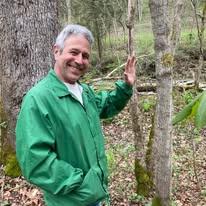
The Senate refused to confirm my cousin, A SURGEON, for U.S., SURGEON GENERAL. They wanted a person that was more aligned with traditional medicine instead of functional medicine, so a Radiologist has been nominated 🤬 WTF! https://www.nationalreview.com/news/who-is-nicole-saphier-trumps-new-surgeon-general-nominee/

1 like • May 4
A radiologist... SMH!
May 1 •
FUN FACT ABOUT ME
Few people know that I am part owner of some race horses. Caldera was my first horse and was #10 in the lineup to go to the Kentucky Derby last year. A couple of races before the Derby, a horse next to Caldera rammed into the sided of him, taking him to his knees. He didn't go to the Derby 😭 Yesterday was his first race back after a year. He is big, beautiful, and powerful. Here is that race! He is #1 https://www.facebook.com/reel/1978374422785760

2 likes • May 2
That has to feel incredible!
Apr 26 •
Saturday Human Crimes: The Physiology Behind the Behavior
Cats commit crimes (see my cat crimes post) and so do humans. But the human ones are quieter. Sneakier. Harder to spot unless you know what you’re looking for. Cats knock things off counters. Humans knock themselves off balance. Cats commit chaos in daylight. Humans commit theirs in the nervous system. There’s a crime almost every human commits, not publicly, not loudly, not in a way anyone else would notice. It happens in the pauses. In the micro‑moments. In the places where your body speaks before your mind catches up. You think it’s a habit. A flaw. A personality quirk. It isn’t. It’s a physiological glitch, a survival script your body wrote long before you had language for it. It shows up as: - the snack you didn’t mean to eat - the message you didn’t send - the spiral you didn’t choose - the exhaustion you can’t explain - the reaction you regret before it’s even over Everyone thinks they’re alone in it. Everyone thinks it’s “just them.” Everyone thinks they should be able to control it. But there’s a reason you can’t. A reason no one ever told you. A reason that makes the whole thing make sense in a way that feels, unsettling. Some of us have been studying these crimes. Not to judge them. But to decode the language underneath, the one the body has been speaking this whole time. There’s a place where these patterns finally make sense. Where physiology becomes a map instead of a mystery. Where the “why am I like this?” finally gets an answer. 1. Emotional Eating in the First Degree This isn’t about “comfort food.” This is about metabolic triage. When your blood sugar drops, your body enters a state called neuroglycopenia — meaning your brain isn’t getting enough glucose to function. Your brain has ONE job: keep you alive. So it does what any panicked CEO would do — it fires the entire executive team (your prefrontal cortex) and hands the keys to the intern (your amygdala). The amygdala has two strategies: - Find safety - Find calories

0 likes • Apr 27
So does knowing where all the hard-wiring is and recognizing it help us to somehow regulate it? Or is all we can do is to recognize it and not be so hard on ourselves? (if that is even possible)
Apr 26 •
Weekly Simcha Science - Sunday 04/25/26
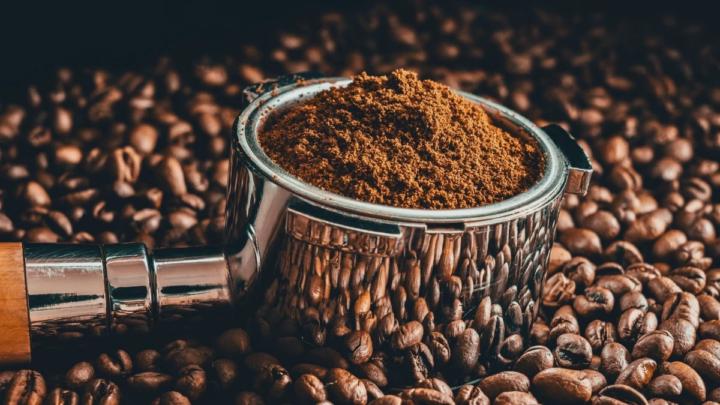
I am changing this to weekly instead of daily. Scientists Discover an Amazing New Use For Your Leftover Coffee Grounds Scientists in South Korea have found a clever new use for your old coffee grounds: Insulation. A team from Jeonbuk National University (JBNU) converted coffee waste into a material that was just as effective at insulation as materials currently used in buildings. The advantage is that the new material is made from renewable sources rather than fossil fuels and, when it comes time to dispose of it, it's biodegradable. "Coffee waste is produced on a massive scale worldwide, yet most of it ends up in landfills or is incinerated," says Seong Yun Kim, materials engineer at JBNU. "Our work shows that this abundant waste stream can be upcycled into a high-value material that performs as well as commercial insulation products while being far more sustainable." Collectively, the world drinks about 2,25 billion cups of coffee every day, and that translates into a huge amount of discarded grounds. Most of this waste is burned or buried, which is as bad for the environment as dumping it down the drain. Instead, scientists are increasingly finding more useful things to do with old coffee grounds. Recent studies have explored adding the stuff to concrete and other paving materials, using it to remove herbicides from the environment, and even extracting new drug compounds from it. In the new study, the JBNU team investigated how well coffee grounds could function as a thermally insulating material. First, spent coffee grounds were dried out in an oven at 80 degrees Celsius (176 degrees Fahrenheit) for a week. Then, they were cooked at much higher temperatures to produce a carbon-rich material known as blochar. Next, this biochar was treated with environmentally friendly solvents, water, ethanol, and propylene glycol, and then mixed with a natural polymer called ethyl cellulose. Finally, the powdery mixture is compressed and heated into a composite material.
0 likes • Apr 27
@Dr. Peninah Wood Ph.D Sounds good, but I have questions about cost effectiveness. A week at 176 degrees is a lot of energy. Then it is added to what sounds like current (blown in type) cellulose insulation. I like it being degradable. I just have questions....lol.
Apr 24 •
Just want to share this...
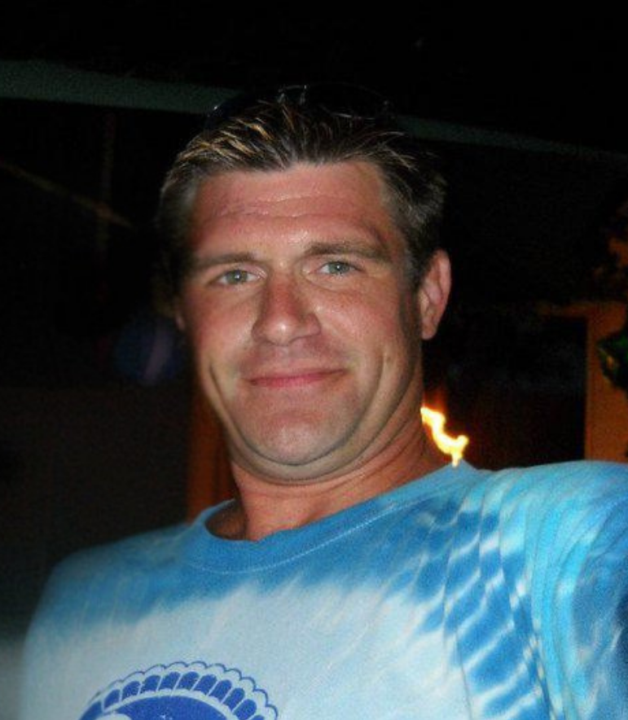
Someone on Skool offered to make stickers of my son that died and Simcha. I had to send her pictures of both of them. Just want to share this one of my son. She called him "Hollywood handsome." I think she is right. I miss him so much!
1 like • Apr 25
She IS right.
1-10 of 24
@lee-trabout-5374
Retired contractor. Loving country living in SE Indiana.
Active 55d ago
Joined Jan 8, 2026