Activity
Mon
Wed
Fri
Sun
Aug
Sep
Oct
Nov
Dec
Jan
Feb
Mar
Apr
May
Jun
What is this?
Less
More
Owned by Kate
A gentle creative space for reflection through art. Slow prompts, artist dates and kind community. Art inspired by kindness, courage and quiet wonder.
Memberships
Empowering Animals
41 members • Free
Cottage Grandma Skills School
23 members • Free
Build Your Online Business
1.5k members • $9/month
The Directory On Skool
923 members • Free
Ricochet
213 members • Free
Retro Riches Archive
89 members • Free
HAPPY Hangout
95 members • Free
Janet VanEerden Watercolor
92 members • Free
The Rise & Align Lounge
105 members • $8/month
16 contributions to Simcha Healthcare

🔥
May 1 •
FUN FACT ABOUT ME
Few people know that I am part owner of some race horses. Caldera was my first horse and was #10 in the lineup to go to the Kentucky Derby last year. A couple of races before the Derby, a horse next to Caldera rammed into the sided of him, taking him to his knees. He didn't go to the Derby 😭 Yesterday was his first race back after a year. He is big, beautiful, and powerful. Here is that race! He is #1 https://www.facebook.com/reel/1978374422785760


🔥
1 like • May 1
Oh wow 🤩 I love horses and racing ! How amazing 🏇
🔥
1 like • May 1
@Dr. Peninah Wood Ph.D
🔥
Apr 3 •
Psychological Warfare: Pharma & Food Edition
My cousin Calley, again. He is the senior advisor for the United States Department of Health and Human Services. Great information that will piss you off. Worth the two+ hours to watch.
🔥
1 like • Apr 4
Oh I will add it to my watch list !
🔥
Mar 29 •
Sunday: The Thread That Connects It All
Why your symptoms, your story, and your biology were never separate, and why that matters now. Most people walk around believing their body is a collection of unrelated malfunctions. A mood swing here. A gut flare there. A week of exhaustion. A sudden spike of anxiety. A craving that feels like betrayal. A shutdown that feels like failure. But the body doesn’t operate in fragments. It operates in networks. And networks don’t break in one place they shift, compensate, adapt, reroute, and reorganize. Your symptoms aren’t isolated events. They’re signals in a system that’s been trying to hold you together. Let’s zoom out to the level no one teaches you. Your physiology is not a machine. It’s a storytelling organism. Every hormone, every neurotransmitter, every inflammatory signal, every craving, every crash they’re all part of a communication loop between: - your nervous system - your metabolic state - your immune system - your lived history - your current stress load - your environment - your beliefs about yourself - and the cultural narratives you’ve absorbed When one of these shifts, the others respond. Not because you’re fragile but because you’re interconnected. Let’s trace a real thread. Thread Start: You feel “unmotivated.” Most people stop there. They blame themselves. They assume a character flaw. But the thread continues: Your “lack of motivation” is tied to your energy availability. Low cellular energy changes dopamine signaling. Dopamine isn’t about pleasure, it’s about drive. Your energy availability is tied to your stress physiology. Chronic cortisol output shifts your metabolism toward conservation. Your body prioritizes survival over ambition. Your stress physiology is tied to your nervous system state. A chronically activated sympathetic system suppresses executive function. You can’t plan your way out of a threat. Your nervous system state is tied to your history. If your body learned early that the world isn’t safe, your baseline becomes vigilance, not expansion.

🔥
2 likes • Mar 29
This is really helpful, I am better at seeing where my body’s telling me I need to listen a little harder now. I was really busy yesterday physically and mentally and today I got up and realised that the body was not happy at all. My brain is really buffering today also so I am I’ve gone back to bed. Not to sleep but just to give the bod want it needs. Hopefully tomorrow will be better because I’ve rested 🙌🏻
🔥
Mar 25 •
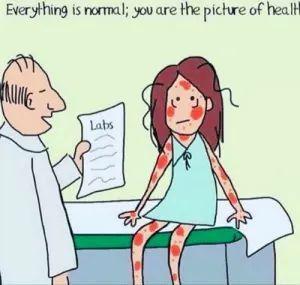
Wednesday: The Myth That Needs to Die
Normal Labs Mean You’re Fine. This myth dies today. Why This Myth Is So Dangerous Most people don’t realize this, but the standard lab ranges used in traditional medicine were never designed to measure optimal function. They were created to identify disease states in large populations, not early dysfunction, not metabolic decline, not nervous system dysregulation. A Brief History of How These Lab Values Were Created This is the part almost no one knows, and once you hear it, you can’t unhear it. Once you see it, you can't unsee it. 1. Lab ranges were created in the 1940s - 1960s using convenience samples Hospitals and clinics simply measured the people who showed up. Not healthy volunteers. Not screened populations. Just whoever walked in, mostly people already dealing with symptoms. 2. They removed only the very sick outliers If someone’s numbers were extremely abnormal, they were excluded. But the “mildly unwell,” the chronically stressed, the nutrient‑depleted, the pre‑diabetic, the inflamed? They stayed in the dataset. 3. The average became the “normal” Once the extremes were removed, the remaining values, from a population that was not healthy, became the reference range. 4. As the population got sicker, the ranges widened This is the part that shocks people: As metabolic health declined over the decades, the “normal” ranges shifted with it. So today’s “normal” is not yesterday’s “normal.” It’s just the average of a progressively unwell population. 5. These ranges were never meant to define optimal health They were created to help doctors identify disease, not to help humans understand function. And yet, these are the numbers people are told to trust with their lives. So when someone is exhausted, inflamed, wired‑and‑tired, craving sugar, gaining weight, losing hair, or feeling like their brain is wrapped in cotton and their labs come back “normal,” they’re told: - “You’re fine.” - “It’s probably stress.” - “Maybe try sleeping more.” - “Your labs look great, maybe it’s anxiety.”
🔥
1 like • Mar 26
Wow that’s crazy and makes a lot of sense as to why It took so long for a diagnosis of any kind it’s certainly been a journey.
🔥
Mar 22 •
DAILY SIMCHA SCIENCE - SUNDAY 03/22/26
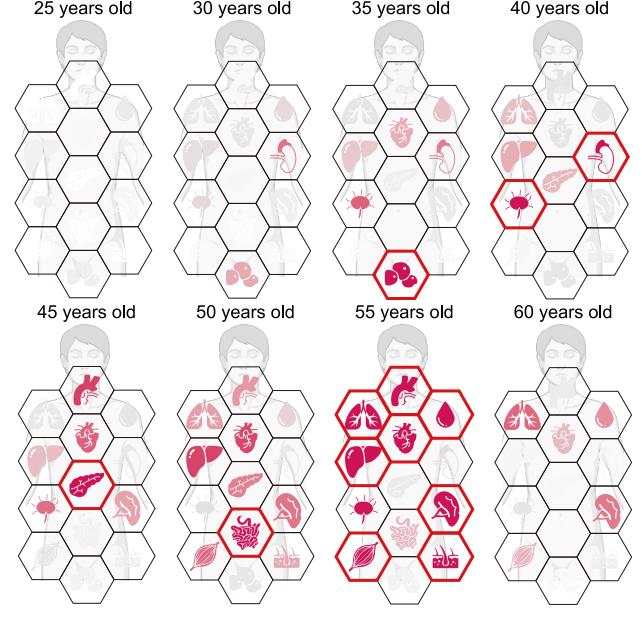
Study Reveals a Turning Point When Your Body's Aging Accelerates The passage of time may be linear, but the course of human aging is not. Rather than a gradual transition, your life staggers and lurches through the rapid growth of childhood and the plateau of early adulthood, to an acceleration in aging as the decades progress. A study identified a turning point at which that acceleration typically occurs: around age 50. After this time, the trajectory at which your tissues and organs age is steeper than the decades preceding, according to a study of proteins in human bodies across a wide range of adult ages, and your veins are among the fastest to decline. "Based on aging-associated protein changes, we developed tissue-specific proteomic age clocks and characterized organ-level aging trajectories," writes a team led by scientists from the Chinese Academy of Sciences in their paper published in 2025. "Temporal analysis revealed an aging inflection around age 50, with blood vessels being a tissue that ages early and is markedly susceptible to aging." Humans have a remarkably long lifespan compared to most other mammals, but it comes with some costs. One is a decline in organ function, leading to an increased risk of chronic disease as the years mount. We don't have a very good understanding of the patterns of aging in individual organs, so the team investigated how proteins in different tissues change over time. "Our findings lay the groundwork for a systems-level understanding of human aging through the lens of proteins," the researchers write. They collected tissue samples from a total of 76 organ donors between the ages of 14 and 68 who had died of accidental traumatic brain injury. They also obtained blood samples. The 516 samples, from 13 different tissues, covered seven of the body's systems: cardiovascular (heart and aorta), digestive (liver, pancreas, and intestine), immune (spleen and lymph node), endocrine (adrenal gland and white adipose), respiratory (lung), integumentary (skin), and musculoskeletal (muscle).
🔥
1 like • Mar 23
@Lorene Roberts 🙏 That’s so lovely 🥰
🔥
1 like • Mar 24
@Lorene Roberts 🥰 I agree Most definitely.
1-10 of 16

🔥
@kate-bullock-6754
Artist, illustrator from Cornwall UK & founder of Smidgen of Calm 💜 where creativity meets calm, curiosity and community.
Active 6h ago
Joined Feb 27, 2026
Powered by