Activity
Mon
Wed
Fri
Sun
Aug
Sep
Oct
Nov
Dec
Jan
Feb
Mar
Apr
May
Jun
What is this?
Less
More
Owned by Dr. Peninah
Helping people optimize health, energy, mindset, and wellness by addressing root causes through Functional, Nutritional and Holistic Medicine.
Understand your pet through physiology. Learn the gut - immune - neuro patterns that shape behavior, mood, and resilience long before symptoms appear.
Memberships
Empowering Animals
41 members • Free
Deal Hub
377 members • Free
Root Cause Fatigue
188 members • Free
🇮🇱 Israel IRL
8 members • Free
Claude Code Club
6.6k members • $9/month
Grow My Skool
256 members • Free
Remote Income Blueprint
59 members • $27/month
Promotion Hub
84 members • $2/month
Group Support Community
44 members • Free
515 contributions to Simcha Healthcare

🔥
2d •
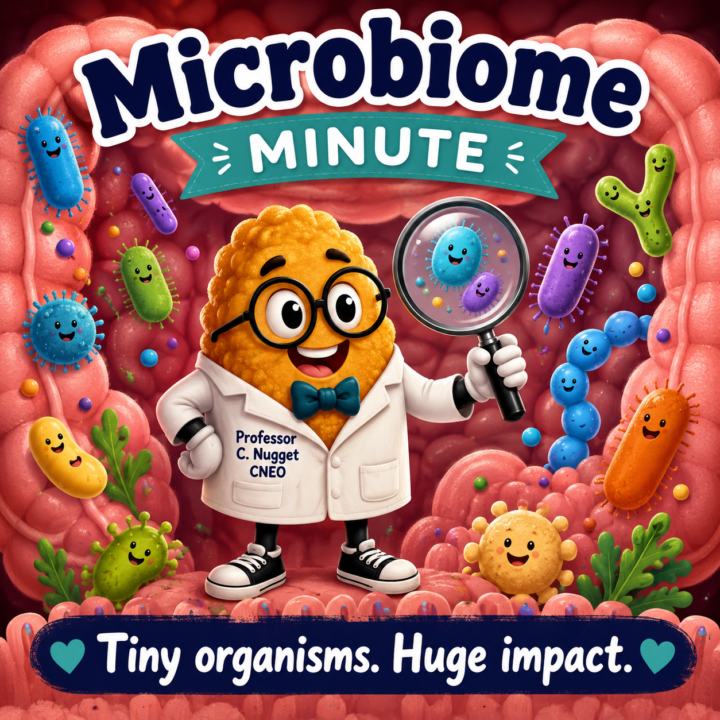
Wednesday Nugget From Professor C. Nugget - Microbiome Minute
Look down at his shoes Before you make fun of his shoes... Black Converse high-tops. 😂 I love him 🤣 It's like he's saying: "Science is serious. Dress code is optional." Or... "I've got a Ph.D. in Nuggets, but I'm still cool." Did you know? Nearly 70% of your immune system is associated with your gut. Your microbiome, those trillions of beneficial bacteria living in your digestive tract, does far more than help digest food. It plays a role in: - Immune health - Brain function and mood - Inflammation - Metabolism - Protection against harmful microbes When the microbiome becomes unbalanced, your body may begin sending subtle signals like fatigue, digestive discomfort, brain fog, skin issues, or frequent illness. The good news? Your microbiome is constantly changing. Every healthy choice you make, from the foods you eat to the quality of your sleep, helps shape its future. Functional medicine doesn't just ask, "What's wrong?" It asks, "Why is it happening?" The microbiome is often one of the first places to look.
🔥
0 likes • 12h
@Sara Abrams, that's a good thing to do. Coffee is not a bad thing. Make sure you are buying high-quality, organic, mold-free coffee. Coffee actually has benefits.
🔥
19h •
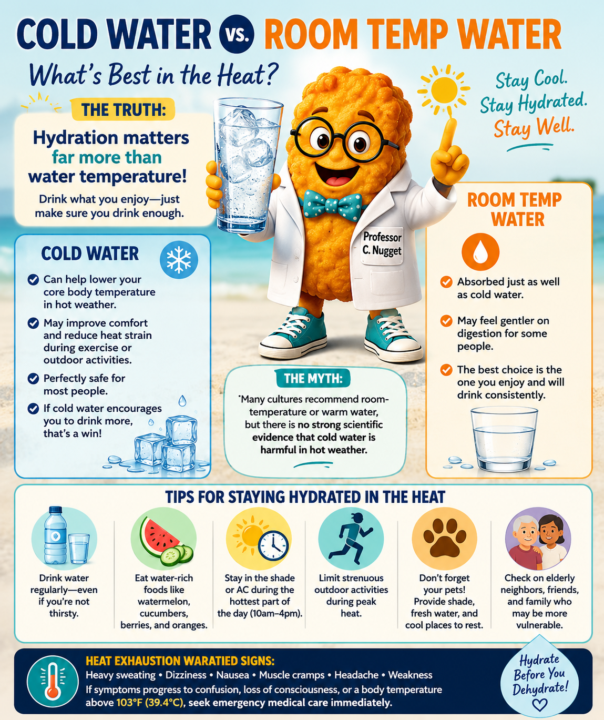
SIMCHA HEALTHCARE DAILY NUGGET - BEAT THE HEAT
Smart Ways to Stay Safe This Summer When temperatures soar, your body has to work much harder to keep you cool. Heat exhaustion and heat stroke can happen faster than many people realize, especially in older adults, children, and those with chronic health conditions. Here are a few simple ways to stay safe: - Drink water regularly, even if you don't feel thirsty. - Wear lightweight, light-colored clothing and a wide-brimmed hat when outdoors. - Stay in the shade or air conditioning during the hottest part of the day (10 a.m.–4 p.m.). - Eat water-rich foods like watermelon, cucumbers, berries, and oranges. - Limit strenuous outdoor activities during peak heat. - Never leave children or pets in a parked vehicle, not even for a few minutes. - Check on elderly neighbors, friends, and family members who may be more vulnerable to heat-related illness. - Don't forget your pets! Make sure they have plenty of fresh water, shade, and cool places to rest. Hot pavement can burn sensitive paw pads. Know the warning signs of heat exhaustion: - Heavy sweating - Dizziness - Nausea - Muscle cramps - Headache - Weakness If symptoms progress to confusion, loss of consciousness, or a body temperature above 103°F (39.4°C), seek emergency medical care immediately, it could be heat stroke. There's a lot of misinformation going around social media, and here, about drinking cold water during times like this. The current evidence is: - Cold water is perfectly safe for most people and can actually help lower your core body temperature during hot weather. - The best water is the water you'll actually drink. If cold water encourages you to drink more, that's usually the better choice. - Room-temperature water is absorbed just as well as cold water. The difference in hydration is negligible. - During exercise or heavy outdoor work, cool or cold water may help improve comfort and reduce heat strain, making it easier to stay hydrated. - Some people experience stomach discomfort or "brain freeze" if they drink very cold water too quickly. If that's you, sip it slowly or choose cool rather than ice-cold water.
🔥
21h •
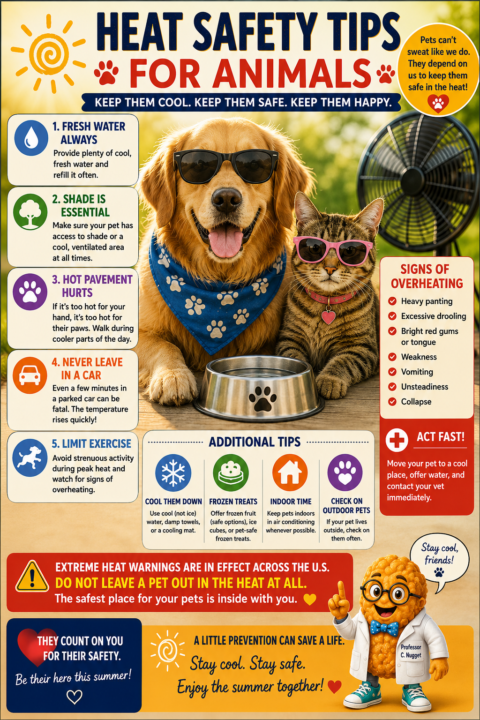
SIMCHA HUB OF PET PHYSIOLOGY DAILY NUGGET - HEAT WARNING
Extreme heat warnings are being issued across much of the United States. If you're uncomfortable outside, imagine wearing a fur coat. Please don't leave your pets outside in this dangerous heat. Even with shade and water, extreme temperatures can quickly become life-threatening. Bring your pets indoors where it's cool and only take them outside for brief potty breaks or necessary exercise during the coolest parts of the day, early morning or after sunset. Here are a few ways to protect your furry family members: - Keep fresh, cool water available at all times. - Keep pets indoors in air conditioning whenever possible. - If they must be outside briefly, make sure they have access to shade, but remember, shade alone may not be enough during extreme heat. - Test the pavement with the back of your hand. If you can't comfortably hold it there for 7 seconds, it's too hot for your pet's paws. - Walk early in the morning or later in the evening when temperatures are much lower. - Never leave a pet in a parked vehicle, even for one minute. Temperatures inside a car can become deadly in minutes, even with the windows cracked. - Offer cooling mats, fans, frozen pet-safe treats, or cool (not ice-cold) water to help regulate body temperature. Know the signs of heat stroke: - Excessive panting - Heavy drooling - Bright red gums or tongue - Weakness or lethargy - Vomiting or diarrhea - Staggering or collapse If you suspect your pet is suffering from heat stroke, move them to a cool area immediately, offer small amounts of cool water if they are alert, and seek emergency veterinary care right away. Heat stroke can become fatal very quickly. At Simcha Hub of Pet Physiology, we believe prevention saves lives. During this heat wave, the safest place for your pets is inside with you. Stay cool. Stay safe. Protect those who depend on you. A dog in Ohio was found deceased chained outside in the heat. DON'T DO IT!!! The post about this can be found in the community.
🔥
May 1 •
LAB FRIDAY: ALL DISEASES BEGIN IN THE GUT: GI-MAP
Everyone should consider a GI‑MAP because modern research keeps confirming what Hippocrates said 2,400 years ago: “all disease begins in the gut.” The gut microbiome influences inflammation, immunity, metabolism, brain function, and even cardiovascular risk, meaning gut dysfunction can quietly drive problems far beyond digestion. BUT YOUR DOCTOR WILL NOT ORDER THIS TEST Why “All Disease Begins in the Gut” Is No Longer Philosophy, It’s Physiology Modern science shows the gut isn’t just a digestive tube, it’s a neuro‑immune‑metabolic command center. Research demonstrates: - The gut microbiome communicates with the immune system, nervous system, endocrine system, and metabolic pathways. Disruptions in this ecosystem (dysbiosis) are linked to anxiety, depression, hypertension, cardiovascular disease, obesity, diabetes, IBD, and cancer. - Microbiome shifts influence systemic inflammation, a root driver of chronic disease. Microbial metabolites like TMAO and LPS can trigger vascular injury and immune activation, increasing cardiovascular and metabolic risk. - Dysbiosis affects the gut–brain axis, contributing to neurological conditions such as Alzheimer’s and Parkinson’s. - Environmental exposures like microplastics can alter gut bacteria and contribute to inflammatory bowel disease. - Stress and lifestyle patterns (like late‑night eating) reduce microbial diversity and worsen bowel symptoms, showing how sensitive the gut ecosystem is to daily life. In other words: When the gut shifts, the whole body shifts. Why Everyone Should Get a GI‑MAP The GI‑MAP is one of the only tests that can quantitatively show what’s happening inside this system. Because the gut influences nearly every organ, this test becomes a foundational health assessment, not a “GI test.” Here’s why it matters for everyone: 1. It identifies dysbiosis before symptoms become disease Dysbiosis is linked to metabolic disorders, immune dysfunction, neurological issues, and chronic inflammation long before symptoms appear. The GI‑MAP detects these microbial shifts early.

🔥
1 like • May 1
@Jessica Fish a pendant? WTF? 😂 Amazing. Now labs are a different story. I think everyone should have them done but I don't push them either!
🔥
0 likes • 2d
Bump
🔥
3d •
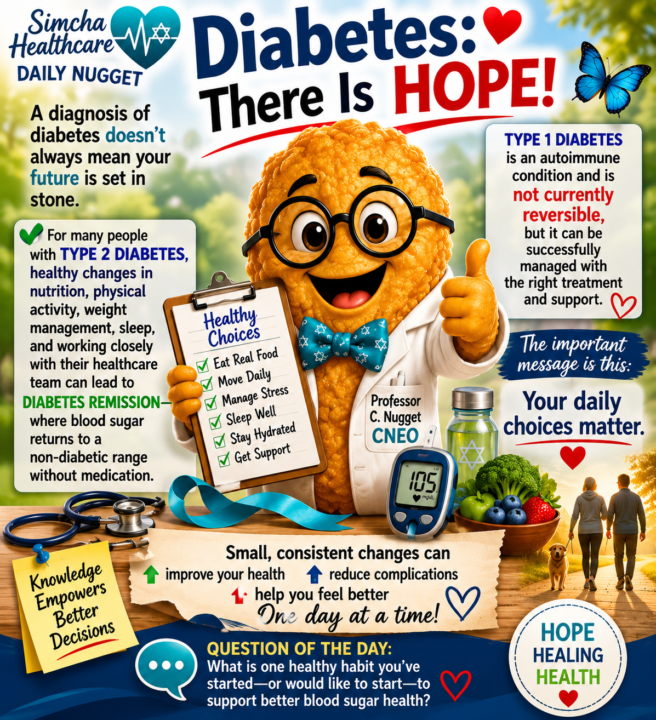
Simcha Healthcare Daily Nugget - Diabetes: There Is Hope
A diagnosis of diabetes doesn't always mean your future is set in stone. For many people with type 2 diabetes, healthy changes in nutrition, physical activity, weight management, sleep, stress management, and working closely with their healthcare team can lead to diabetes remission, where blood sugar returns to a non-diabetic range without the need for diabetes medication. A functional medicine approach can also play an important role by looking beyond blood sugar numbers to identify and address underlying contributors such as nutrition, inflammation, sleep, stress, gut health, and metabolic function. For some individuals with type 2 diabetes, this comprehensive approach can help support remission. Type 1 diabetes is different. It is an autoimmune condition and is not currently reversible, but it can be successfully managed with the right treatment and support. Your daily choices matter. Small, consistent changes can improve your health, reduce complications, and help you feel better, one day at a time. Knowledge empowers better decisions.
🔥
2 likes • 3d
@Cindy S. 🤣🤣 sounds good. Let's do it! Just let me know when!
🔥
2 likes • 3d
@Cindy S. 🤣🤣🤣
1-10 of 515
🔥
@peninah-wood-2002
Dr. Peninah Wood, Ph.D, is the founder and CEO of Simcha Healthcare. She has a Doctorate in Functional, Nutritional, and Holistic Medicine.
Online now
Joined Nov 18, 2025
Kentucky
Powered by