
Write something
🔥
5d •
What herbal teas do you reach for when the heat gets heavy?
When the summer heat settles in, especially with high humidity, I start thinking differently about herbs. Hot weather is not just about thirst. It can leave the body feeling drained, heavy, dry, sluggish, or overheated. That is when a simple tea can become part of the daily rhythm, not as a quick fix, but as one more way to support the body while we slow down, hydrate, and pay attention. Some people like cooling teas like mint, lemon balm, hibiscus, or rosehips. Others lean toward mineral-rich teas like nettle, oatstraw, raspberry leaf, or alfalfa. Some like moistening herbs like linden or marshmallow root when the heat feels drying. Others keep it simple with whatever grows close to the kitchen door. I am curious what everyone here actually uses. When the heat gets hot, what kind of herbal tea do you usually reach for? What is your go-to summer tea, and do you drink it hot, chilled, or room temperature?
Poll
10 members have voted
🔥
16d •
Some Herbs Build Slowly
Last week we talked about what an herb is doing in the body. Now we need to add one more layer. Some herbs are gentle supports. They are not always used because something is wrong right now. They are used because they help the body stay nourished, steady, and resilient over time. Nettle is a good example. It is mineral-rich and often used when the body feels run down or depleted. Oatstraw is another steady herb. It supports the nervous system in a slow, nourishing way. Rosehips can bring gentle daily support through food-like nourishment. These herbs are more like compost in the garden. We do not add compost and expect the whole garden to change overnight. We use it because it helps build the ground. This week, pick one gentle herb and ask: Would this herb be useful as steady support, or am I expecting it to act like a quick fix? A strong home apothecary starts with simple herbs we can understand and use with care.
🔥
15d •
The Question That Changed How We Use Herbs
One of the most common questions I am asked is, "How do I prepare this herb?" That is a good question, but the first question I ask is, “What part of the plant are you using?” Once we know the part, the preparation often becomes much clearer. Leaves and flowers are usually infused as tea. Mineral-rich herbs like nettle and oatstraw often benefit from a longer infusion. Roots, barks, berries, and hard seeds are commonly simmered as a decoction. Aromatic seeds such as fennel and cardamom are often lightly crushed before use. Mucilaginous herbs like marshmallow root may work best as a cold infusion. Resins such as frankincense are often better suited to tinctures, powders, oils, rather than a simple tea. Herbal learning becomes much more approachable when we begin grouping plants by the parts we use. A simple notebook can be helpful: - Herb name - Part used - Preparation method - Steeping or simmering time - Taste - Notes and observations - Safety considerations Over time, that notebook becomes a personal herb guide built from real experience. What herb first made you realize that not every plant is prepared the same way?

15d •
Foraging Project
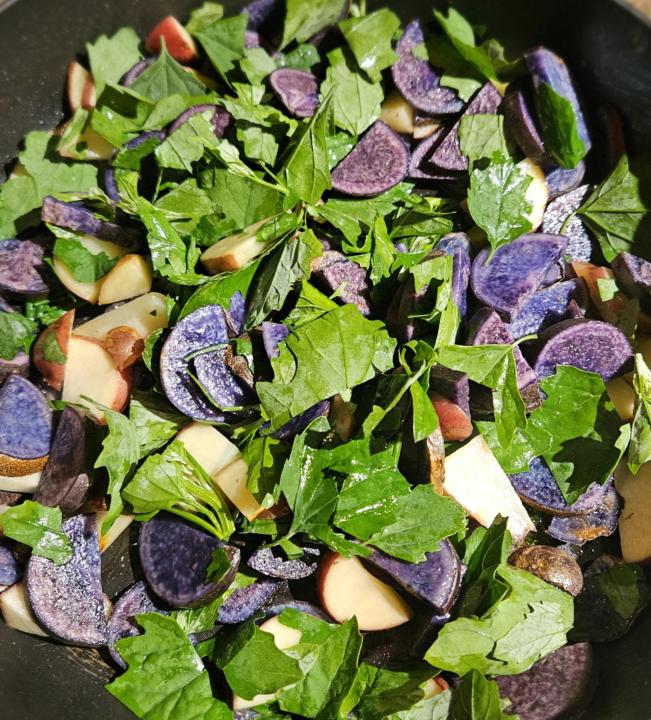
A couple days ago I foraged Lamb's Quarters and rinsed them, then put them in the fridge overnight. The next morning, I chopped up about 1.5 cups and put them in my frying pan with some blue/red potatoes and garlic. I fried them up and had them for a great mid-day snack. Then... I started getting stomach cramps about 20 minutes later... which did not go away for several hours. I actually had to go lay down for a bit, which is unusual for me to do. Afterwards I looked it up - and some people are sensitive to Lamb's Quarters, suffering gastro-intestinal issues from eating them. I guess I might be one of those sensitive people! So I learned a little lesson about trying new things - eat a few bites and see how things go before eating a full serving of something I'm completely unfamiliar with. Other than that, my foraging project this month has gone super well. I've made clover jam (a couple different flavors), honeysuckle syrup, honeysuckle tea, elderberry cordial, a plantain infusion that is steeping for salve, and a jewelweed infusion that is also getting ready to be made into salve. :)
1-25 of 25
powered by
skool.com/oasis-builders-8012
Oasis Builders helps busy families grow healthy food, herbs for medicine, and gain calm confidence for everyday readiness.
Suggested communities
Powered by