Activity
Mon
Wed
Fri
Sun
Oct
Nov
Dec
Jan
Feb
Mar
Apr
May
Jun
Jul
Aug
Sep
What is this?
Less
More
Owned by Sarah
Helping Christian families live healthier, think independently, grow their own food, and become more prepared.
Full Hands, Full Hearts
46
Free
Pitch Secrets A to Z Community
2.9k
Free
Skoolers
155.9k
Free
Freedom Lovers Only
48
Free
Oasis Builders
163
Free
Sacred Season Sisters
127
Free
Skool Growth Free Training Hub
9.5k
5.0
Free
TH
The Holistic Hippy Mama
439
Free
104 contributions to Oasis Builders
🔥
10d •
Little Farm Summit
Create a Little Farm Life That Fits Your Real Life https://littlefarmsummit.com/sign-up/?sc_ref=dOgd0q5w3P7X7xbC&sc_vis=To1z7pe289JZymftBVKs7u2S4qqFh7
🍀
1 like • 7d
Nice!
13d •
Why Save Your Own Seeds?
Saving your own seeds does more than save money. It lets you keep varieties you like, share them with others, and slowly select plants that perform well in your specific conditions. Each season you can save seed from the plants that stood out—better flavor, stronger growth, earlier ripening, drought tolerance, disease resistance, or simply the ones that needed the least help. Over time, that repeated selection can gradually shift a population toward traits that work better on your property. Open-pollinated and heirloom varieties are usually the easiest place to start. Hybrids can still produce seed, but the next generation may vary a lot. For me, it comes down to this: Grow. Observe. Select. Save. Replant.

🍀
3 likes • 11d
I love saving seeds! I didn't really buy any this year, everything was from last year. And next year I'll have even more!
🍀
1 like • 7d
@Jim Flach Yeah I'm really thinking about that for next year.
🍀
22d •
Pest Control
Living in the country brings all kinds of pest challenges. This morning I was moving some hay around and found this guy. He's a beauty! And a very valuable part of our ecosystem here!

🍀
2 likes • 11d
@Jim Flach My husband isn't really a snake person either. But he will come inside and let me know he found one, then I will be the one to pick it up. He found a little ringneck snake by our well when he was working on it. I went over and grabbed it to show everyone. It was cute!
🍀
1 like • 7d
@Elizabeth O'Carroll we had pythons and boas, colubrids, and I may have even gone rattlesnake hunting a time or two when I was younger. ;)
🔥
9d •
The Hermit of Gully Lake
Willard Kitchener MacDonald spent much of his life living alone in the woods of Nova Scotia. He hunted, fished, trapped, and lived with very little. When he needed something he could not provide for himself, he went into town. At first glance, his story looks like complete self-reliance. But he was never completely alone. People from the surrounding community visited him, brought food, books, clothing, and supplies, tried to help as he grew older, and respected his choice to live differently. When he disappeared, more than 100 people eventually took part in searching for him. That is the part of his story that interests me. We can teach our families to grow food, preserve it, repair things, manage water, and handle more of life's ordinary problems ourselves. Those skills give a family options. But resilience is not about separating ourselves from everyone else. A strong family should be able to take care of more of its own needs while also being connected to people who notice when something changes, offer a hand when needed, and know they can call on us in return. MacDonald lived about as independently as a person could, yet even he benefited from community. Maybe family preparedness is not just about what we store or what we know how to do. It is also about the caring relationships we build around us. What is one skill your family could strengthen, and one relationship outside your household worth strengthening along with it? https://www.youtube.com/watch?v=h2eMqaNrqEQ&pp=ygUYVGhlIEhlcm1pdCBvZiBHdWxseSBMYWtl
🍀
1 like • 7d
I love history like this. And yes, I agree that no matter what, we really do need each other!

Aug 24 •
Horses On The Land
I had recently heard mixed reviews about having horses on my land. While there are lovely animals... at least the ones I'm with.... they eat lots of vegetation where I'm trying to get my ground covers up and running. There are 2 concerns that I have .... - Stomping the ground and compacting it - Eating ground covers/grass till ground is bare They do fertilize with their dung and hydrant pee which is great. 👉🏻 So, what's your opinion? The area that the horses are in is about 1 acre. 👉🏻 If you do have animals on your land, how do you know when enough is enough?
🍀
1 like • 20d
@Jim Flach we used to have a couple nubians that lived with our horse. I feel like they were easier than our goats we have now.
🍀
1 like • 11d
@Jim Flach they have mini nubians now that are not much bigger than our ND's. I love their long ears and short legs. ;)
1-10 of 104
🍀
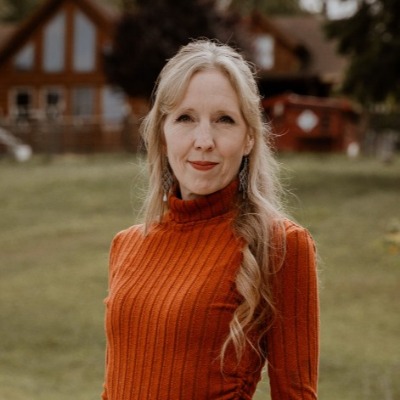
@sarah-peterson
Christian wife, mom of 5, researcher & homesteader. Sharing resources on health, freedom, preparedness, faith, natural living, and self-reliance.
Active 2m ago
Joined Jun 8, 2026
S.E. Ohio