
Write something
Pinned

Sep '25 •
IMPORTANT GROUP INFO
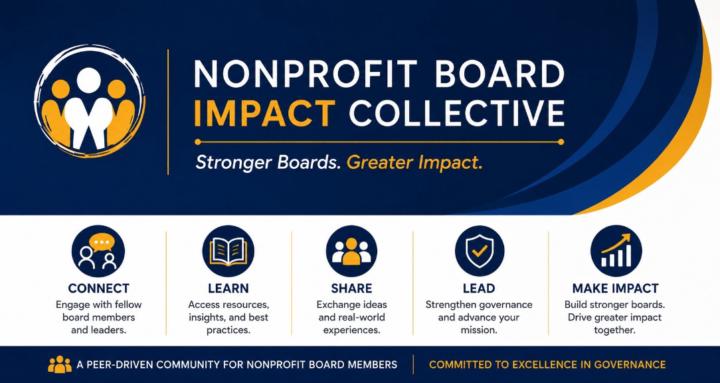
Welcome to the Non-Profit Board Impact Collective! We’re so glad you’re here. This space was created for current nonprofit board members who want to: - Connect with peers facing similar challenges - Share strategies and resources that work - Celebrate wins (big and small) - Build stronger, more effective boards together 🚀 How to get started: - Introduce yourself in this thread – Share your name, organization, and one thing you wish more boards did well. We'll explore the following topics: - Fundraising – ideas, templates, and strategies - Operations – governance, bylaws, board structures, policies - People and Culture – board culture, ED relationships, succession, DEI - Ask questions – This is a safe, pitch-free space. If you’ve got a challenge, ask away! - Share your wins – We learn as much from successes as from challenges. Community Guidelines: - ✅ Be respectful and supportive - ✅ Focus on board-related topics - 🚫 No pitching or promotional posts 💡 Pro tip: Turn on notifications for this workspace so you don’t miss conversations that matter. We can’t wait to see the connections, ideas, and solutions that come out of this Collective. Let’s build stronger boards together.
2d •
What would improve your Board?
On 10/19 we are hosting a call on the topic of Board effectiveness. If there was one thing you’d improve about your Board, what would it be?

15d •
Thanks for the invitation!
Thanks so much for the invitation. Looking forward to meeting new folks, learning from each other, and sharing resources!
29d •
Open Call, RE: Questions about fundraising
Collective members - What are your questions? On 9/22 we are hosting a webinar on the Board's role in fundraising. We'll have a special guest speaker, one of our collective members who specialize in fundraising joining the session. We would be happy to address them during the session.

21d •
Thank you for the invite and the add :)
Thank you for the invite, I hope to learn more about managing and guidance while leading a our board to success.
1-30 of 52
skool.com/nfp-board-impact-collective-7353
This space is for current nonprofit board members who want to connect with peers facing similar challenges & share strategies and resources that work.
Leaderboard (30-day)
1

+2
2
+1
3

+1
4

+1
5
+1
Powered by