
Pinned

9d •
🥳 July 2026 in Review!
Hey fam, As we close out an amazing month of July, it’s time to look back at some outstanding performances and key achievements. 🚀 Presenting our top leaderboard champions who made this month truly competitive and inspiring! @Fahila K p on top with highest engagement of the month 🏆 @Colin Clapp - $ 25 @Christopher Daniel - $15 ✨ Here’s a recap of the content and updates shared throughout last month: 🎥 Video Releases: 1️⃣ Connect Instagram (and 1000+ apps) to Claude - even without a built-in connector 2️⃣ GPT-5.6 or Fable 5? I Built a Website and Game with Both 3️⃣ New Video: We Built an AI That Qualifies Leads Better Than Our Sales Team | Claude 🚨 Other Updates: 1️⃣ 🎥 Create AI Videos for Free with Gemini Omni! 2️⃣ The Next AI Revolution Isn't at Work - It's at Home 🏠🤖 3️⃣ Google Launches Gemini 3.6 Flash, 3.5 Flash-Lite & 3.5 Flash Cyber 4️⃣ Gemini 3.6 Flash Is Here: Is Google Falling Behind on Intelligence or Playing a Bigger Game? 5️⃣ 🚨 Kimi K3 is here! 6️⃣ Will AI tools like Claude replace n8n and Make? 📢 Classrooms updates: 1️⃣ Make Basics

Pinned

15d •
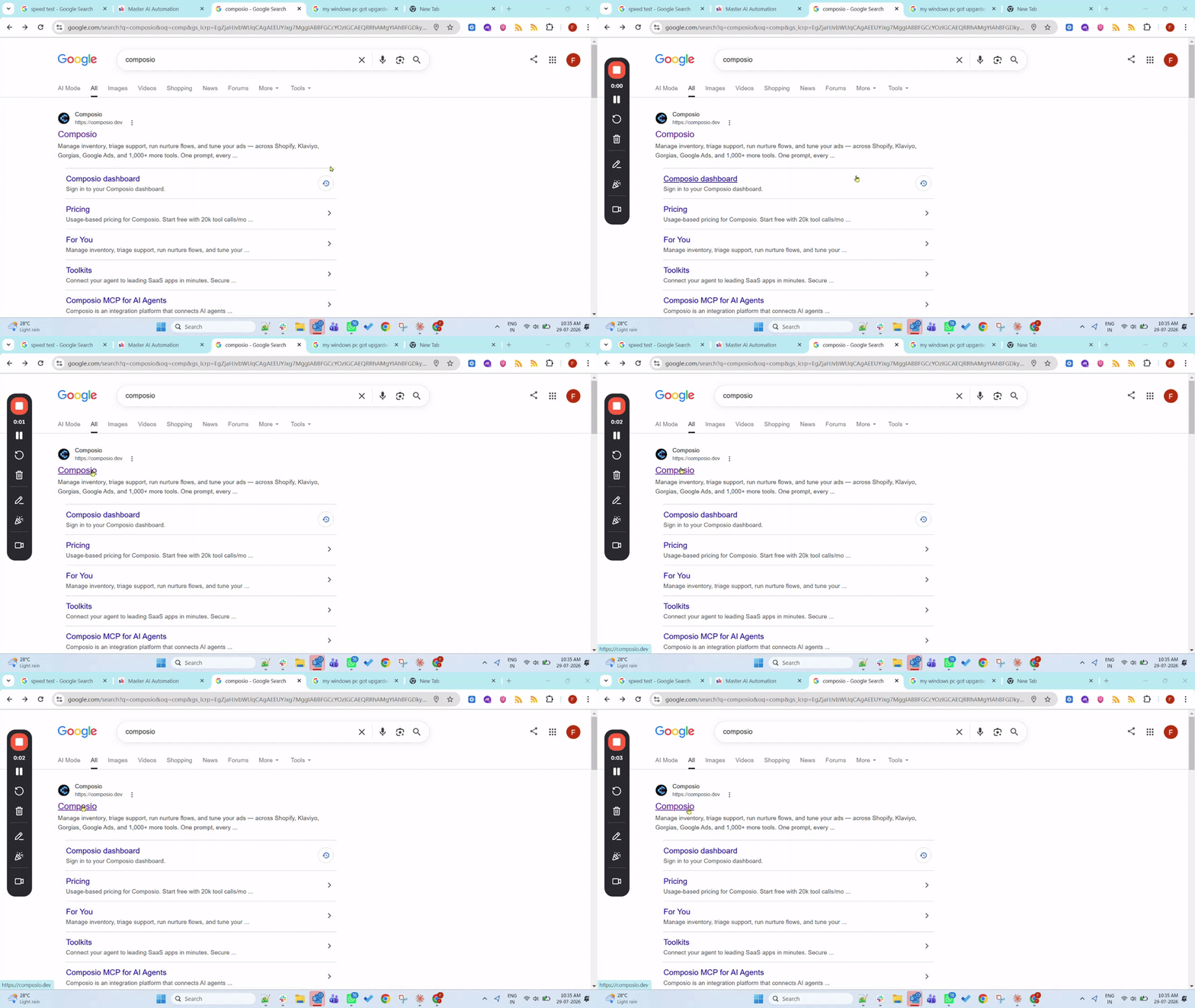
Connect Instagram (and 1000+ apps) to Claude - even without a built-in connector
Want Claude connected to Instagram — or any of the 1000+ apps it doesn't natively support? The trick most people miss: you don't wait for Claude to add a connector. You use Composio (free) as the bridge. Connect once and Claude can: → Read & reply to your Instagram comments and DMs → Pull post insights — reach, likes, top posts → Draft and schedule posts → …and do the same across Gmail, Notion, Sheets and 1000+ more Secure by design — no API keys in chat, and your password stays with Instagram (Business/Creator accounts only). I walk through the whole setup here, click by click: www.loom.com/share/7892ddd1e40d4a0d90c06d5b1b35bf5f

5d •
Good News for Gemini Users!
Google has extended the free Gemini Omni video generation offer! The offer was originally available until August 4, but it has now been extended to August 11, 2026, at 11:59 PM PT. You can create up to 10 Gemini Omni videos at no cost through the Gemini app or web. You can also create, edit, and remix videos using the “Create video” option.


4d •
I Automated 3 Months of Invoice Tracking With One Prompt
I tried Google's new Gemini Spark feature this week. One prompt, 2 minutes, done. Search my Gmail for purchase receipts or invoices from the past 3 months. Extract the date, vendor, total amount, and item category, then log them into a Google Sheet called '3month Expense Log'. Spark went through my Gmail, pulled out every invoice, and built a clean sheet with all the columns filled in. No manual searching, no copy pasting. Quick facts on Gemini Spark: - Google's persistent AI agent, launched at Google I/O 2026, still in beta - Needs a personal Google account, age 18+, and a Google AI Pro or Ultra subscription - Works on Tasks (your goal), Skills (saved instructions), and Schedules (auto triggers) - Connects to Gmail, Calendar, Docs, Sheets, Drive, and more - Can run up to 15 tasks at once - Also useful for trip planning, lead tracking, and subscription monitoring If you deal with repetitive admin work, this is worth trying. What is the first task you would hand off to Gemini's Spark?

2d •
Claude Routines ⏰
Attention Fam! have you tried claude routines yet? lemme tell you real quick what is it. 😉 𝐖𝐡𝐚𝐭 𝐢𝐬 𝐢𝐭: An Agentic workflow automation within Claude like you build in n8n or Make 𝐇𝐨𝐰 𝐝𝐨𝐞𝐬 𝐢𝐭 𝐰𝐨𝐫𝐤: Connect tools to Claude via MCP or API credentials 𝐖𝐡𝐞𝐫𝐞 𝐝𝐨𝐞𝐬 𝐢𝐭 𝐰𝐨𝐫𝐤: Claude Code 𝐇𝐨𝐰 𝐝𝐨𝐞𝐬 𝐢𝐭 𝐭𝐫𝐢𝐠𝐠𝐞𝐫: 1. Schedule trigger 2. Github PR creation 3. API trigger from any of your favourite tools 𝐖𝐡𝐞𝐧 𝐭𝐨 𝐮𝐬𝐞 𝐢𝐭: If you need LLM in your workflow, claude routines can be good option to go with. It does not work with anthropic API but with your normal subscription on pro or above plans. 𝑵𝒐𝒘, 𝒅𝒐 𝒚𝒐𝒖 𝒌𝒏𝒐𝒘 𝒘𝒉𝒂𝒕'𝒔 𝒕𝒉𝒆 𝒅𝒊𝒇𝒇𝒆𝒓𝒆𝒏𝒄𝒆 𝒃𝒆𝒕𝒘𝒆𝒆𝒏 CLAUDE ROUTINES 𝒂𝒏𝒅 𝑪𝒍𝒂𝒖𝒅𝒆 SCHEDULED TASKS?

1-30 of 2,887
Leaderboard (30-day)
1
+122
2

+73
3
+29
4

+18
5

+18
Powered by