
Pinned

⭐
Nov '25 •
Welcome! Introduce yourself + share a pic
Let’s get to know each other! You can use this simple format: Hey, I’m from ____________. For fun, I like to ______________________. Here’s a pic of my myself or something I like.

3h •
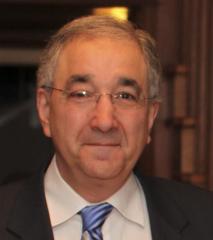
Previous president of Albania
This is very interesting. It is in Arabic, so I added the translation below: Picture of previous President of Albania (Anwar Khojah). He considered all staff of religious institutions do not have work. He employed them as cleaning staff so they would be more useful to the country and the people much better than leaving them jobless with useless time to start preaching hate and discord between the people and religions, in the population of Albania. https://m.youtube.com/shorts/FX-AkPGCxEI

12m •
Lets Debunk some Islamic arguments
☪️1. Classical (Fus'ha) Arabic vs. Modern/Day-to-Day Arabic Islamic view: The Quran's preservation in its original form (including recitation rules/tawjid) keeps the divine text intact. Modern dialects evolved naturally (human process), but the Quran's language was chosen for its precision and eloquence at revelation. Translations convey meaning but lose layers, that's why Muslims emphasize learning Classical Arabic for deeper study, not because the message is Arabic-only. Counterpoint: This evolution shows language is human and changes over time, supporting the idea that the Quran's "miraculous" preservation is due to cultural/religious effort (memorization, standardization under Uthman) rather than divine intervention alone. ☪️2. Other Religious Languages (Greek, Chinese, Japanese, etc.) Still Survive Islamic view: Preservation isn't "divine ordination" in a magical sense but part of God's promise (Quran 15:9: "We have sent down the Reminder and We will preserve it"). Humans (hafiz, scholars) are the means. Counterpoint: Survival is human-driven (e.g., religious institutions, printing, education). Many ancient languages died despite sacred texts. This doesn't disprove divinity but shows preservation relies on human factors. Biblical Hebrew (revived), Koine Greek (New Testament), Classical Chinese (Daoist/Confucian texts), Sanskrit (Hindu/Vedic). Classical Arabic survived due to the Quran's centrality in worship, scholarship, and law, plus Arab cultural pride and institutions like madrasas not divinity. ☪️3. No Mention of Prophets Beyond Israelites in Abrahamic Religions? The Bible (Old Testament) focuses heavily on Israelite prophets (Moses, Isaiah, etc.), with few exceptions (e.g., Balaam, Job possibly non-Israelite). The Quran expands this: It names prophets sent to other peoples, e.g.: - Hud to 'Ad (Arab tribe) - Salih to Thamud (Arab tribe) - Shu'ayb to Midian - Lut (Lot) to his people (non-Israelite context)
1
0

20h •
I was a huge Pink Floyd fan
There’s no doubt that I always thought Pink Floyd was one of the greatest bands. I even loved a lot of the solo things Roger Waters did. But watching him on Piers Morgan just now made me sick to my stomach in ways. I can’t describe. He’s actually worse than Mirandi for the amount of propaganda he’s pushing. Please tell me somebody else caught that interview.
2h •
How Richard Branson started an airline
Richard Branson started Vigin Atlantic airline in England with no money. https://www.instagram.com/reel/DS2PFjnjbU1/?igsh=MTZnYTRpN3lpbGpnNw==
1-30 of 1,203
skool.com/libertypolitics
Talk politics with others who care, in live calls and community posts. Share your views, ask questions, or just listen in.
Leaderboard (30-day)
1

+552
2
+472
3
+258
4
+251
5

+250
Powered by