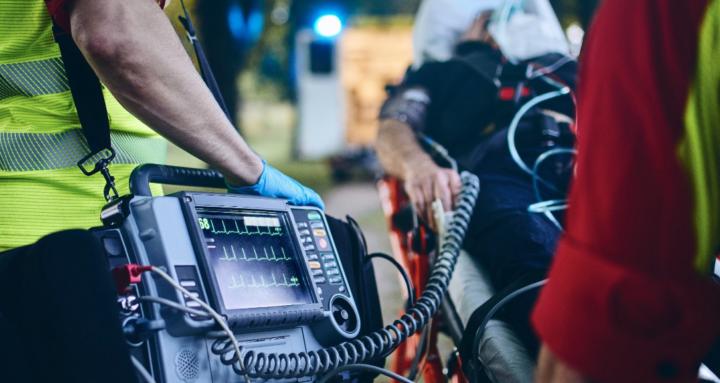
Clinical scenario week 4:
An ambulance is dispatched on a high-priority response following a call from family members reporting a young woman with seizures and decreased level of consciousness. The patient, a 19-year-old female, was last seen awake approximately 30 minutes prior to being found unresponsive at home. Upon arrival, the patient is found lying on the floor in the hallway. She is unconscious and does not respond to verbal commands or painful stimuli. Her airway is patent, and she is breathing spontaneously with apparently adequate ventilation. Respirations are regular. Heart rate is tachycardic at 130 beats per minute, and capillary refill appears normal. Blood glucose is measured at 6.3 mmol/L. The patient has bilaterally dilated pupils. Glasgow Coma Scale is assessed as 3. No signs of trauma are identified, and secondary examination reveals no trauma-related findings. According to the patient’s father, she has a known history of substance misuse, including benzodiazepines, cocaine, and amphetamine. It is unclear what substances she may have taken on this occasion. Estimated transport time to the nearest hospital is 35 minutes. While being observed in the ambulance, the patient experiences another seizure episode. The seizure lasts approximately 30 seconds to one minute and is described as non–tonic-clonic in nature. The seizure resolves spontaneously. During a focused physical examination, the ambulance crew notes discolored nasal secretions, pink in appearance, without visible white powder. Questions 1. Which differential diagnoses should be considered based on the patient’s presentation and history? 2. Which prehospital interventions should be prioritized to ensure patient safety and prevent further deterioration?