Activity
Mon
Wed
Fri
Sun
Apr
May
Jun
Jul
Aug
Sep
Oct
Nov
Dec
Jan
Feb
Mar
What is this?
Less
More
Memberships
Learn Emergency Medicine
50 members • Free
4 contributions to Learn Emergency Medicine
Jan 15 •
Clinical scenario week 3:
An ambulance is dispatched on a high-priority response following a call from family members reporting an elderly male with difficulty breathing and fever. The caller states that the patient has been unwell for several days, with significant deterioration over the past 24 hours. Upon arrival at a private residence, the patient, a 75-year-old male, is found seated and leaning forward in a chair in the living room. He appears fatigued and unwell, coughing frequently and producing yellow sputum. He is warm to the touch and visibly short of breath. The patient is awake and responsive but appears weak. Respiratory effort is increased. Auscultation reveals coarse crackles over the left lung. He appears flushed and diaphoretic. Heart rate is 115 beats per minute, blood pressure is 90/50 mmHg, respiratory rate is 28 breaths per minute, and oxygen saturation is 89% on room air. Body temperature is 38.9 °C. The patient reports cough, fever, increasing shortness of breath, and marked fatigue. He has a known history of chronic obstructive pulmonary disease and uses an inhaled bronchodilator as needed. He has no known allergies and takes no other regular medications. His last oral intake was approximately six hours prior. He reports that his cough and fever have gradually worsened over the past week. The nearest urgent care clinic is 10 minutes away, while a hospital with acute internal medicine services is approximately 30 minutes away. The patient is prepared for transport. Questions 1. Which findings in this case raise suspicion of sepsis, and why? 2. Which interventions should be prioritized in the prehospital setting to reduce the risk of further deterioration? --- Is the administration of antibiotics permitted in the prehospital setting at your workplace?
Poll
5 members have voted
2 likes • Jan 18
Antibiotics are not on my Scope of drugs. I would ? Airway infection and maybe sepsis (yellow airways excretion and raised body temperature) there is no base line indicated for respiration rate so one does not know if he has a high resp rate or not. I would start a 40% oxygen mask and IV Normal saline 60 dropper. I don't know the capabilities of the Urgent care that you are referring to, so it is difficult for me to answer the transportation question.
Jan 10 •
Link to medical Information
Here is a Google Drive link to a folder that I have put all sorts of medical information in (case studies, short course paramedic protocol books and more). This is all South African orientated information. https://drive.google.com/drive/folders/1C_DrPF61OCOWAhUsAaj13jtHFmrAEswS?usp=sharing
Jan 7 •
Clinical scenario week 2:
An ambulance is dispatched on a high-priority response following a report of domestic violence. A neighbor has contacted dispatch stating that a 23-year-old female has been stabbed. Law enforcement has been notified and is en route. Upon arrival, the patient is found sitting semi-upright on the kitchen floor of an apartment. She is awake, anxious, and in visible pain. A smaller kitchen knife remains impaled in the left upper quadrant of the abdomen. There is minimal external bleeding, though blood is visible on a towel she is holding against the wound. The patient has a patent airway and is speaking in full sentences. Respiratory effort is slightly increased but unremarkable. She appears pale and mildly diaphoretic. Her heart rate is 110 beats per minute, blood pressure is 105/65 mmHg, and oxygen saturation is 98% on room air. She is fully alert and oriented with a Glasgow Coma Scale score of 15. She reports severe abdominal pain. She has no known allergies, takes no regular medications, and has no significant medical history. Her last oral intake was approximately one hour prior to the incident. She states that she was stabbed with a knife during an argument with her partner. The nearest urgent care facility is 15 minutes away, while a trauma center is approximately 35 minutes away. The patient is prepared for transport with the knife left in place. Questions: 1. What medical and tactical considerations support leaving the impaled knife in place during prehospital care? 2. Which interventions should be prioritized during transport to reduce the risk of patient deterioration? This case is fictional and used as a reflection case. A proposed solution will be published on Friday, January 9.
2 likes • Jan 8
@Fredrik Hoff Nordum Entonox is on the Basic Life Support Drug Protocols. According to my notes it is actually Contra-indicated for Abdominal injuries, (not avaliable on the ambulances any more in South Africa) but Methoxyflurane (Green Whistle) can be used. Sorry made a mistake, the last Ambulances I worked on were ALS and my partner would use Morphine for pain control and I did all the driving.
2 likes • Jan 8
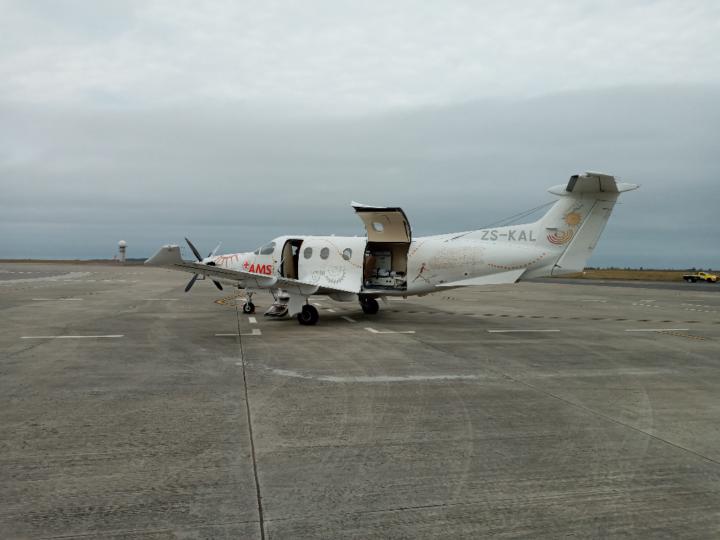
@Fredrik Hoff Nordum I haven't done ALS house calls since 2017. The last work I did with ALS was Inter hospital transfers via fixed wing and road ambulance between the airport and hospital. When working on the Aircraft the patients already had all their drugs sorted out and my ALS partner would deal with it.
Jan 8 •
Hello From Cape Town South Africa
Hi All, I am a 40-something Intermediate Life Support (ILS) medic based in Cape Town, South Africa. I began volunteering with the Government Ambulance Service in 2004 and qualified as a Basic Life Support (BLS) Medic in 2005. During this time, I continued volunteering on government ambulances while also working ad hoc for private ambulance services. I also volunteered in the Trauma Unit at Red Cross War Memorial Children’s Hospital, where I served for nine years. In 2012, I qualified as an Intermediate Life Support Medic. From 2012 until 2016, I continued volunteering with the Government Ambulance Service, working on both ILS and ALS ambulances. My experience also includes maritime medivac operations, event medical services, film shoots, and fixed-wing aeromedical operations. Beyond pre-hospital emergency care, I have been involved in Search and Rescue operations, serving as both an On-Scene Commander and Communications Officer. I am also a qualified Electrical Technician, Radio Technician, and Access Control Technician. On this platform I am hoping to meet other Medics from around the world and help share my experience and knowledge.
1-4 of 4
@ian-stanbridge-9110
Involved in EMS in Cape Town ZA since 2004, Qualified Basic Life Support Medic in 2005, Intermediate Life Support in 2012
Active 55d ago
Joined Jan 8, 2026
Cape Town, South Africa
Powered by