

Jun 9 •
I got to be on the LSEIQ podcast
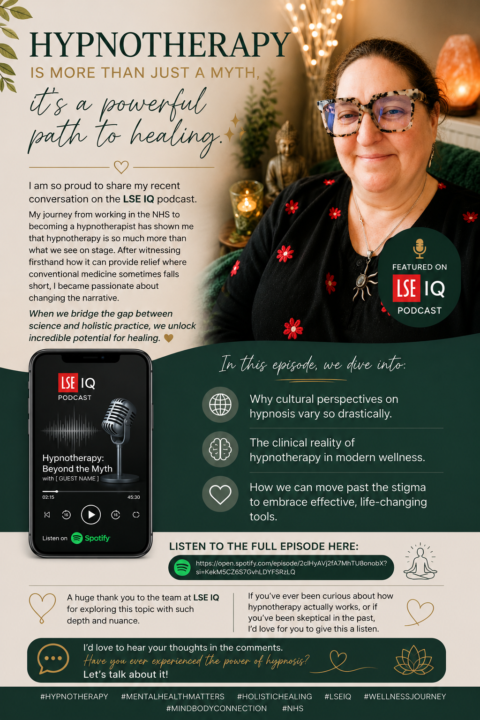
Hypnotherapy is more than just a myth, it’s a powerful path to healing. ✨ I am so proud to share my recent conversation on the LSE IQ podcast. For a long time, hypnotherapy has been shrouded in misconception, but my journey from working in the NHS to becoming a hypnotherapist, has shown me that it is so much more than what we see on stage. After witnessing firsthand how hypnotherapy can provide relief where conventional medicine sometimes falls short, I became passionate about changing the narrative. I truly believe that when we bridge the gap between science and holistic practice, we unlock incredible potential for healing. In this episode, we dive into: Why cultural perspectives on hypnosis vary so drastically. The clinical reality of hypnotherapy in modern wellness. How we can move past the stigma to embrace effective, life-changing tools. A huge thank you to the team at LSE IQ for exploring this topic with such depth and nuance. If you’ve ever been curious about how hypnotherapy actually works, or if you’ve been skeptical in the past, I’d love for you to give this a listen. 🎧 Listen to the full episode here: https://open.spotify.com/episode/2clHyAVj2fA7MhTU8onobX?si=KekM5CZ6S7GvhLDYFSRzLQ
0
0
Apr 6 •
The Benefits of Pregnancy Relaxation Classes
A gentle return to calm, connection, and trust. Pregnancy is often described as a beautiful time… and it truly can be. But it can also be a time of change, uncertainty, and heightened sensitivity, both physically and emotionally. The body is adapting. The mind is processing. And the nervous system is often working overtime. This is why pregnancy relaxation classes are not just a “nice extra”… They are, in many ways, a deeply supportive and necessary part of preparing for birth. In fact, this weekend I had the absolute joy of teaching pregnancy relaxation at the Foundation Meet & Master for JOYBirth, my Birthworkers Diploma. Spending the weekend immersed in practice, guiding students through trance, breath, and deep relaxation was a beautiful reminder of just how powerful this work truly is. There was such a sense of calm in the room. A collective exhale. A shared space of learning, connection, and softness. And it reinforced something I see time and time again when we teach relaxation properly, it changes everything. 1. Supporting the Nervous System At the heart of pregnancy relaxation is one key intention: to help the body feel safe. When we feel stressed or overwhelmed, the body moves into a fight or flight response. Muscles tighten, breathing becomes shallow, and the mind can begin to race. Relaxation classes gently guide the body in the opposite direction, into rest and restore mode. Through breathwork, guided relaxation, and hypnotic techniques, we begin to: Activate the vagus nerve Slow the heart rate Soften muscular tension Regulate emotional responses Over time, this doesn’t just create temporary calm, it trains the nervous system to return to balance more easily. And this is incredibly important for both mother and baby. 2. Reducing the Fear–Tension–Pain Cycle Many women come into pregnancy carrying stories or fears about birth. When fear is present, the body naturally tightens. When the body tightens, discomfort can increase. And this can reinforce the fear.
0
0

Feb 11 •
✨ Joyful Mind Mantra ✨
Slowing down is not failure. It is wisdom. Too many options create overwhelm. One clear step creates calm. I honour my body. I trust its signals. I move at the speed of regulation. I do not need to hold everything. Systems can hold structure. I hold presence. From the first click to the first conversation, I create safety. I create clarity. I create space to breathe. What feels like a pause is actually alignment. I am building from calm. I am leading from congruence. I am expanding through softness. And that… is the joyful mind way. 🌿✨
Jan 29 •
A New Discovery That Changed How I Think About Group Wellness
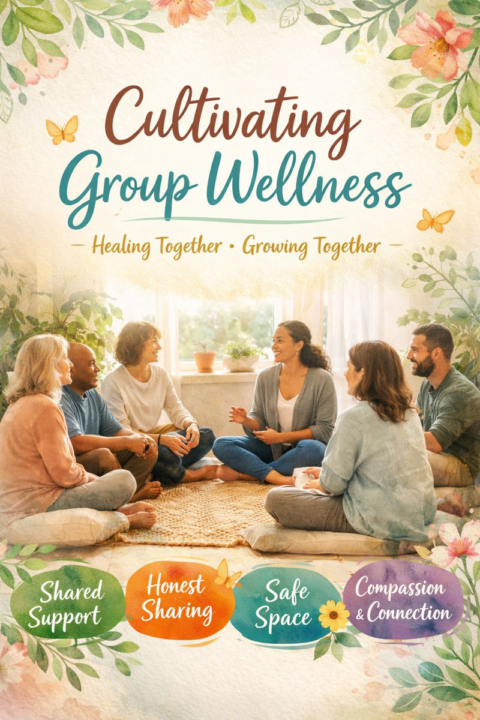
This week, I had one of those moments where you realise you’ve somehow missed something that everyone else seems to already know. You know the feeling, people are nodding along, using the language with ease, and you’re quietly thinking, How have I not come across this before? That was me this week when I properly encountered Yalom’s group factors. It felt surprisingly new to me, not because the ideas were unfamiliar, but because I’d never seen them named, structured, and explained in this way. Once I started paying attention, I couldn’t unsee them. They suddenly showed up everywhere: in learning spaces, support groups, friendships, and communities like ours. And the more I reflected on them, the more I realised how powerful they are, especially when it comes to emotional wellness and group wellbeing. 💛 Why This Matters for Emotional Wellness One of the most important ideas in Yalom’s work is Universality, the realisation that we are not alone in our struggles, our quirks, or even our insecurities. So often, emotional distress grows in silence. We assume our feelings are unique, excessive, or somehow “too much.” When we discover that others feel the same way, whether it’s anxiety, self-doubt, overwhelm, or even feeling too loud or too quiet, something softens inside us. That softening is emotional wellness in action. Shame reduces. Anxiety eases. Self-judgement loosens its grip.We move from “What’s wrong with me?” to “Oh… this is human.” And that shift alone can be deeply healing. From Individual Wellness to Collective Wellness What really struck me, though, is how these ideas extend beyond the individual. We talk a lot about personal wellbeing, and rightly so, but group wellness is something different. It’s about how safe, supported, and regulated a group feels as a whole. It’s about how people show up together. Yalom’s factors give us a beautiful framework for this. - Altruism reminds us that helping and being helped both matter - Group cohesiveness creates emotional safety and belonging - Instillation of hope shows us that growth is possible, even when things feel messy - Interpersonal learning helps us understand how we affect others, and how they affect us
0
0
1-6 of 6
powered by
skool.com/joyful-mind-community-4081
The Spiritual, Practical community for Manifestation and Meditation Mastery. Build confidence & purpose. Teacher Training available. Join FREE!
Suggested communities
Powered by