
Write something

🔥
19d •
WHAT STORY IS YOUR KITCHEN TELLING? 📖🍲
Following on from our incredible community breakthrough this week, let’s take the next step together. If you were to gather your recipes, your memories, and your unique culinary voice into a physical book, what would the central heartbeat of that cookbook be? Click your option, and then drop a comment telling us a little more about your vision. Let’s start giving your dream book a real shape. Cast your vote below! 👇 📊 POLL: If you started mapping out your pages today, which theme calls your name?
Poll
Cast your vote
0
0


22d •
Mushroom & Brie Omelet
This delicious recipe is found in my "5 Ingredients or Less Recipe Pack"! Serves 4, 30 minutes for preparation 1 glove minced garlic 7 oz. (200 g) mushrooms sliced Heat a large non-stick pan over high heat with a splash of olive oil. Add mushrooms and garlic & cook, stirring for 5-7 minutes. Transfer to a bowl 8 eggs 7 oz (200g) brie cheese, sliced Heat a little olive oil over medium-high heat in a small non-stick pan. Whisk eggs with 1/4 cup (60 ml) cold water. Season with salt and pepper. 4 oz (120 g) rocket arugula Pour a quarter of the egg mixture into the pan. Cook until starting to set, then add in mushrooms and brie. Cook until the cheese melts. Repeat with the remaining ingredients for three more omelets. Enjoy!
🔥
24d •
A DELICIOUS CELEBRATION OF MY GRANDSON'S BIRTHDAY
Downstairs, the kitchen is already rewriting the day. It is my youngest grandson’s birthday, but the true architecture of the afternoon belongs to his father — a man who approaches the stove not out of necessity, but with the quiet, intense devotion of a highly gifted cook. Today, he is creating a Bouillabaisse. A proper Bouillabaisse does not tolerate impatience. It requires a specific kind of culinary gravity. On the counter, the fish wait — their scales catching the afternoon light like wet slate. Fennel bulbs are sliced into pale, clean ribbons, throwing a sharp, medicinal sweetness into the air before they ever hit the heat. Then comes the alchemy of the broth. - Leeks softening into olive oil without taking colour. - Tomatoes collapsing slowly into a rich, saffron-stained rust. - Garlic crushed just enough to release its oil, but not enough to dominate the room. The saffron is the crucial note. A tiny pinch of dried threads that turns the liquid into a deep, liquid amber. It smells faintly of the sea, of dry grass, and of ancient, sun-baked coastlines. It is an expensive, deliberate sort of warmth. Beside the stove, a pot of copper-coloured stock rises toward a simmer, carrying the intense, concentrated essence of crab shells and fish bones. When it meets the saffron base, the kitchen suddenly perfumes itself with the unmistakable language of the Mediterranean—heavy, complex, and deeply serious. Outside, the birthday balloons sway in the hall, markers of another year flying past. Inside, the fish are slipped into the bubbling broth in strict, silent order. First the firm, stubborn pieces that need time to hold their shape; then the delicate, fragile whites that yield almost instantly to the heat. There is a brief, focused window where everything must align. One minute too long, and the fish punishes you by dissolving into anonymity. Bouillabaisse demands a watchful eye. The bowls arrive at the table steaming, stained a rich, deep orange. Slices of crusty bread sit nearby, ready to be smeared with a fiery, golden rouille that cuts through the richness like a sharp blade.

🔥
May 29 •
ABOUT ONE OF MY FAVOURITE DISHES
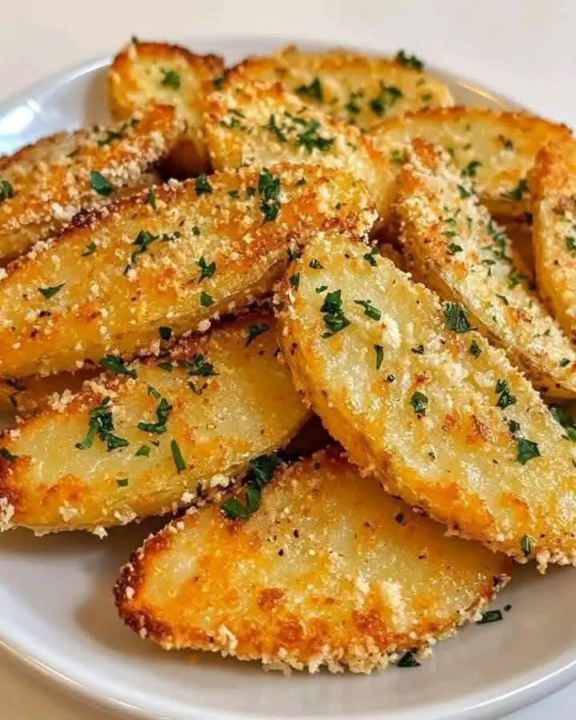
Born from the high Andes, the potato conquered Europe to become the ultimate comfort fuel. Golden, crisp jackets give way to a steaming, fluffy interior — a cloud of pure comfort. Salted, buttered, or roasted in rich fats, it carries the weight of empires, revolutions, and humble, fireside family suppers across centuries. BAKED GARLIC PARMESAN POTATO WEDGES Ingredients: 4 large russet potatoes, washed and cut into wedges 1/4 cup olive oil 3 cloves garlic, minced 1/2 cup grated Parmesan cheese 1 tsp paprika 1 tsp dried oregano 1/2 tsp garlic powder 1/2 tsp onion powder Salt and black pepper, to taste Fresh parsley, chopped, for garnish Instructions: 1. Preheat the oven: Preheat your oven to 400°F (200°C). Line a large baking sheet with parchment paper or lightly grease it. 2. Cut the potatoes into wedges (about 8 wedges per potato) and soak them in cold water for 20-30 minutes. This helps remove excess starch for extra crispiness. Drain and pat the wedges dry with a clean kitchen towel. 3. In a large bowl, mix olive oil, minced garlic, Parmesan cheese, paprika, oregano, garlic powder, onion powder, salt, and pepper. Add the potato wedges and toss until evenly coated. 4. Place the seasoned potato wedges on the prepared baking sheet in a single layer, skin-side down. 5. Bake for 35-40 minutes, flipping halfway through, until the wedges are golden brown and crispy. Sprinkle the baked potato wedges with additional Parmesan cheese and chopped parsley. Serve hot with your favorite dipping sauce (like ranch or garlic aioli). These Baked Garlic Parmesan Potato Wedges are crispy on the outside, gloriously fluffy on the inside, and bursting with garlicky, cheesy flavour. ***** Sooo here's my question: which is your favourite way of preparing potatoes? If a salad, tell us your secret!
🔥
May 30 •
I NEED YOUR ADVICE, PLEASE
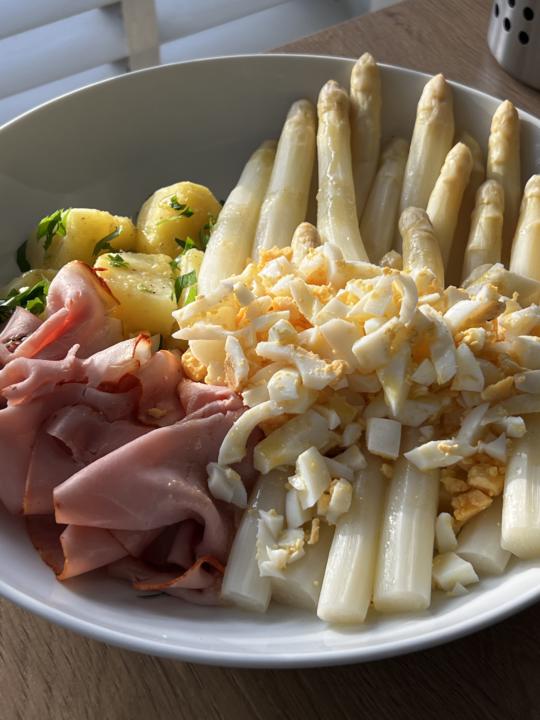
Recipes are about creating a legacy, don't you think? In my 'Write Recipes that Work' my guidance is not only how to write a recipe that works, but also how to write one that sounds delicious: inviting and one that needs to be used down the generations. Or even featured in your cookbook or memoir? How much do you think I should charge for that module? At the moment it's a one-off price of $35. Then it's yours forever. Here's a recipe written by dear friend and chef Arnold Tanzer. It's a spot-on example of how to write a recipe. 𝘚𝘱𝘳𝘪𝘯𝘨, 𝘱𝘦𝘦𝘭𝘦𝘥 𝘤𝘢𝘳𝘦𝘧𝘶𝘭𝘭𝘺 White asparagus arrives in the Netherlands with the strange dignity of visiting royalty and the emotional fragility of a peony. For six brief weeks the country loses its mind politely. Roadside farm stalls reopen. Restaurants suddenly place vegetables in the centre of the plate as if they have discovered morality. Entire villages perfume themselves with melted butter. Then, almost immediately, it is over. That is the nature of white asparagus. It emerges from sandy ground pale and tightly held, protected from sunlight entirely. Handling it requires patience more than skill. The peeler moves downward in long careful strokes. Fibres collect on the board like pencil shavings. One missed strip and the stalk punishes you at the table later. White asparagus remembers negligence. The cooking water matters. Salt first. Then a teaspoon of sugar and a small splash of vinegar. A knob of butter. Not enough to taste individually — only enough to steady the whole thing. The sugar rounds the bitterness at the edges. The vinegar sharpens the sweetness. Dutch cooking rarely announces its intelligence; it prefers understatement. Nearby, potatoes simmer toward collapse. Butter melts slowly in another pan until the water disappears and the milk solids begin drifting toward hazelnut territory. 𝘞𝘦𝘨𝘣𝘳𝘢𝘯𝘥𝘣𝘰𝘵𝘦𝘳. Butter pushed just beyond. The asparagus arrives steaming, carrying the faint mineral smell of wet sand and warm fields. Potatoes beside it, splitting open at the edges. Ruffled shaved Ham softening from the residual heat. Egg scattered over everything, in yellow and white fragments that resemble spring light through curtains.
1-5 of 5
powered by
skool.com/how-to-write-about-food-8335
Write. Publish. Profit.
Hungry to write and create an income? You've just found the number one place to create your evocative food writing to earn.
Suggested communities
Powered by