
Pinned

🍀
4h •
The 3 day Raise your Vibrational Set Point Challenge starts Aug 26th! POST YOUR INTENTION HERE
it's official! we are running a free 3 day challenge! What makes this one different is that the focus is on raising what is called your vibrational set point We use something called the "snap back effect" and why you snap back into old patterns, identity, etc. if you have not done so yet do it here! it is needed to get all the information including the zoom links! https://themagneticchallenge.com/ I’m excited you’ve decided to join me for this transformational 3 day challenge where we are going to be letting go of old patterns, shifting your vibration and wiring in a new magnetic version of YOU! to attend the challenge be sure to read this post in full and follow the 4 easy steps: Step 1: Mark your calendar by going to the calendar section and adding events to your calendar! The challenge kicks off on Wednesday August 26th at 10am PT/ 1pm ET We’ll meet LIVE on Zoom each day for powerful, identity shifting training sessions that will last for about 2 hours the zoom link for all 3 sessions will be emailed to you! You can see what time the challenge starts in your local time zone by using the calendar tab inside this community. Step 2: Text me for updates and easy access to the zoom link Want reminders, special announcements, and updates before we go live? Text "Shift2026" to +1 (424) 304-0104 to get reminders before we go live and special updates throughout the 3 days! Step 3: Introduce yourself to the High Vibe Tribe as a comment response to this post We’re in this together as a high vibe community! I would love to know a little bit about everyone who’s participating, so go ahead and make a post introducing yourself In your post you can share: - Your name - Where you’re located - And what is your intention of this challenge Step 4: Start the shift into the new version of you Prepare for the 3 day challenge by starting with the meditation below: https://youtu.be/KKrPqB59kg0?si=lAzOK2HOe9k9c9Qc

Pinned
🍀
5d •
Healing the Father Wound through structure (and connection)
If you have a pattern of being the "strong one" or of being hyper independent... if you have a masculine shield up or find yourself always feeling in fight or flight... if you rebel against structure or plans because it feels "limiting" or like control... OR if you overly rely on it and are rigid with plans changing at all... This video may spark a breakthrough for you I am currently going through a big shift in consciousness around a pattern in my life It's completely changing the way I relate to myself, my business, and people This video shows you more about how you can heal your relationship by creating safety through structure What are your thoughts around this, and what is your relationship to structure? And also, in case you didn't hear... The intimate cohort starts on August 18th, and now is time for enrollment! 6 weeks to go deeper to become the most magnetic you in love and LIFE Remove love blocks, stop abandoning yourself, and wire in a magnetic you in 6 weeks without falling back into old patterns it starts on August 18th and when you enroll you get a bonus FREE in-person or virtual ticket to The Shift Experience, a 3 day live event in Sedona! (I'll be doing three live events in the next 12 months, and you can pick which one. Dates will be available soon) https://www.skool.com/the-shift-mentorship/about you will also get this if you join by tonight! - Bonus #1: 90 days of Aaron AI ($500) - Bonus #2: The SHIFT Love Method ($700) - Bonus #3: 2 VIP integration calls ($300) The only reason this is only 997 is because you went through the challenge, and I'm looking for people that can go through it first so that I can have testimonials and get it at over half off and with a live event which is bananas So if that's you, now is the time to Shift!
Pinned
🍀
Jan '24 •
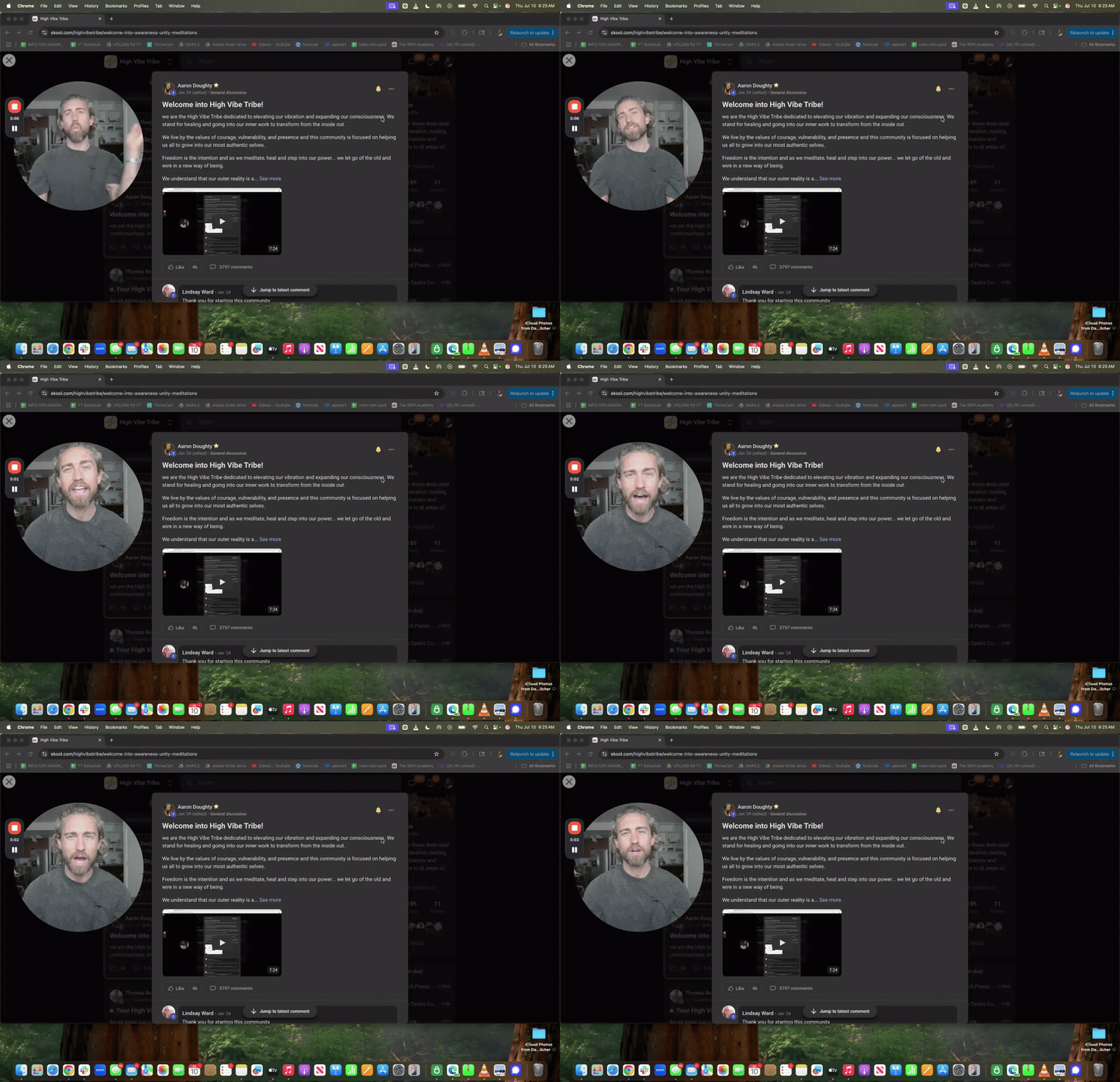
Welcome into High Vibe Tribe!
we are the High Vibe Tribe dedicated to elevating our vibration and expanding our consciousness. We stand for healing and going into our inner work to transform from the inside out. We live by the values of courage, vulnerability, and presence and this community is focused on helping us all to grow into our most authentic selves. Freedom is the intention and as we meditate, heal and step into our power... we let go of the old and wire in a new way of being. We understand that our outer reality is a refection of our inner reality and rather than blame the outside or try to fix it, we look at ourselves and let go of parts of ourselves attached to the beliefs, patterns and past "familiar" energies keeping us locked in the past. When you go through a spiritual awakening many feel like the lone wolves in their family. This community is a way to connect with other people like you… dedicated to healing the past, spiritual growth, and creating their dream life. This is not about surface level change or thinking better thoughts… it’s about doing the inner work, looking at subconscious parts most people avoid (the shadow) and creating inside out transformation. There are some Rules for this community to keep it a safe space… 1. Absolutely no selling or promoting other groups/events. This includes directing messaging other members. Members who break this rule will be banned from the group. 2. Posts should either add value and be well thought out. Lets create a high vibe, supportive community section 3. No posting “who else lives in New York?” Etc these will be deleted as if everyone posted them the group will be flooded with it. if you want to learn how to see who lives in your city I share in the video below 4. Be supportive and accepting of other people. Like posts, support other people and encourage them.

36m •
Vedic Wisdom: what is BHAGAVAD-GITA?
Bhagavad-gītā is the oldest and most widely read book of theistic science in the world today. Also known as the Gītopaniṣad, the Bhagavad-gītā has been the principle handbook of yoga for more than 5,000 years. In contrast to many mundane literatures of the present day, the Bhagavad-gītā is free from mental speculation and is complete in knowledge of the eternal self (ātmā), the process of bhakti-yoga and the nature and identity of the Absolute Truth, Śrī Kṛṣṇa. As such, the Bhagavad-gītā is the single most important book in the world, surpassing all others in wisdom and enlightenment. The first word of Bhagavad-gītā is dharma. Sometimes dharma is mistaken to mean religion or a particular belief, but it is not so. Dharma means the quintessential duty or knowledge that elevates our consciousness to a direct connection with the Absolute Truth. This is also known as sanātana-dharma, the occupational duty of all living beings. The Bhagavad-gītā begins with the word dharma – thus we can understand from the outset that Bhagavad-gītā is not about dogma or a sectarian way of thinking. Indeed, Bhagavad-gītā is the complete science of realising the Absolute Truth. Bhagavad-gītā is certainly a scholarly work, but one need not be a scholar to understand the Gītā’s straightforward and simple message. Indeed, Arjuna, the first student of Bhagavad-gītā, was not a scholar, but a warrior. In the past many great scholars, gurus and self-realised masters have written illuminating commentaries to accompany the Gītā – its ‘as it is’ meaning, its poetry, philosophy and its hidden treasure – so that the people of their time, as well as the people of future generations, may have a better appreciation of the message of Śrī Kṛṣṇa. Since time immemorial, the Bhagavad-gītā has been a prime source of inspiration for many great thinkers and philosophers in both the east and the west. In ancient times, the first commentary on the Gītā was written by Ādi Śaṅkara, who was the first ācārya to treat it as a freestanding text. Subsequently, other great ācāryas such as Rāmānuja, Madhva, Śrīdhara Svāmī and others wrote commentaries on the Gītā that presented its essential devotional significance, in stark contrast to Ādi Śaṅkara’s impersonal interpretation.
Originally, the Bhagavad-gītā is part of the ancient historical epic, the Mahābhārata, composed by the great sage Vyāsa in approximately 3100 BCE. The eighteen chapters of the Bhagavad-gītā are found within the Sixth Canto of the Mahābhārata known as the Bhīṣma-parva, which altogether contains 117 chapters. Initially Vyāsa wrote the 8,800 core verses of the Mahābhārata and later his disciples Vaiśampāyana and Sūta added further historical details until the Mahābhārata finally consisted of 100,000 verses – seven times the size of Homer’s Illiad and fifteen times the size of the King James Bible.
1
0


20h •
Schedules/routines/rhythms
Does anyone else have trouble sticking to a plan or structure with your day? Are some personalities just not wired to be able to do that and is it a bad thing? Just interested in everyone’s feedback.

1-30 of 37,716

skool.com/highvibetribe
a community for those dedicated to raising their vibration, healing, letting go of limitations and creating freedom in all areas of life
Leaderboard (30-day)
1

🔥
+2165
2

🔥
+818
3

🔥
+776
4

+511
5

+426
Powered by