
Write something

May 7 •
Anyone experiencing CGM withdrawal?
How are you managing without your visible monitor? Interested to hear!
May 5 •
Wrap Up 🔥
Hi Everyone, It was such a pleasure walking you through the power of using a CGM. You just spent the last 2 weeks seeing your body in real time using your Freestyle Libre And that’s something most people never experience. What you’ve likely noticed: → Your glucose doesn’t just respond to food→ It responds to stress, sleep, timing, movement, and even your thoughts → The same meal can give you different results on different days → Small shifts (like walking after a meal or eating protein first) can make a big difference → “Eating less” or skipping meals doesn’t always help… and often backfires! The biggest takeaway from this reset: This isn’t about perfection. It’s about awareness, experimentation and personalization Because there is no one “perfect diet”. There is only what works best for your body. What I hope you’re walking away with: ✔ A better understanding of your hunger, energy, and cravings ✔ Awareness of what spikes you (and what doesn’t) ✔ Tools to flatten your curves in real life ✔ Confidence to experiment instead of guess And also this… (the honest part) For many of you, your numbers probably looked “pretty good” overall. But here’s what I want you to know: ... “Good” is not the same as optimal And the real magic is in the subtle patterns: - Slight elevations after meals - Gradual rises through the day - Differences between similar foods - The impact of stress and under-fuelling That’s where we move from tracking to optimizing So what’s next? If you want to take this further, the next step is making this data personal. Because two people can have similar graphs…and need completely different strategies. This is where a 1:1 review comes in We take your data and connect it to: - your meals - your lifestyle - your goals (energy, weight, hormones, performance) And build something that actually fits your life. If you’re ready for that next step, I encourage you to schedule a 30 min glucose review where we can dig even deeper and personalize.


May 1 •
MacDonald’s…
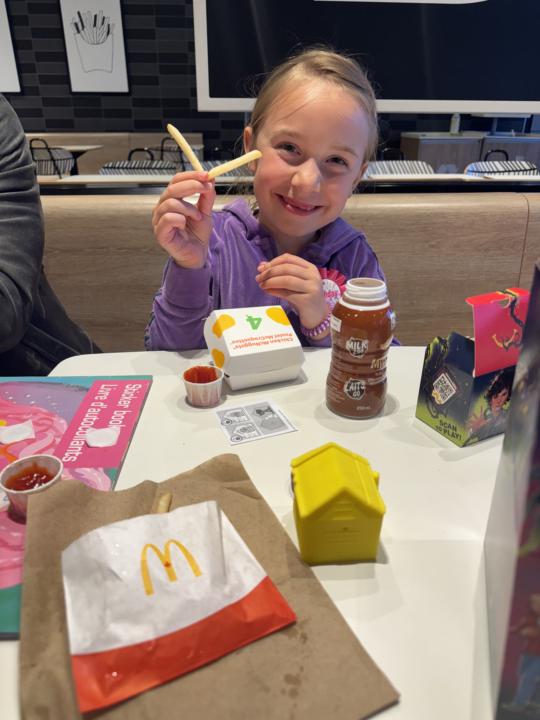
Well this was a bit surprising! But it speaks to glucose/insulin optimization. Our goal. The birthday girl requested McD’s…. She loves the chicken nuggets and how you can “suck the juice out of them” 😬. I had a McChicken and “some of her fries”. The line stayed steady…. I waited…. Still steady. It wasn’t until today that I realized I had eaten some homemade chicken an hour before the birthday meal. That probably helped. (I don’t think I will go back to experiment without the pre load… until next year!). The mag is clear: PRE LOAD your social meals and celebrations 😜
3
0
1-30 of 446
powered by

skool.com/higher-health-5776
Feel like your body’s not responding? This group will show you how to use any CGM to lose weight, balance energy, and feel your best.
Suggested communities
Powered by