
Write something

May 30 •
Welcome 🤗 me back
After experiencing unforeseen circumstances, I’ve fully recovered and am back for collaboration and more. 🤗🤝
0
0

Apr 7 •
My Favorite “Due Diligence” Prompt For Sourcing Industrial Inventory (With AI Doing The Heavy Lifting
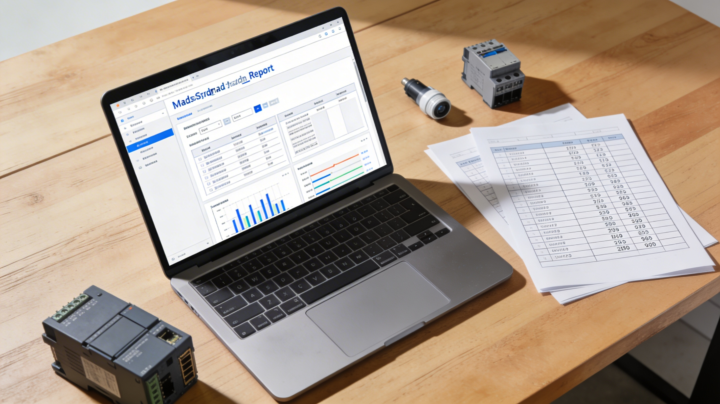
I wanted to share a prompt I use when I’m evaluating industrial automation / electrical lots (auctions, liquidations, surplus deals) for eBay reselling. This has saved me hours of manual research and helped me avoid bad buys while spotting hidden winners. Here’s the exact workflow the AI follows: - I upload the seller’s inventory sheet (PDF, Excel or CSV) - It reads the file and extracts: item name, manufacturer/brand, model/part number, quantity - It groups everything into logical categories: PLC modules, contactors, soft starters, sensors, grippers, power supplies, heating elements, safety relays, etc. - For each item (or per model if there are many of the same): Then it generates a structured markdown report that includes: - A table for each category with: quantity, model/part number, brand, approx. retail price, expected eBay price per unit, short notes - Estimated eBay revenue per category - Estimated total eBay revenue for the entire lot - A short priority list of “high‑value” items I should list first - Recommendations on what to sell individually vs what makes more sense to bundle in lots - It assumes everything is new/unused unless the sheet clearly marks it as used, and automatically uses lower multipliers for used items (and labels that clearly) - Finally, it writes a short conclusion + recommendations in Danish, in a direct, business‑like tone, aimed at a professional eBay seller (that’s for me, but you can change language/tone for your own use case) How I actually use this: - When I get a big industrial lot list from a broker or auction house, I drop the file into the prompt. - Within minutes I have a data‑driven view of: realistic resale value, which parts are worth the most, and whether the deal makes sense at the asking price. - It also doubles as a listing roadmap: I start with the high‑value SKUs, then move on to the long tail and bundle‑friendly items. If you’re running any kind of reselling / flipping operation where you’re offered bulk inventory lists (especially technical/industrial stock), feel free to swipe this prompt, adapt the categories to your niche, and let the AI do the boring part of the due diligence for you.
Mar 18 •
How I Set Up AI Agents to Browse Sourcing Sites Daily — and Report Back to Me
I Let an AI Agent Browse Auction Sites While I Slept — Here's What It Found One thing I hear a lot: "How do you keep up with all the auction sites without spending hours every day?" Here's exactly what I've been running this week. I set up an AI agent that browses Troostwijk, Surplex, Klaravik, and NetBid every morning, filters for my core brands and product types, scores each lot, and sends me a ranked report before I've had my first coffee. This is what yesterday's report looked like: The top find: a 430-lot industrial electrical auction in Zonhoven, Belgium (Troostwijk A1-43714). One company's entire inventory going under the hammer — 60 Siemens lots, 62 ABB lots, 14 Schneider lots, plus sensors, contactors, relays, and cables. Lots starting from €50. The agent flagged this as 10/10 and it closes Friday. I would have missed this entirely if I was browsing manually. Other standouts from the same report: - 50x Siemens SIMATIC ET200 I/O modules (Surplex, Netherlands) — starting price €10. Zero bids at time of scan. These sell for €15–40 each on eBay. - 2 lots of 5x Danfoss VLT FC-302 frequency converters (Surplex, Netherlands) — €100 start per lot, no bids. FC-302s go for €150–400+ each depending on spec. - Siemens S7 CPU + I/O modules lot (Surplex, Germany) — €100 start, complete set including power supply. CPU alone sells for €200–500+ on eBay. - Batch of Siemens + Allen-Bradley PLC modules (Troostwijk, Belgium) — already 12 bids at €210. Demand confirmed. The agent also found a Danish pallet box of electrical components on Klaravik in Vejen — 0 DKK start, no reserve, Danish pickup. Low risk, low cost. 10 ranked lots. Total browsing time for me: 4 minutes. The scoring logic is built around my actual inventory — Siemens, Omron, SICK, ABB, Danfoss, Allen-Bradley, Festo — and prioritizes bulk lots over single items. Every lot in the report includes current bid, closing time, location, and a direct link. This isn't theory. That Troostwijk Belgium auction is real, it closes in two days, and I'd never have found it without the agent running overnight.
1
0

Mar 11 •
🚨 Common Mistakes New eBay Dropshipping Sellers Must Avoid
Many beginners start eBay dropshipping with excitement but make some common mistakes that slow their growth. 1️⃣ Sourcing from the wrong platform – Slow shipping, poor quality, or unreliable suppliers can lead to cancellations and unhappy customers. 2️⃣ Not understanding eBay policies – Many new sellers ignore eBay rules, which can cause account warnings or suspension. 3️⃣ Scaling too fast on a new account – New accounts should grow slowly. Sudden high sales can trigger account reviews. 4️⃣ Poor product research – Listing random products without checking demand, competition, and profit margins. 5️⃣ Ignoring customer service – Slow replies and poor handling of returns can hurt your seller metrics. 💡 Avoid these mistakes early to build a stable and profitable eBay store. If anyone needs help, feel free to ask me. I’d be happy to help.
Mar 12 •
How I Use AI to Write Facebook Marketplace Ads
One thing members keep asking me is: "Klaus, how do you actually use AI in your day-to-day business?" Here's a real example from this week. I had 3 boxes of mixed electrical equipment — industrial plugs, fuses, cable fittings, lighting — stuff I picked up from a lot. Before AI, writing ads for Facebook Marketplace for each of those would take me 10-15 minutes per item. Looking up the right product names, writing Danish copy, figuring out a fair price range. It adds up fast when you're running 80,000+ listings on ebay too. Here's what my workflow looks like now: 1. I photograph each lot and drop the images into a dedicated OneDrive folder. One subfolder per item. 2. I open Perplexity Computer and say: "Go to my OneDrive folder, find the DBA and Facebook subfolder, and write a title, ad copy, and price suggestion for each lot — end every ad with my standard pickup address and PostNord shipping line." I leave the Perplexity Computer to do the task, and I do other stuff while it works. 3. The AI looks at the images, identifies the products (brand names, specs, quantities), writes the Danish ad copy, and suggests realistic price ranges based on what's in the photos. 4. I review, copy-paste, done. What came out this week: - A mixed electrical lot (OSRAM, Philips, OBO, Thorsman) → fully written ad in Danish, price suggestion 200–300 kr. - ~20 red CEE industrial plugs (400V, 3-phase) → identified correctly from photos, priced 250–400 kr. - Diazed 63A fuses + WAGO connectors → spotted the brand names on the packaging and wrote a technically accurate ad. The AI doesn't just write generic fluff. It reads the images closely enough to name the specific products, mention quantities, and flag that items are used vs. new-old-stock. That's the part that used to eat my time. /Klaus KLJ Trading
1-30 of 72
powered by
skool.com/ebay-ai-mastery-academy-3480
Scale your eBay business with AI automation. Join Klaus from KLJ Trading to discover smarter, faster ways to boost your sales and profits.
Suggested communities
Powered by