
Write something
Pinned

Apr 13 •
Welcome
Welcome to the community. Myself and other collaborators will guide you through a journey towards optimal health with our 42 day Health Optimisation And Reset Program (HOARP). Using simple but powerful foods and strategic timing we will help you to reset your entire gut system, mineral and electrolyte rebalance, inspire you to return to some free lifestyle behaviours and essentially reboot your entire microbiome system. It may not always be an easy ride but it will be without doubt worth while. I am here to be of service to you.
May 13 •
Re seed phase this weekend. Or in to next week
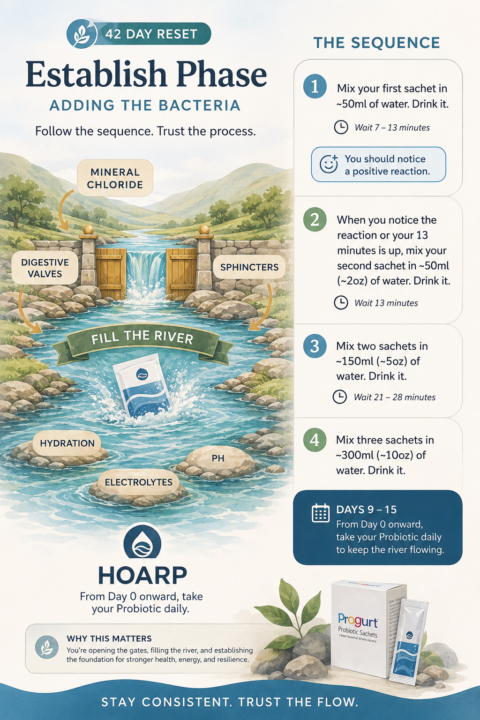
Establish Phase – Probiotic Sequence 🦠🌊 As we move into the “Seed the River” phase of the HOARP 42 Day Reset, we begin introducing the probiotic bacteria using a very specific sequence. This gradual process may help the body adapt progressively while supporting the terrain we have already been building with minerals, hydration and pH support. Best Time to Start It is best to begin the probiotic sequence early in the day on a relatively empty stomach where possible. Choose a time when you can sit quietly and tune into your body for a few moments. Many participants report noticing subtle positive sensations such as:✨ warmth✨ calmness✨ increased clarity✨ digestive movement✨ energy shifts✨ changes in thirst or circulation Everyone responds differently. The Sequence Step 1 Open your first sachet and mix in approximately 50mL water. Drink it. Wait approximately 7–13 minutes. Sit quietly and simply observe how you feel. Step 2 When you notice a positive response — or after approximately 13 minutes — open the second sachet and mix in approximately 50mL water. Drink it. Wait another 13 minutes. Step 3 Mix two sachets into approximately 150mL water. Drink. Wait approximately 21–28 minutes. Step 4 Mix three sachets into approximately 300mL water. Drink. This completes the establishment sequence. During the Rest of the Day Continue your day as usual while maintaining:✔ your pH salt sachets✔ your Mineral Chloride✔ mineral-rich fluids and foods✔ movement and sunlight exposure The goal is to continue supporting the “river” while introducing beneficial organisms into the terrain. Ongoing Maintenance From this point onward, continue with: 🦠 1 probiotic sachet📅 3 times per week until the end of the program For example:• Tuesday• Thursday• Sunday Consistency matters more than perfection. 🌊 Open the gates🌊 Fill the river🦠 Seed the river⚡ Support the flow
May 8 •
Heading into week 2.
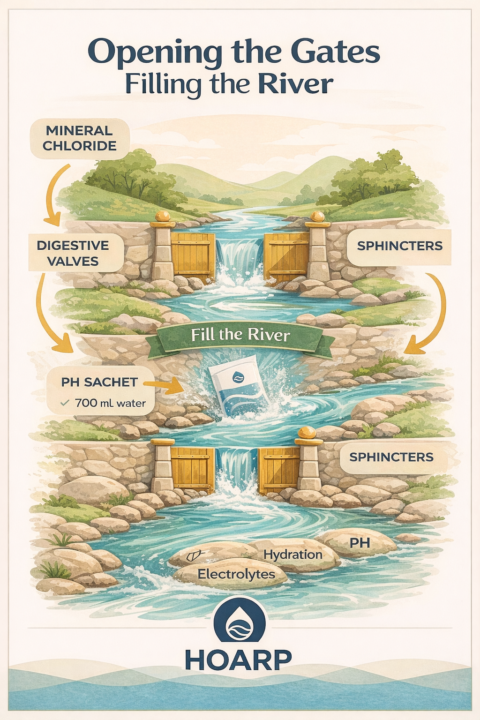
🌿 HOARP RESET — WEEK 2 BEGINS 🌿 We head in to Week 2 either this weekend or Monday. We begin introducing the pH Sachets as part of the “terrain preparation” phase before we introduce the bacteria later. Most likely the weekend of 16/17 May. Keep up with your dose of mineral chloride. Think of this week as:🌊 supporting the river⚡ restoring mineral signaling🩸 improving fluid dynamics🚽 supporting bowel motility☀️ aligning circadian rhythm😮💨 calming the nervous system Our starting dose is:➡️ 1 pH sachet in 700 mL waterSipped gradually across the day. Remember:More is NOT always better. Some people may feel amazing quickly.Others may notice bloating, thirst changes, fatigue shifts or bowel changes as the terrain begins adapting. That is feedback.Not failure. This process is about supporting physiology gently and consistently. Over the next few weeks we’ll also begin thinking differently about food:Not just calories…Not just macros… But mineral density.Hydration.Circulation.Moisture.Terrain. This is where HOARP becomes more than a “gut protocol.” We are supporting the environment the body and microbiome live within. Ready the terrain. Support the river.Then introduce the seeds For a few of you if you find the solution too salty have 1x sachet in 1L water
28d •
New members
Good morning We have some new members and as I don’t have an official start date for that next 42 day reset I’ll simply direct you to the order of things Check out the classroom tab on the first page. Top left I think Read week 1. Week 1 is the PH salt sachets only. Week 2 add in mineral chloride as well as the salts. End of week 2 and starting into week 3 you add the probiotic bacteria. 1 sachet 3x/week.
0
0

Jun 23 •
Ethereal Cacao
A bit late to the party on posting this, but for those getting into cacao, I have a friend on the Coast who makes it along with a sweet and spicy mix to add in. It tastes amazing and has completely converted me off coffee! The mix contains cinnamon, turmeric, cayenne pepper and coconut sugar. I have 3 teaspoons of cacao (roughly 23g) in the morning (only 2 if having it at night) with 2 teaspoons of the mix, then blend it with a milk frother. Such a delicious way to start the day and a much gentler energy boost than coffee for me. 😊🍫☕️ Here is the link to her products Great to support local too! https://etherealcacao.com/
1-30 of 45
powered by

skool.com/dr-lisa-osteo-hoarp-6250
Learn from Dr Lisa (Osteo) Vaughan about optimising health through Osteopathy, Circadian biology, gut health, movement the breath and mindfulness
Suggested communities
Powered by