
Write something
May 29 •
Small Wins Club: Celebrating Consistency
When we think about progress, we often look at what our dogs are doing. But today, let’s celebrate something just as important: 👉 Your consistency. Maybe this week you: - Reinforced calm greetings instead of rushing past them - Practiced a few minutes every day - Remembered to reward check-ins on walks - Stuck to your management plan - Chose patience when progress felt slow - Showed up even when you were tired Those things matter. In fact, many of the breakthroughs we see in our dogs are built on weeks or months of small, consistent actions that don’t feel exciting in the moment. Dogs learn through repetition. Trust is built through repetition. Habits are built through repetition. The reality is that consistency often creates results long before we can see them. 💡 A reminder: You don’t have to be perfect to be consistent. You just have to keep showing up more often than not. 💬 What is one thing you’ve been consistently doing with your dog lately that you’re proud of? Let’s celebrate the habits that are building success behind the scenes 💚🐾
0
0
May 5 •
Reflection: What Feels Easier Than Last Month?
Take a moment and think back to last month… Not just what you were working on — but how things felt. Is there anything that feels even a little easier now? Maybe: - Walks feel less overwhelming - Your dog settles a bit faster - You’re noticing triggers sooner - A routine flows more smoothly - You feel more confident handling situations - Your dog is making slightly better choices It doesn’t have to be big or dramatic. Sometimes progress looks like: 👉 Less tension 👉 Faster recovery 👉 More understanding 👉 A smoother moment that used to feel hard 🧠 Why this matters When we only focus on what still needs work, we miss: - How far we’ve come - What’s already improving - What’s actually working Noticing what’s easier helps you What feels easier with your dog now compared to last month? Even small shifts are worth celebrating 💚🐾
0
0
Apr 17 •
Small Wins Club: Growing Handler Awareness
Not all progress happens in your dog. Some of the most important growth happens in you. 🧠 What improved awareness can look like A small win this week might be: - Noticing your dog getting overwhelmed sooner - Catching a moment before a reaction - Adjusting the environment instead of pushing through - Recognizing when to train vs. when to pause - Reading body language more clearly - Timing your reinforcement just a little better These are huge shifts. 🌿 Why this matters When your awareness improves:✔ You prevent problems before they happen✔ You support your dog more effectively✔ Training becomes clearer and more consistent✔ Your dog feels safer and more understood Your dog’s progress is directly connected to what you notice. 💡 A helpful reminder You don’t have to be perfect. You just have to be:👉 a little more aware than yesterday That’s how real progress builds. 💬 What’s one thing you noticed this week that you might have missed before? Those moments of awareness change everything 💚🐾
0
0
Apr 10 •
Big Win: First Public Outing & Real-Life Impulse Control
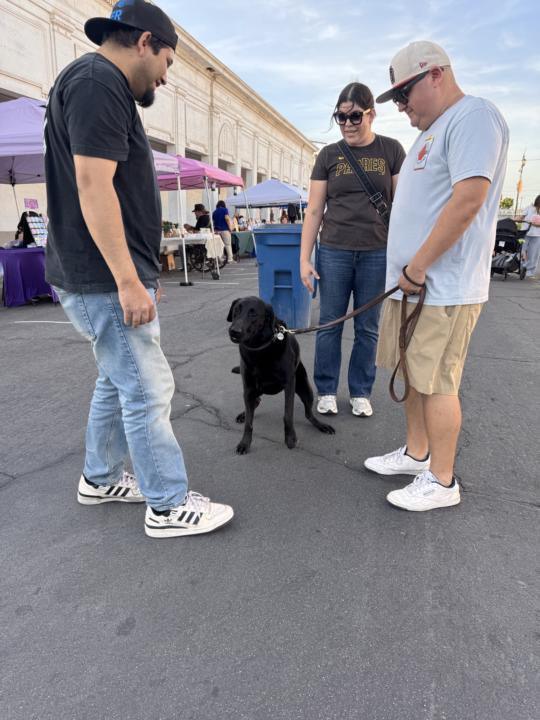
These photos are from Gwynn’s very first community event with his parents — and this was a BIG step. This wasn’t just a training session. This was: - People walking around - Loud music - New sights, sounds, and smells - A completely new environment And Gwynn had never been out in public like this before. In the first moment, you can see him taking everything in — alert, aware, processing a lot of new information. That’s normal. That’s the moment where many dogs: - Get overwhelmed - React - Struggle to stay connected But then… Gwynn made a different choice. In the next photo, he’s in a down, choosing to stay grounded and engaged with his handler — in the same environment. That’s not just obedience. That’s: ✔ Emotional regulation ✔ Trust ✔ Learning how to exist in the world ✔ Real impulse control 🧠 Why this is such a big deal For a first outing like this, success isn’t perfection. Success is: - Being able to process the environment - Recovering and settling - Staying connected - Making better choices And Gwynn did exactly that. 💡 A reminder for everyone Progress doesn’t come from avoiding the world. It comes from: - Thoughtful exposure - Support in new environments - Letting dogs learn at their pace - Celebrating the small (but actually huge) wins 💬 What’s a “first” your dog handled better than expected recently? Firsts are where confidence starts — and Gwynn absolutely showed up 💚🐾
0
0
Apr 3 •
Small Wins: Celebrating Slow & Calm Choices
In a world that rewards speed, excitement, and big reactions… it’s easy to overlook one of the most meaningful signs of progress: 👉 Slower movement 👉 Calmer choices But those moments are powerful. 🌿 What this can look like A calm win might be: - Walking a little slower on leash - Pausing instead of rushing forward - Choosing to disengage - Settling without being asked - Taking a breath before reacting - Sniffing instead of scanning These are signs your dog is: - Thinking instead of reacting - Regulating instead of escalating - Feeling safer in their environment 🧠 Why this matters Calm doesn’t always come naturally — it’s a skill. When dogs start choosing slower, softer responses, it means: ✔ Their nervous system is more balanced ✔ They have more behavioral options ✔ Learning is sticking ✔ Trust is growing 💡 A helpful mindset shift Instead of looking for: ❌ Faster responses ❌ More excitement ❌ Perfect performance Try noticing: ✅ Softer body language ✅ Slower decisions ✅ Moments of pause That’s where real change lives. 💬 What’s one slow or calm choice your dog made recently? Those quiet moments are worth celebrating 💚🐾
1-22 of 22
skool.com/diydogtraining
Do It Yourself Positive, science-based dog training that builds trust, confidence, and real-life skills—helping you go beyond the leash together.
Powered by