Activity
Mon
Wed
Fri
Sun
Nov
Dec
Jan
Feb
Mar
Apr
May
Jun
Jul
Aug
Sep
What is this?
Less
More
DIY Dog Training
32
Free
33 contributions to DIY Dog Training
Mar 28 •
Teaching Calm at Thresholds (Doors, Gates, Crates & More)
Thresholds — like doors, gates, and entryways — are some of the most common places dogs get excited, pushy, or impulsive. But they’re also some of the best opportunities to teach calm behavior. 🧠 Why thresholds matter Thresholds naturally create anticipation: - Going outside - Seeing people - Starting a walk - Access to something exciting Without guidance, dogs learn: 👉 “Rushing gets me what I want.” With training, they learn: 👉 “Calm gets me access.” 🎯 What we’re teaching The goal isn’t perfection or long waits. It’s: - A pause - A moment of calm - Awareness of you - Controlled movement through the space Even 1–2 seconds of calm is a win. 🛠️ Step-by-step approach 1️⃣ Set up the moment Approach the door/gate on leash or with management in place. 2️⃣ Wait for calm Look for: - Four paws on the floor - A pause in movement - A brief check-in No cue needed at first — just observe. 3️⃣ Mark and open The door opening becomes the reward. 👉 Calm = access 4️⃣ Reset if needed If your dog rushes: - Close the door - Reset calmly - Try again No punishment — just information. 🔁 Practice builds understanding Repeat in small, low-pressure reps: - Different doors - Different times of day - Varying levels of excitement Consistency helps the pattern stick. ⚠️ Common mistakes - Asking for too much duration too soon - Repeating cues instead of waiting for calm - Opening the door during excitement - Rushing the process Remember: timing matters more than speed. 💡 A helpful reframe Instead of: ❌ “My dog won’t wait at the door” Try: ✅ “I haven’t made calm the most successful option yet” 💬 Which threshold (front door, crate, gate, car, etc.) would you like to make calmer this week? Small pauses at thresholds create big changes in impulse control 💚🐾
1 like • May 24
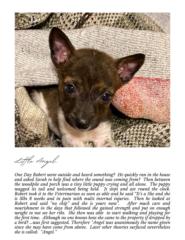
Angel does excellent at thresholds 👏 💚
Apr 20 •
Create a post explaining why plateaus happen.
At some point in training, things can feel… stuck. - Progress slows down - Skills stop improving - Motivation dips - It feels like you’re doing everything “right” but nothing is changing This is called a plateau — and it’s a normal part of learning. 🧠 What a plateau actually is A plateau doesn’t mean learning has stopped. It often means:👉 Your dog is processing and stabilizing what they’ve already learned Learning isn’t a straight line — it happens in layers. 🔍 Common reasons plateaus happen 1️⃣ Skills need more repetitionYour dog understands the behavior, but it’s not fully solid yet. 2️⃣ The environment got harderMore distractions = more difficultyEven small changes can impact performance. 3️⃣ Criteria increased too quicklyDuration, distance, or distractions may have been pushed too fast. 4️⃣ Reinforcement needs adjustingYour dog may need: - More frequent rewards - Higher-value rewards - Clearer timing 5️⃣ Mental or physical fatigueLearning slows when dogs are: - Overstimulated - Tired - Lacking decompression 🌿 What helps during a plateau ✔ Go back to easier versions of the skill✔ Reinforce success more often✔ Change the environment✔ Keep sessions short and positive✔ Focus on consistency over intensity Sometimes the best way forward is to simplify. 💡 A helpful reframe Instead of:❌ “We’re not making progress” Try:✅ “We’re in a phase where learning is settling in” 🧠 Why plateaus are important Plateaus often come before breakthroughs. They allow: - Behaviors to become more reliable - Confidence to build - Skills to transfer to new environments 💬 Where are you feeling stuck right now — and what might your dog need more of to move forward? Progress isn’t always visible — but it’s still happening 💚🐾
1 like • May 24
One challenge last month was…. Being ill and not able to be present for consistent training ;;;;
Feb 19 •
Why Emotional Safety Is the Foundation of All Training
Before a dog can learn a cue… Before they can focus… Before they can make good choices… They need to feel emotionally safe. Emotional safety means your dog feels: - Predictability in their environment - Trust in your responses - Freedom from fear or intimidation - Supported when they’re unsure When a dog doesn’t feel safe, their nervous system shifts into survival mode — scanning, reacting, bracing, or shutting down. In that state, learning takes a back seat. What happens when safety is present? When dogs feel emotionally safe: - They recover faster from stress - They experiment and offer behaviors - They engage more voluntarily - They show curiosity instead of avoidance - They make better choices Safety doesn’t make dogs “soft.” It makes them capable of learning. Signs emotional safety might be missing You might notice: - Frequent stress signals - Avoidance of training situations - Sudden “noncompliance” in certain environments - Escalation under pressure - Shutdown behavior (very still, disengaged, hesitant) These aren’t personality flaws. They’re feedback. How to build emotional safety You build it through: - Clear and consistent routines - Reinforcement over intimidation - Gradual exposure instead of flooding - Allowing choice and agency - Resetting instead of punishing Emotional safety is not separate from training. It is training. A mindset shift Instead of asking: ❌ “How do I make this behavior stop?” Try: ✅ “Does my dog feel safe enough to learn right now?” Behavior change follows emotional safety — not the other way around. 💬 Where have you seen your dog learn best — and how did safety play a role? Trust first. Skills second. Always 💚
1 like • Feb 19
Willing let me bathe her! Angel use to scramble to jump out of tub LOL but I think she realizes how she feels better after and that it’s safe :) huge milestone! Happy calm clean Yeah!
1 like • May 23
Now she even Loves baths!! 💛👏
Apr 25 •
Why Your Dog “Knows It” at Home… But Not Outside - Generalization Explained
Ever feel like your dog is a training superstar at home…but suddenly forgets everything the moment you step outside? That’s not your dog being stubborn. That’s generalization. 🧠 What is generalization? Generalization is your dog’s ability to understand that:👉 “This behavior applies everywhere, not just in one place.” Dogs don’t automatically generalize skills. To them: - “Sit in the kitchen” - “Sit in the park” - “Sit when guests are over” …can feel like completely different behaviors. 🌍 Why this happens Dogs learn very specifically. They notice: - Location - Smells - Sounds - Your body position - The environment So when any of those change, the behavior may not transfer right away. 🛠️ How to build generalization To help your dog succeed: ✔ Practice in different environments ✔ Start in low-distraction areas and build up ✔ Change one variable at a time (location, distance, distraction) ✔ Reinforce heavily in new places ✔ Lower expectations when the environment gets harder Think:👉 Same skill, new context 🔄 What it looks like in real life You might: - Practice “sit” in the living room → then the backyard → then a quiet park - Work on loose leash walking on a quiet street before a busy one - Build recall in your yard before trying it at a park Each new environment is a new learning opportunity. 💡 A helpful reframe Instead of:❌ “My dog knows this, they’re just not listening” Try:✅ “My dog is still learning this in this environment” 💬 What’s a behavior your dog does well at home but struggles with elsewhere? That’s your starting point for building generalization 💚🐾
1 like • May 23
Yes, she (Angel) still senses my energy if not calm. She is so perceptive!
Feb 18 •
Reflection: What Feels Easier Now?
Take a moment and think back a few weeks… or even a few months. Is there one situation that feels even slightly easier now than it used to? Maybe: - Walks feel less chaotic - Guests are a little smoother - Recovery from triggers is faster - Grooming takes less effort - You feel calmer handling tough moments - Your dog checks in more often Progress doesn’t always show up as something new. Sometimes it shows up as something old feeling lighter. Those shifts are easy to miss because they happen gradually. 💬 What’s one situation that feels easier now than it did before? Even small changes are worth noticing. That’s growth 💚
1 like • Feb 19
Yes!! The bathroom break at Gas stations with more than usual loud noises - Angel hesitated at first as it had been while since on a long drive and being around the loud sounds - she then relaxed walked and went potty then calmly walked back to vehicle with only very slight pull - huge improvement!
1-10 of 33
@sarah-chesnut-4003
Husband and wife that Love dogs. Learning new things for older puppy training
Active 130d ago
Joined Dec 11, 2025
Powered by