

May 15 •
May the month of the Mother and the Divine Shoulder Balance
Salamba Sarvangasana the all limbs supported pose. Salamba Sarvangasana is known as the "mother of all the asanas". It Is reported to have remarkable healing effects on the body mind sense complex, In his book Light on Yoga Guruji BKS Iyengar tells us that the importance of Sarvangasana cannot be over emphasized. He goes on to say it is one of the greatest boons conferred on humanity by the ancient sages. In May class we will address safe approach to this asana. Useful preparatory movements of shoulder and chest area will be given. Correct use of props, variations, and adaptations to the classic will be included. Please bring 4 firm blankets to this class. With love and blessings Kathleen
1
0
Apr 16 •
Grounding
Grounding Grounding, also known as earthing, refers to standing (bare feet) or lying on the earth to have contact with the earths natural electric charge. In Yoga asana we practice placing the body in various relationships to the earth and her energies. We understand the feeling of being at home, being centered, contented, contained, with the breath flowing easily and contentedly and freely. Over time with practice our bodies begin to cooperate with what we are asking it to do! Yes, asana does sometimes ask us to stretch and to develop strength To gain this feeling of home in yoga asana we use movements and actions to set up of the muscles bones and tissues to attain this steady feeling of physical and physiological alignment. An example: Let us consider the feeling of sitting in Dhandasana (seated staff) Virasana (seated hero pose) We are asked to move the thigh bones into the floor. To move the thigh bones to the outer socket and at the same time to hold the bones into the socket. When this alignment comes the hip joint feels soothed and we start to notice that the breath appears to move deeper into the pelvis. We develop our inner sense of touch. These physical and physiological movements and actions can draw our minds inward. See you in our skul asana classroom to explore grounding in asana
1
0
Jan 28 •
Surya Namaskar and Surya Mudra
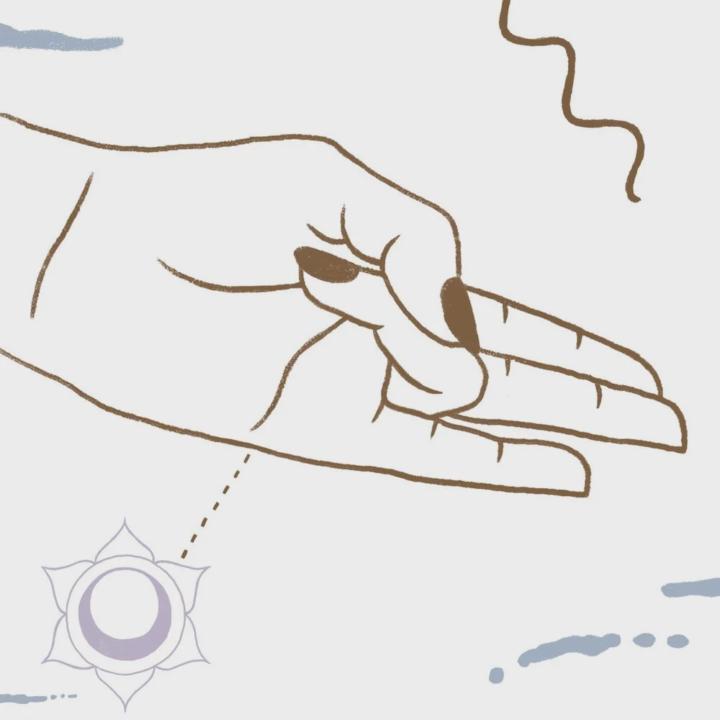
Surya is the Sanskrit word for sun. Namaskar means a salutation. Yoga offers many ways to harness the sun’s energy within the body . In our January Yoga session we focused on the warmth of the sun. We found several ways to work with the Surya Namaskar; A series of asanas that stir the internal heat and digestive fire known as Agni. We also worked with a mudra. Mudra means a hand gesture or a lock. Surya Mudra is a gesture that symbolizes and harnesses the suns energy. Hence Surya Mudra acknowledges that every living thing on earth depends on the sun for their sustainable energy.

Jan 2 •
Why do we practice yoga?
Are you ready to start the new year exploring yoga and shedding the weight of the mind's illusions of what is true about yourself? Watch this short of Ramanand Patel, @Kathleen Wright's beloved teacher, and share your thoughts about his explanation about how to practice yoga.
Nov '25 •
Notes on twisting asanas
The rotation of the spine is called Parivrtta action. This twisting action is also called lateral rotation. The actions of twisting are first learned in Parivrtta Trikonasana (rotated triangle pose). For this class the asanas were chosen to learn the lateral extension easily. We look at twisting asanas and a few of the many modifications of twisting. As with all asana please leave several hours since your last meal before doing the twists. Twists are not recommended for pregnant woman and modifications should be approved by a professional if there are injuries to the spine. As you are practicing the asanas remember to let the breath move freely. Exhale to turn, inhale wait.

1-6 of 6
powered by
skool.com/blissful-living-academy-4719
Reveal your inner bliss - on the mat, in the kitchen and in life.
Suggested communities
Powered by