
Write something

🔥
Mar 8 •
🔐 How AI will Transform Enterprise IT: Part 3 — Control, Risk, and Reluctance
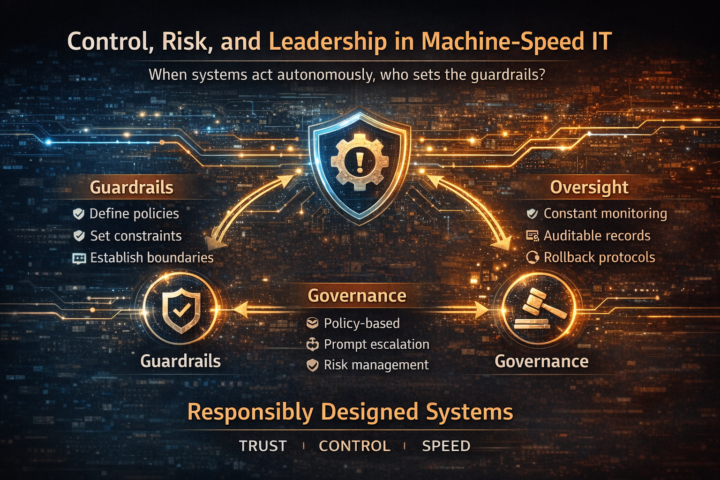
The technical shift to machine-speed IT is already underway. The real challenge will not be computing power, infrastructure, or even AI capability. The challenge will be trust. As systems begin to operate autonomously — coordinating with other systems, making operational decisions, and executing tasks — organizations must answer a fundamental question: How much control are we willing to delegate to machines? 🔐 The Control Question For decades, enterprise processes have relied on human checkpoints. Approvals. Reviews. Manual overrides. Exception handling. These checkpoints exist not only for accuracy, but for accountability. Autonomous systems challenge that model. When decisions occur at machine speed, the traditional approach of reviewing every step becomes impossible. Instead, organizations must shift from transaction oversight to policy oversight. Executives will increasingly define: - What systems are allowed to do - What constraints must never be violated - What thresholds trigger human intervention In other words, leadership moves from approving actions to designing guardrails. 🔐 The New Risk Model Autonomous systems introduce a different kind of risk. Not necessarily worse risk — but faster risk. When machines coordinate decisions across infrastructure, finance, security, and operations, errors can propagate quickly if governance is poorly designed. This makes several capabilities essential: - Clear operational policies - Strong monitoring and audit trails - Immediate rollback mechanisms - Transparent system behavior Trust will not come from removing oversight. It will come from redefining oversight. 🔐 Where Leaders Will Hesitate Despite the advantages, organizations will naturally resist autonomy in several areas. Financial transactions. Regulatory compliance. Customer-facing decisions. Strategic reporting. These domains carry reputational, legal, and financial consequences. Leaders are conditioned to maintain direct involvement.
🔥
Mar 7 •
How AI will Transform Enterprise IT: Part 2 of 3
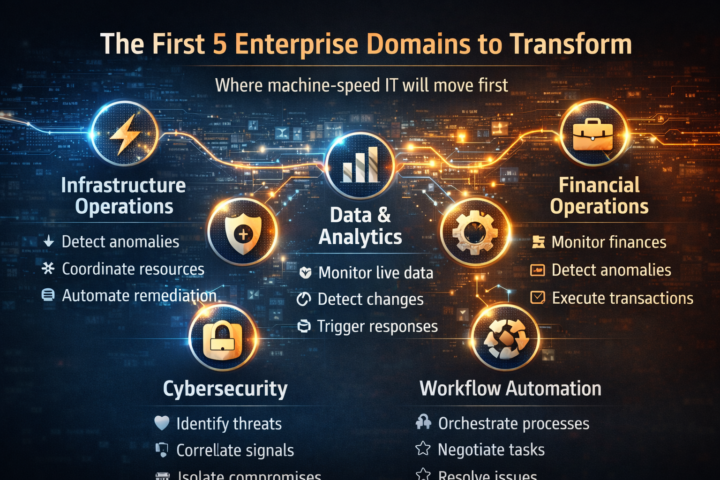
Part 2 — Where It Happens First The shift to machine-speed IT will not happen everywhere at once. It will begin where systems already interact heavily, data moves continuously, and decisions are repeatable. In most enterprises, five areas are positioned to change first. ⚡ Infrastructure Operations Infrastructure monitoring is already heavily automated. The next step is autonomous coordination between systems. AI agents will begin to: - Detect anomalies across networks, storage, and compute - Diagnose root causes across multiple systems - Trigger remediation without waiting for human review - Reallocate resources in real time Instead of dashboards alerting engineers, systems will increasingly resolve issues before humans are even notified. 🔐 Cybersecurity Security is already a machine-speed problem. Attack traffic, intrusion attempts, and vulnerability scanning occur far faster than humans can analyze. As a result, security systems are moving toward agent-driven response loops. AI systems will increasingly: - Identify abnormal behavior across environments - Correlate signals from multiple tools - Automatically isolate compromised systems - Adjust security posture in real time Security will become one of the first domains where machines defend against machines. 📊 Data Pipelines & Analytics Today, data flows through layers of processing before reaching dashboards designed for human interpretation. But machines don’t need dashboards. AI agents will increasingly: - Monitor live data streams - Detect meaningful changes - Trigger operational responses automatically - Coordinate actions across multiple systems The role of analytics will shift from informing people to triggering systems. 💼 Financial Operations Many financial processes follow structured rules: approvals, reconciliation, forecasting, and compliance checks. These processes are prime candidates for agent-assisted decision loops. AI systems will begin to: - Monitor financial signals continuously - Flag anomalies and compliance issues - Execute policy-approved transactions - Coordinate across billing, procurement, and forecasting systems
🔥
Feb 21 •
How AI Will Transform Enterprise IT: Part 1 of 3
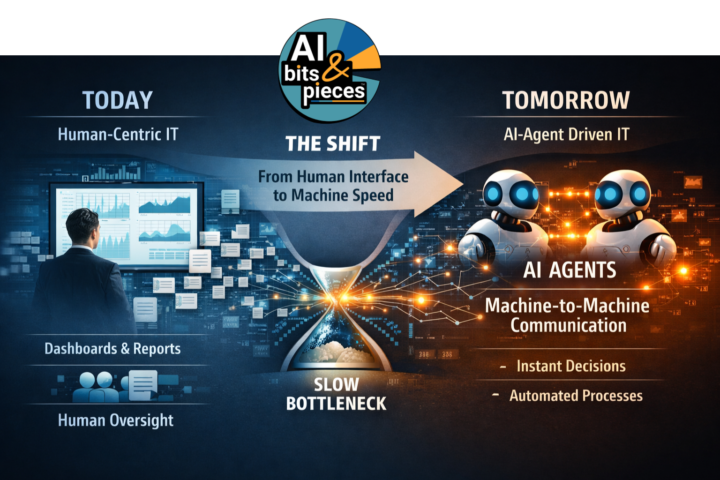
In This 3-Part Series we explore how Enterprise IT was built for humans in the loop, and how AI is going to radically change the nature of enterprise IT. As AI agents begin operating at machine speed — system to system — the human interface layer becomes the bottleneck. This series explores what shifts, where it happens first, and how executives must adapt. ⏳ Part 1: Introduction The shift from human interface to machine speed For the last 40 years, enterprise IT has been designed around a single assumption: Humans are in the loop. - Dashboards exist so we can interpret data. - Approval workflows exist so we can review decisions. - Reports exist so we can digest what systems are already capable of calculating. In short: Modern IT infrastructure has been engineered to slow down for human comprehension. That design made sense when systems were tools. It makes less sense when systems become participants. 🏗️ Structural Shift Is Beginning Over the next 12–24 months, organizations will begin experiencing a foundational shift: From human-mediated IT systems to agent-orchestrated machine systems AI agents will increasingly: - Monitor infrastructure continuously - Diagnose and resolve issues autonomously - Negotiate between systems - Optimize workflows in real time - Trigger financial, operational, and security decisions And critically — they will do this without waiting for a dashboard refresh or executive review cycle. This is not… better automation. This is machine-to-machine decision velocity. 🚧 The Current Bottleneck Today’s enterprise systems are built around: - The speed and pace of human logic - Security review cycles built for manual oversight - Change management at scheduled intervals - Data presentation layers optimized for people But machines do not require interpretation. They require protocol, validation, and trust frameworks. 🛡️ The emerging architecture will prioritize: - Direct system-to-system negotiation - Event-driven autonomous response - Continuous optimization loops - Policy-based guardrails
1-3 of 3
skool.com/ai-bits-and-pieces
To-the-point posts and single-thought AI lessons you can read in under 3 minutes and apply in everyday work and life.
Leaderboard (30-day)
1

🔥
+114
2

+26
3

+15
4

+15
5

+13
Powered by