
Pinned

💎
⭐
3h •
🚀New Video: Building Realistic Voice Agents Has Never Been Easier
Voice agents used to mean clicking through ElevenLabs dashboards and wiring up API endpoints by hand. In this one I built a working voice agent for a website that captures leads and books discovery calls through cal.com, all by describing it in plain English to Claude Code. You'll see the full build, the bugs I hit along the way, and how I debugged them without ever touching the docs.
Pinned
💎
⭐
1d •
🚀New Video: I Tried 100+ Claude Code Skills. These 6 Are The Best.
After 400 hours in Claude Code, I noticed that businesses keep paying for the same six types of skills. In this video, I break down each one, what it does, and why these simple, boring skills are the ones that actually sell. Whether you're brand new to AI automations or already building for clients, these are the skills worth learning first.
Pinned

🔥
3d •
🏆 Community Wins Recap | Apr 25 – May 1
From AI roles and first clients to live receptionist systems and enterprise training deals - this week inside AIS+ showed what happens when builders stop watching and start executing. 🚀 Standout Wins of the Week inside AIS+ 👉 @Griffin Maklansky went from being laid off to landing an AI Workflow Builder role in just 1 month. 👉 @Ahmed Bin Faisal landed another $2,000 USD client — an interior design firm — and broke down exactly what led to the close 👉 @Narsis Amin built a working AI restaurant receptionist handling bookings, availability, and CRM logging end-to-end. 👉 @Josh Holladay closed a $4.5K (+$1K) client with half up front today — and dropped his top 10 lessons from the close 👉 @Dion Wang received his first official testimonial, validating real client impact and around 40 hours/month saved. 🎥 Super Win Spotlight | @Duy Nguyen Duy started as an engineer who was curious about AI — but unsure how to turn that curiosity into something real. After joining AIS+, he went from learning passively to building his own AI-operated business, Sharper Automations. Since then, he has: • Built a 24-agent AI business operating system • Landed 2 local paying clients through word-of-mouth • Created a system that improves itself weekly through feedback loops • Started moving toward his goal of leaving his corporate job His biggest shift? From “Can I really do this?” → to building a real business around AI automation.


7m •
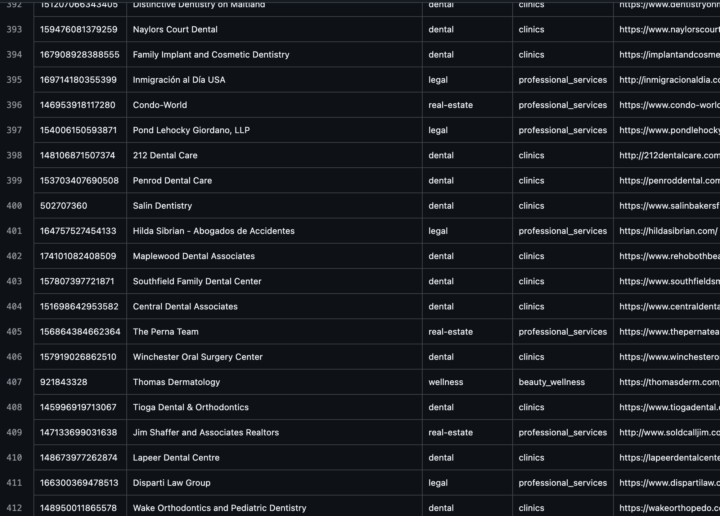
Ready to outbound
Scrapped a few thousand leads If someone needs a few tell me which industry you need.

13m •
My Kids' Apps Were Sharing Way More Data Than I Thought 🥰
Parenting in the digital age. Kids want apps. Every app wants permissions. Every app has privacy policies. Nobody reads privacy policies. Until I did. Got concerned. THE PRIVACY WAKE-UP CALL Downloaded a popular kids' game my 8-year-old wanted. Glanced at the privacy policy before automatically clicking agree. "We share information with third-party advertising partners." For a kids' game. Including "device identifiers" and "usage patterns." Went through every app my kids use. What are they collecting? Who are they sharing with? Is any of this compliant with children's privacy laws? Reading privacy policies is painful. Dense legal language. Buried disclosures. Took hours for just a few apps. THE PRIVACY SCANNER I BUILT Upload privacy policy. Workflow extracts the key information. What data they collect. Who they share with and why. Whether they mention children specifically. Data retention periods. User rights for deletion or access. Scores overall privacy concern level. Not legal advice, just red flags. Apps collecting location data on kids: flagged. Apps sharing with advertising networks: flagged. Apps with no mention of COPPA compliance: flagged. Creates a summary I can actually read without a law degree. THE INFORMED DECISIONS Before: Click agree, hope for best, no idea what's happening with kids' data. After: Know what each app actually does. Can make informed decisions about what's allowed. Removed 4 apps from kids' devices after reviewing policies. Three were sharing far more than seemed appropriate. Not paranoid, just informed now. Some apps are fine. Some are concerning. Nice to know the difference. The scanner isn't perfect on very long policies. Summarization can miss nuances. But catches major red flags consistently. What do apps on your devices actually do with your data?
0
0
1-30 of 16,327
skool.com/ai-automation-society
Learn to get paid for AI solutions, regardless of your background.
Leaderboard (30-day)
1

+5823
2

🔥
+4502
3

+3972
4

+2292
5

+907
Powered by