
Write something

Feb 21 •
🎂 HAPPY BIRTHDAY MY MENTOR ~ ROBERT HOLLIS 🌟
February 21, 2026 Happy Birthday, Robert Hollis Today I celebrate not just the day you were born, but the incredible man you have become. Your wisdom, leadership, generosity, and heart for helping others have touched more lives than you probably realize. You have a rare gift -- the ability to see potential in people before they see it in themselves -- and that has changed the direction of many journeys, including mine. I am deeply grateful for your friendship, your guidance, and the encouragement you have given me along the way. You have been a steady light, a voice of reason, and often a source of laughter when it was needed most. I'm looking forward to building United Wisdom with you to ONE BILLION members! Your Daily Wisdom sessions are priceless! Thank you for your heart to serve, for the enormous amount of 'Free' resources and wisdom you bestow upon us. You are an incredible human doing! I love you with all my heart and soul! My prayer for you this year is simple but powerful: May God continue to shower you with favor, protection, health, joy, and abundant blessings in every area of your life. May the seeds you have planted in others return to you multiplied beyond measure. And may this next chapter bring you new adventures, peace in your heart, and moments that remind you just how loved and appreciated you are. Thank you for being who you are. With love and gratitude, Debra Grady P.S. Since I'm posting this on our community page, feel free to post any pictures of you and Robert that you have when you wish him a Happy Birthday!!

Feb 25 •
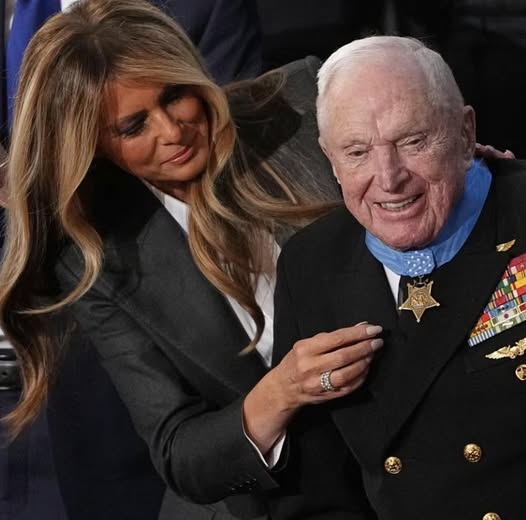
Royce Williams ~ 100-year-old Awarded Medal of Honor
President Donald Trump and First Lady Melania Trump just awarded 100-year-old Navy fighter pilot Royce Williams the Medal of Honor! Near the end of a long State of the Union address, when most Americans were thinking about bed rather than history, the focus shifted to a man who had once stared down Soviet fighter jets in a frozen sky and survived to tell almost no one about it. Royce Williams was just a young Navy lieutenant in November 1952 when he launched from the deck of the USS Oriskany in an F9F Panther and flew into what would become one of the most extraordinary aerial engagements in American military history. What unfolded that day was not a routine patrol or a brief exchange of fire but a sustained, desperate dogfight against multiple Soviet MiG-15s, aircraft that were faster, more maneuverable, and more heavily armed than the jet he was flying. The MiG-15 had clear advantages on paper. It could outclimb the Panther, outturn it, and unleash higher caliber firepower. In almost every technical comparison, the odds leaned heavily toward the Soviet pilots. Yet Williams did not disengage at the first sign of trouble. He maneuvered, fired, absorbed damage, and stayed in the fight long after prudence might have suggested breaking away. By the time his ammunition was gone, four MiGs had been shot down. His own aircraft was barely holding together. After landing, mechanics counted 263 holes punched through the fuselage. Hydraulic systems were compromised. The jet had taken such punishment that it was ultimately pushed overboard because it could not be salvaged. Even the return to the carrier was a trial in itself, as Williams had to guide a crippled aircraft onto a pitching deck in rough seas, knowing that a mistake at that stage would be unforgiving. What makes the story even more remarkable is what followed. The United States was not officially acknowledging direct combat with Soviet forces in Korea, and the engagement was classified to avoid inflaming tensions that might have widened the conflict only a few years after World War II. The public record softened the details. The extraordinary clash in the sky was tucked away in official files. Williams himself said little about it for decades.
Feb 21 •
The Comeback Nobody Saw Coming: Alysa Liu’s Return to the Ice
Since @Robert Hollis brought this subject up today in our Daily Wisdom, I was curious for more details. Alysa Liu won the Olympic gold at the 2026 Milan Cortina Games this week. Alysa Liu comes from a big family, as the oldest of five, including siblings Selina, Julia, Joshua and Justin. The Olympic figure skater and her brothers and sisters were raised in California by their father, Arthur, who became a single parent to all five of his children through surrogacy. He recognized his eldest daughter's natural talent on the ice when she was 5 years old. By the time she turned 13, Alysa made history as the youngest-ever U.S. figure skating champion and the first U.S. woman in history to land three triple axels. So it came as a shock to many when she announced her retirement just three years later — citing a desire to spend more time with her family. “My worry was that I’ll have never lived with my family," Alysa, who came out of retirement in 2024, as told to The Guardian in March 2025. "I’m growing up so fast, so young. I knew that if I continued skating, I would never have a chance at home." In a sports world obsessed with relentless pushing, burnout, and medals at any cost, the story of Alysa Liu is quietly becoming one of the most fascinating and talked-about comeback narratives in recent memory — not just because she returned, but because of how she returned. Alysa Liu was once known as the child prodigy of American figure skating — the youngest U.S. champion in history, landing difficult jumps before most teenagers were even thinking about elite competition. She rose fast. Almost too fast. Then, at just 16 years old — when many athletes are still climbing — she walked away. Nocscancal. No dramatic injury announcement. No public breakdown. She simply said she was done. She wanted to be a normal teenager. For two years, she disappeared from elite skating. She went to school. Lived life. Let her body and mind recover from the intense pressure that comes with being labeled “the future” at such a young age.

Feb 19 •
TWO CHOICES
Two Choices, What would you do?....you make the choice. Don't look for a punch line, there isn't one. Read it anyway. My question is: Would you have made the same choice? At a fundraising dinner for a school that serves children with learning disabilities, the father of one of the students delivered a speech that would never be forgotten by all who attended. After extolling the school and its dedicated staff, he offered a question: 'When not interfered with by outside influences, everything nature does is done with perfection. Yet my son, Shay, cannot learn things as other children do. He cannot understand things as other children do. Where is the natural order of things in my son?' The audience was stilled by the query. The father continued. 'I believe that when a child like Shay, who was mentally and physically disabled comes into the world, an opportunity to realize true human nature presents itself, and it comes in the way other people treat that child.' Then he told the following story: Shay and I had walked past a park where some boys Shay knew were playing baseball. Shay asked, 'Do you think they'll let me play?' I knew that most of the boys would not want someone like Shay on their team, but as a father I also understood that if my son were allowed to play, it would give him a much-needed sense of belonging and some confidence to be accepted by others in spite of his handicaps. I approached one of the boys on the field and asked (not expecting much) if Shay could play. The boy looked around for guidance and said, 'We're losing by six runs and the game is in the eighth inning. I guess he can be on our team and we'll try to put him in to bat in the ninth inning..' Shay struggled over to the team's bench and, with a broad smile, put on a team shirt.. I watched with a small tear in my eye and warmth in my heart. The boys saw my joy at my son being accepted. In the bottom of the eighth inning, Shay's team scored a few runs but was still behind by three. In top of the ninth inning, Shay put on a glove and played in the right field. Even though no hits came his way, he was obviously ecstatic just to be in the game and on the field, grinning from ear to ear as I waved to him from the stands.

Feb 15 •
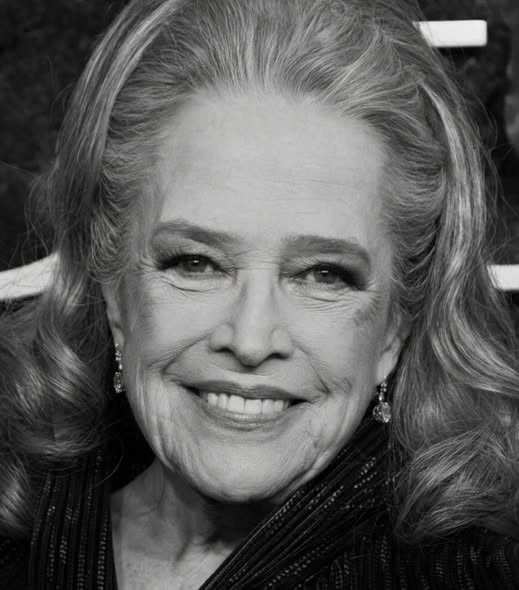
Kathy Bates ~ She Didn't Let Illness End Her Story
She beat cancer twice—then did something Hollywood celebrities never do: she told the truth about what comes after. Her name is Kathy Bates. Long before illness rewrote part of her story, she was already a force in American cinema. By the early 1990s, she'd claimed an Academy Award for Best Actress with a performance in Misery so controlled and terrifying it secured her place in film history. She became known not for glamour, but for something rarer: women who were sharp, complex, and impossible to ignore. Then ovarian cancer arrived in 2003. Quietly. Privately. She told almost no one. Treatment happened away from headlines and press cycles. For nine years, the public didn't know. Not because of shame—but because she refused to let illness eclipse her craft. She didn't want to become a story about survival instead of an actor doing the work. Then came 2012. Breast cancer this time, and a double mastectomy at sixty-three. The physical changes were irreversible. The cultural expectations around women's bodies—especially older women in Hollywood—were unforgiving. Kathy Bates made a choice that cut against every industry instinct: she told the truth. Both cancers. Both recoveries. No performance of gratitude. Just facts, stated plainly. And then she did something even rarer. She talked about lymphedema. Most people have never heard the word. It's a chronic condition that happens when lymph nodes are damaged or removed during cancer treatment. The lymphatic system can't drain properly, causing painful swelling—often permanent—usually in the arms. It limits mobility. It causes fatigue. It increases infection risk. It requires lifelong management. And it's almost never discussed. After surgery, Bates developed lymphedema in both arms. Compression sleeves became part of daily life. So did physical therapy, constant monitoring, and navigating pain. Many survivors aren't warned in advance. Many don't learn the word until they're already living with it. So Kathy Bates said it out loud.
1-22 of 22
powered by

skool.com/ageless-wisdom-grandma-grady-5485
Where Faith & Grace Lead, Wisdom Grows & Financial Freedom Flows for all Souls 💕
Suggested communities
Powered by