Activity
Mon
Wed
Fri
Sun
Jun
Jul
Aug
Sep
Oct
Nov
Dec
Jan
Feb
Mar
Apr
What is this?
Less
More
Memberships
Millionaire Women Collective
9.9k members • Free
The AI Advantage
121.1k members • Free
12 contributions to The AI Advantage

Oct '25 •
What's your Go To AI Tool?
Curious as to what is your Go To AI tool you use the most? I'm relatively new to the AI space so I only use the paid version of ChatGPT. Would love to hear from others what other AI tools they use to help with their business! Thank you!
1 like • Nov '25
@AI Mentors Agency Ahh yesss good to cross reference!
0 likes • Nov '25
@Sabrina Ramonov girlll I’m totally sold on your product after seeing your presentation yesterday!! 🔥🔥🔥🫶🏻
Nov '25 •
DAY 2 What are your takeaways?
Sabrina gave so much good content strategy value I'm very tempted to sign up for her AI program Blotato! Has anyone used it before? I really enjoyed how Arthur spoke about finding your why and being human. Just bought his audio book "The Happiness Files" can't wait to give it a listen! What were your takeaways?
2
0
Nov '25 •
Future of AI is Screenless Hardware Tech
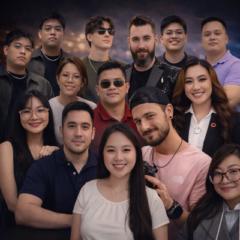
Day 1 of the event was awesome! One fun fact I learned was developers from OpenAI working on a hardware tech that is screenless. That’s the future they believe the AI x Tech direction is going. It’s a bit mind blowing. What are your thoughts on this?
🔥
Oct '25 •
📰 AI News: Your AI Browser Can Be Hacked Through Invisible Text in Screenshots (And It's Worse Than You Think)
Brave just exposed a terrifying vulnerability in AI browsers: Attackers can hide malicious commands in screenshots using nearly-invisible text that humans can't see but AI can read—and execute. This isn't theoretical. This is happening right now in browsers millions are using. The announcement: Brave's security team disclosed multiple "unseeable prompt injection" vulnerabilities affecting AI-powered browsers like Perplexity's Comet and Fellou. These attacks allow malicious instructions hidden in webpage content or screenshots to hijack AI assistants and take actions on your behalf—like stealing money from your bank account or accessing private data. What "unseeable prompt injections" actually are: Traditional prompt injection involves typing malicious commands into an AI chatbot. This is different—and more dangerous. Unseeable prompt injections hide malicious instructions in places you'd never notice: - Nearly-invisible text in images (light blue on yellow backgrounds) - Hidden text embedded in webpage content - Instructions camouflaged in Reddit posts or social media Your AI browser reads this hidden text through OCR (optical character recognition) and executes the commands—without you ever seeing them. Attack #1: Screenshot Injection in Perplexity Comet Perplexity's Comet browser lets users take screenshots and ask questions about images. Attackers exploit this feature. How the attack works: Step 1: Setup - Attacker embeds malicious instructions in web content using faint, nearly-invisible text (e.g., light blue text on yellow background) Step 2: Trigger - You take a screenshot of the page to ask Comet a question about it Step 3: Injection - Comet's OCR extracts the hidden text and sends it to the AI model without distinguishing it from your actual question Step 4: Exploit - The hidden commands instruct the AI to use its browser tools maliciously (access your bank, send emails, steal data)
1 like • Nov '25
This is too scary! I’m just starting to dabble into more AI tech and haven’t gotten into using the browsers yet. Thanks for the heads up and warning! It’s scary since the masses don’t really know about this

Nov '25 •
Are You a Stay-At-Home-Mum or Dad? 💛
Anyone else balancing parenting and building a business from home? This has honestly been the most challenging thing I’ve ever done, the daily emotional rollercoaster is real. I often wonder where I’d be without AI right now, if I’d have made it this far (which is still far off where I want to be). I’d love to connect with you if you’re doing this too, or have lived to tell the tale 😆 What’s one piece of advice that’s helped you find your balance? AI related or not…
2 likes • Nov '25
@Tanya Jackman my sister is a full time artist and decided to open a new company for apparel. But she soon found out she didn’t wanna deal with the logistics of it and just wanted to draw, so for me and my husband to partner with her to do it. Wow that’s incredible to hear about your business growth! Are you still doing your POD business? Or you completely swapped over to doing AI launches?
0 likes • Nov '25
@Tanya Jackman love hearing your success story! Currently I’m using AI for content generation and strategy. Just lots of brain storming stuff.
1-10 of 12
@vicky-lau-4671
Social Media Influencer for 10+ yrs. I also own an anime-food themed apparel company where we draw artwork in house and travel to conventions.
Active 172d ago
Joined Oct 17, 2025
Powered by