Activity
Mon
Wed
Fri
Sun
Aug
Sep
Oct
Nov
Dec
Jan
Feb
Mar
Apr
May
Jun
What is this?
Less
More
Owned by Vibeke
Welcome to a soft space for nervous system regulation, somatic awareness and movement. Join us to learn, explore, and come home to your body.
A practical introduction to Traditional Chinese Medicine for everyday life. Using acupressure and understanding the patterns behind symptoms.
Memberships
Turning Muck Into Magic
6 members • Free
ExpressiveArtSpace Embodiment
28 members • Free
Mot Til Endring 2
65 members • Free
Victorable - Make Money Online
1.1k members • Free
Wealth Academy 💰
110 members • $19/month
The Guided Souls.
15 members • Free
Journey on Nature's Path
472 members • Free
Amy's Health Nest
324 members • Free
The Somatic Academy by Soma+IQ
14.9k members • Free
15 contributions to Amy's Health Nest

Apr 23 •
If you could get homeopathic support for ONE issue right now, what would it be?
Kindly take a moment to complete this poll to help direct content that will be most helpful to you and your family's needs.
Poll
4 members have voted
1 like • Apr 24
Hormones!
1 like • Apr 26
@Amy Rickman Ah, I found “Hormones and Health” in the classroom now — I’ll definitely watch it 😊 Is that the one?
Mar 28 •
Sepia
🌿 Homeopathic Sepia: A Deeper Look at the Hormonal Pattern Homeopathic Sepia is one of the most well-known remedies for hormonal imbalance in women, especially when there is a clear pattern of physical depletion and emotional disconnection. Sepia is prepared from the ink of a cuttlefish 🐙 and in homeopathy it is associated with a very specific picture that looks at the whole person, not just the hormones. 💫 The Sepia Emotional State The hallmark of Sepia is a feeling of indifference or emotional flatness. Many women feel disconnected from loved ones even though they care deeply. There can be irritability, especially when overwhelmed or feeling touched out, along with a strong desire to be left alone. A common way this shows up is: “I love my family, but I don’t feel like myself anymore.” This is often a sign of deep nervous system and hormonal depletion rather than a lack of love. ⚖️ Hormonal and Life Stage Connections Sepia is often considered during times of hormonal transition such as PMS, postpartum recovery, and perimenopause or menopause. These phases can bring mood swings, irritability, low energy, burnout, decreased libido, and a sense of overwhelm with daily responsibilities. 🧠 Physical and Body Clues Sepia has some very characteristic physical symptoms including a heavy or dragging sensation in the pelvic area, fatigue that is not relieved by rest, and increased sensitivity to noise, people, or demands. One of the most unique aspects is that many people feel worse from inactivity but noticeably better with movement or exercise. 🔑 The Pattern That Stands Out In homeopathy, remedies are matched to patterns rather than diagnoses. Sepia stands out when there is a combination of emotional withdrawal, irritability, hormonal stress or transitions, physical heaviness, exhaustion, and improvement with movement. When this pattern is present, Sepia may be considered. 🌱 A Holistic Perspective Sepia is not about forcing the body or simply correcting hormones. It is about supporting the body when it is signaling depletion and a need for restoration. The goal is to help the system return to a more balanced and resilient state when the overall picture matches.

0 likes • Mar 29
Thank you for this 😊
Mar 15 •
☀️ Sunlight and Homeopathic Sol
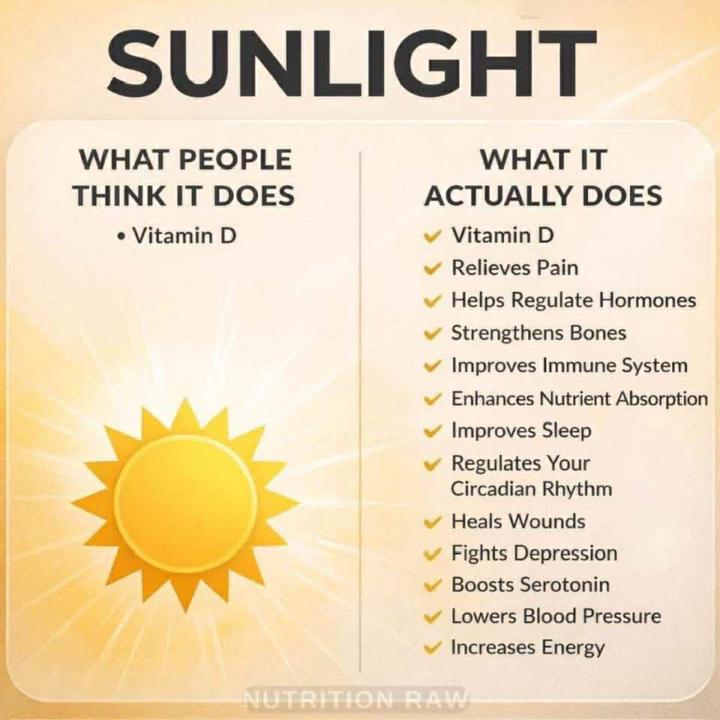
Many people think sunlight is only important for Vitamin D, but it actually supports many systems in the body. Regular sunlight exposure can help regulate hormones, support the immune system, improve sleep, boost mood, and increase energy. Sunlight also helps regulate your circadian rhythm, which is your body’s internal clock. Getting natural light during the day—especially in the morning—signals your body when to wake up and when to wind down at night. This can lead to better sleep, improved mood, and more balanced energy throughout the day. 🌿 Research also shows sunlight exposure may help with serotonin production (our feel-good hormone), blood pressure regulation, wound healing, and nutrient absorption. Pretty amazing for something that’s completely free! One simple habit is to spend about 20–30 minutes outside each day. Getting some sun on your skin without sunscreen during that short window allows your body to naturally produce Vitamin D. And allowing natural light to reach your eyes without sunglasses for helps send signals to the brain that regulate hormones and your sleep-wake cycle. Of course, balance is key—long sun exposure should still be approached wisely—but a little daily sunshine can be a powerful way to support your overall health. What are your favorite ways to soak in the sunshine? Did you know there is a homeopathic remedy made from the sun? It is called Sol and is very powerful. Sol is a unique and lesser-known remedy in homeopathy that is made from sunlight itself. It is sometimes called Sol, Solis, or Sol lucis in different homeopathic literature. The idea behind this remedy is that the energetic qualities of sunlight can be captured and potentized using the standard homeopathic preparation process. The source of this remedy is the sun, which in many healing traditions represents vitality, energy, rhythm, and life force. In homeopathy, sunlight is considered a powerful natural influence on the body’s biological systems, including circadian rhythms, mood, and overall vitality.
1 like • Mar 16
Thank you for sharing this — I didn’t know about this remedy. Very interesting! ☀️
Mar 12 •
Homeopathy Spotlight: Pulsatilla 🌿
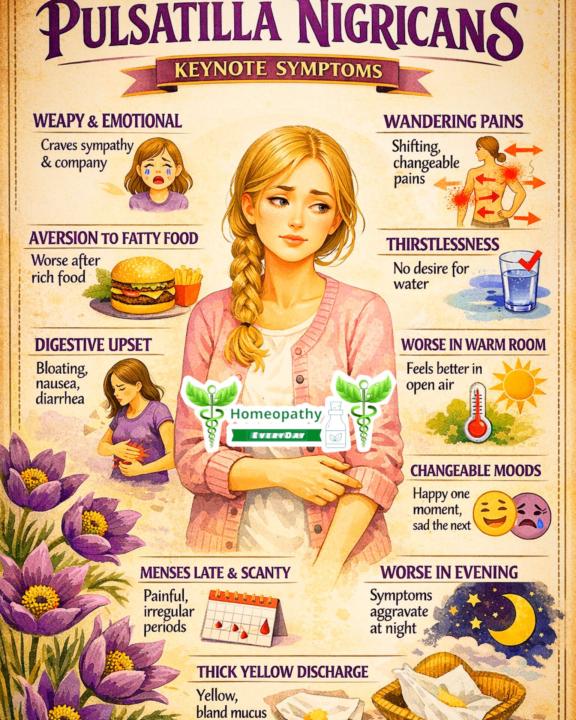
One of the most loved remedies in homeopathy is Pulsatilla. It’s known as a polycrest remedy, which means it has a very wide range of uses and symptom pictures and is commonly used in homeopathic practice. These remedies tend to show up often because their patterns appear in many everyday health situations. ✨ Key Pulsatilla patterns: 💧 Weepy, emotional, and craving comfort or company 👧 Often seen in children and young girls, especially with sensitive or gentle personalities 🌸 Commonly used when hormones are shifting (puberty, menstrual changes) 🌬 Feels better in fresh air but worse in a warm room 🥤 Thirstless even when sick🍔 Symptoms worse after rich or fatty foods 🤕 Wandering pains that move from place to place 🌙 Symptoms worse in the evening or at night 🤧 Thick yellow discharge with colds, earaches, or sinus issues 🌀 Changeable moods — happy one moment, tearful the next Pulsatilla is often considered a gentle but powerful remedy, especially when the emotional and physical symptoms match this classic pattern. 🌼Homeopathy focuses on matching the whole symptom picture of the person — not just the condition. Have you ever seen this Pulsatilla pattern in yourself or your kids?
1 like • Mar 13
Yes, when my daughter was little and sick, she would often fall into a Pulsatilla picture. But she isn’t really a Pulsatilla constitutionally otherwise. Do you also see that — that children present the remedy picture during illness even if it’s not their constitutional remedy?
1 like • Mar 14
@Amy Rickman Yes, I agree. It really is such a gentle and beautiful remedy.
Mar 10 •
Body Clock
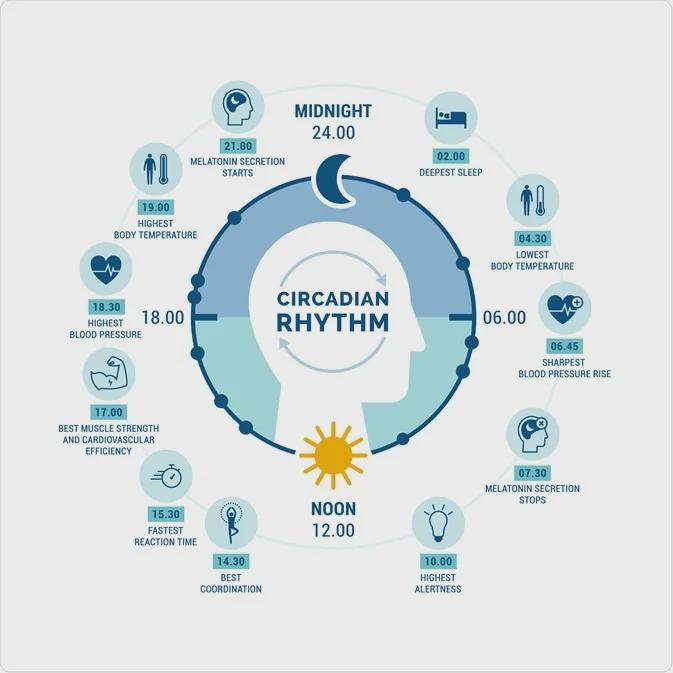
With the time change, I am struggling with sleep again so I decided to do some research on our body clock. ⏰ Your Body Runs on a Clock — Are You Working With It or Against It? 🌞🌙 Our bodies follow a natural circadian rhythm, a 24-hour internal clock that controls sleep, energy, hormones, metabolism, and even blood pressure. When we align our habits with this rhythm, our bodies often function at their best. Here are a few fascinating highlights from the body’s daily cycle: 🌙 9:00 PM – Melatonin begins to rise, preparing your body for sleep 🛌 2:00 AM – Deepest sleep occurs 🌡 4:30 AM – Lowest body temperature ❤️ 6:45 AM – Sharpest rise in blood pressure (your body waking up) 🧠 10:00 AM – Peak alertness and focus 🤝 2:30 PM – Best coordination ⚡ 3:30 PM – Fastest reaction time 💪 5:00 PM – Strongest muscles and cardiovascular performance ❤️ 6:30 PM – Highest blood pressure 🌡 7:00 PM – Highest body temperature ✨ What does this mean for daily life? • Try to sleep before midnight when melatonin is active • Schedule thinking tasks in the morning when alertness is highest • Exercise later in the afternoon when strength peaks • Wind down in the evening to support healthy sleep cycles Small lifestyle changes that respect your body’s rhythm can make a big difference in energy, sleep quality, and overall health. ❓ Do you tend to be a morning person or a night owl?
1 like • Mar 11
Very interesting! In Norway we change the clocks on March 29 this year, so I’m curious to see how that affects the body clock too. 😊 I’m definitely a morning person.
1-10 of 15

@vibeke-stherskar-1110
Founder of Somatic Flow. Acupuncturist & somatic coach guiding embodied integration, chakra-based work & intuitive movement.
Active 1h ago
Joined Dec 19, 2025
INFJ
Norway
Powered by