Activity
Mon
Wed
Fri
Sun
Aug
Sep
Oct
Nov
Dec
Jan
Feb
Mar
Apr
May
Jun
Jul
What is this?
Less
More
Memberships
7FSS 5C Course
8.5k members • Free
Leadership Skool
1.6k members • Free
Imperium Academy™
67.5k members • Free
Inspired Life, Empowered Being
130 members • Free
KAIZEN
49 members • Free
🟢 6-Fig Society | Free
1.5k members • Free
Selling Online / Prime Mover
36.7k members • Free
Saisify Launch Community
325 members • Free
Chess Content Creators
18 members • $9/month
57 contributions to Brojo: Confidence & Integrity

Apr 29 •
Why “Helpful” Husbands Resent Their Wives (Relationship Coach Reveals The Truth)
Most nice guys don’t ruin their marriages by being selfish. They actually ruin them by being helpful. I know this because I’ve done this. Right after my daughter was born, my wife was suffering a lot physically, and I relapsed really hard into being a fixer. This created a massive disconnect between us. While I thought I was helping, I was actually controlling. I was trying to prevent her from having emotions that I found uncomfortable, and that made me build up a lot of resentment too. If you’ve ever walked into your house and felt like you’re having problems dumped on you the minute you walk through the door, that your help is not being appreciated, that the intimacy and your sex life have faded, and you don’t know why this happened or when it started, this interview with relationship coach and intimacy expert Monica Tanner is going to help you sort that out. We’re going to break down something that men completely misunderstand: the difference between fixing and supporting. We’re going to have a look at why resentment builds and how it destroys marriages and relationships, especially for people pleasers, and we’re going to explore how this creates an environment that is not emotionally safe, which is the leading cause of intimacy and connection problems later down the line. Monica is going to help us unpack the chain reaction: how fixing leads to expectations, which leads to resentment, which leads to intimacy issues - and what you can do to break out of the cycle. So get a pen and paper ready, because this episode is absolutely packed with practical tips from someone who really knows what they’re talking about… If you prefer written content, click here to keep reading the full written version on Dan’s blog. Or click on your preferred option below: - Watch on YouTube - Listen on Soundcloud - Listen on Apple Podcasts - Listen on Spotify - Listen on Amazon Audible

2 likes • Apr 29
Very helpful and relevant! Thanks!
Apr 23 •
I want to see some more engagement in this group
Hey guys Firstly, my deepest appreciation to all of you for being part of the group, especially those who interact on the feed and bring some ideas and life into the discussions. I have analytics on Skool that show me many of you are "lurking" - I can see that people read posts and visit the group, occasionally comment (usually when I'm doing some sort of free giveaway), but otherwise don't really post or support others with comments. I want to know what I can do to improve that. I want this to be a place where you feel encouraged and safe to participate actively, help others and share your experience along the way. I've tried a few things already, like 30 day challenges and polls and giveaways, but most of you remain silent. I know one sure-fire way is to make this group paid-only (remove the free membership tier). This is a last resort for me, but I'm running out of ideas. If you want this group to remain free, comment below (or DM me privately if you're not ready to be seen publicly) and let me know what I can do to increase your active participation. Let's build this thing together and have everyone giving in to the group. Cheers Dan
3 likes • Apr 23
I'll try to post more in the coming weeks. Recently been going through a big career transition, but once I've got my feet completely on the ground, I'll be able to be more consistent.
Apr 14 •
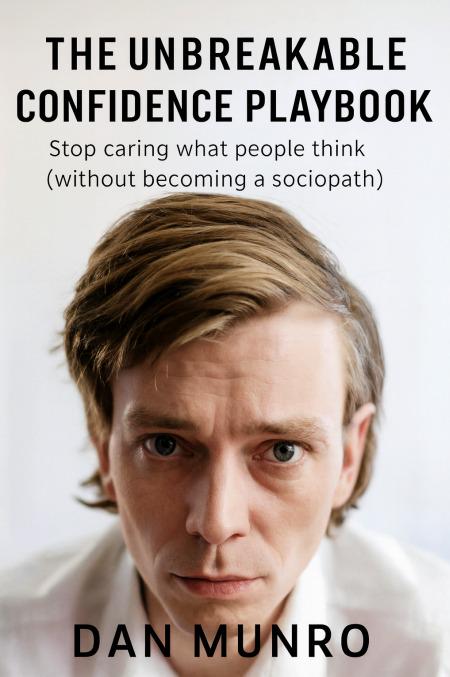
Stop caring what they think
Comment "psycho" to get my free guide on developing unbreakable confidence
0 likes • Apr 14
@Daniel Munro I feel the second category is a healthier mindset to have. It must be exhausting caring what everything thinks all the time. 🤔
0 likes • Apr 14
@Daniel Hoffman since learning about psychopaths back in university, I've often felt that I have a few of their traits as well (such as nearly zero empathy). The difference between Dan and I, and regular full-blown psychopaths, is that us "partials" use our "psychopathy-light" for good, rather than evil! 😂😁
Apr 8 •
Anyone looking for a funnel builder?
Hey Everyone, I'm currently learning how to build funnels using ClickFunnels, and am in need of some practice. Do any of you have a business / product or service to sell and want to increase your leads and sales? If so, I'd be very happy to help you out for free. Getting some results for you and maybe a few testimonials in exchange would mean a lot to me. Thanks for your consideration! 😊
Mar 18 •
Nominate another Brojo member for a free gift!
Alright guys, based on your votes earlier, you can now nominate other people in Brojo to receive free courses, books and more. This is your chance to serve others with just a few taps on the keyboard. Every so often, I'll do a post like this asking you to nominate someone, and that person will get a free gift. How to do it: comment below this post and tag someone in the comment (use the @ feature), with why you want to nominate them, e.g. "I nominate @Daniel Munro because his recent post about Stoicism helped me make a breakthrough" I'll review nominations and contact the nominees privately to offer them a free course or book or whatever I have going on at the moment. Go for it!

1 like • Mar 18
@Alee Allana haha, can we nominate ourselves? 🤔
1-10 of 57
@tyler-scott-9955
Areas of expertise: chess, fitness, languages.
Feel free to contact regarding the above.
FIDE Profile: https://ratings.fide.com/profile/7003048
Active 29d ago
Joined Jun 3, 2025
INTJ
Nagoya, Japan.
Powered by