Activity
Mon
Wed
Fri
Sun
Sep
Oct
Nov
Dec
Jan
Feb
Mar
Apr
May
Jun
Jul
Aug
What is this?
Less
More
Owned by Tim
Stop drifting. Build discipline, find brotherhood, grow in faith, and become the man you were created to be.
All Jesus: Overcoming Anxiety
5 members • Free
📣PodGuesters.com 🎤=💲
322 members • $7/month
Podcast Mastery Community 🎙️
49 members • $55/month
MVP Training Solutions
35 members • Free
the Absurd BookClub
44 members • Free
The Leadership Incubator
16 members • Free
Skoolers
161.6k members • Free
38 contributions to MVP Training Solutions

May 23 •
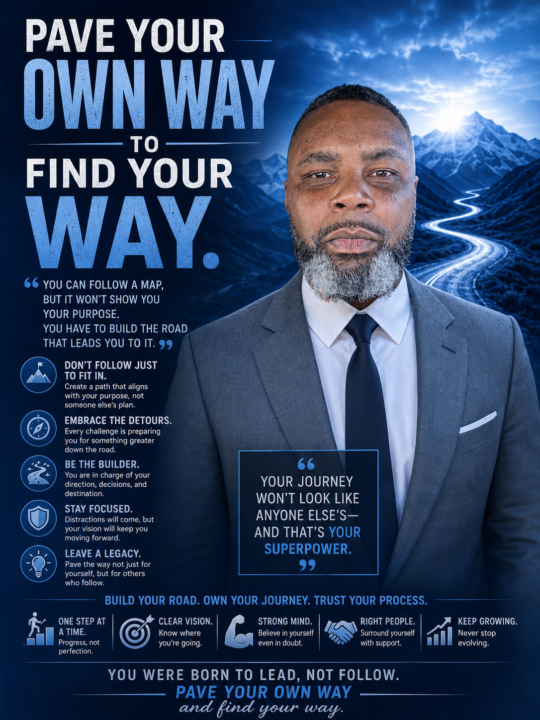
Pave Your Own Way to Find Your Way
Sometimes there is no clear roadmap because your goals, constraints, and timing do not match what worked for others. Waiting for perfect direction can become a form of avoidance, and it keeps you stuck in planning while the window for progress closes. Paving your own way means making the first decision with the best facts you have, accepting uncertainty, and learning through action. It is the discipline of moving forward without needing full approval, full clarity, or guaranteed outcomes. This approach requires structure, not chaos. Set a clear aim, run small tests, track results, and adjust based on evidence rather than ego. Seek input, but do not surrender ownership of the decision, since you will carry the consequences. Over time, your path becomes clearer because you created it through consistent choices, lessons learned, and standards enforced. When you pave your way, you turn uncertainty into direction through action. Dr. M. V. Parker, DBA Founder and CEO MVP Training Solutions

1 like • May 24
great point on “Waiting for perfect direction can become a form of avoidance, and it keeps you stuck in planning while the window for progress closes” because I know I stuck in this perfection phase longer than I should have. Progress over perfection. One step at a time. Thanks for sharing.
Apr 1 •
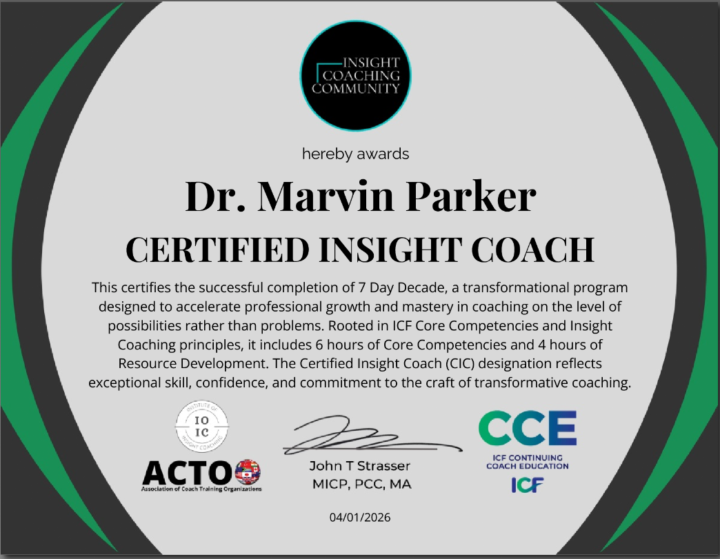
Congratulations Dr. Marvin Parker!
We are pleased to inform you that you have successfully completed the 7 Day Decade Life Coach Certification Program! Your dedication and hard work have earned you this well-deserved certificate.
1 like • Apr 2
Congratulations! That's what I'm talking about!
Mar 28 •
Ask to Be Released With Professionalism and Good Faith
So, this means when you can no longer meet a commitment, the professional move is not to disappear, delay, or break trust in silence; it is to request a formal release and reset expectations. Asking to be released shows respect for the other party’s time, planning, and risk, and it protects your integrity because you name the constraint early and take responsibility for the impact. Good faith shows up in how you do it: provide a clear reason, propose options (revised scope, new timeline, replacement support, or a clean handoff), and accept the outcome if they decline. Leaders who handle commitments this way reduce conflict, preserve relationships, and keep accountability tied to transparency rather than excuses. Dr. M. V. Parker, DBA Founder and CEO MVP Training Solutions

1 like • Mar 30
This is so true. I do about 10 discovery calls a week and 6 recordings a week. Life happens. At first, I would sacrifice what’s going on versus the responsibilities of showing up. Sometimes that needs to happen and sometimes it’s ok to release that commitment and reschedule. Thanks for bringing this up.
Mar 3 •
Closed Doors Signal Redirection
Closed doors do not always mean you are unqualified or unwanted; they often mean the timing, fit, priorities, or requirements do not match the direction you are pursuing. When you treat every “no” as personal rejection, you lose energy and you narrow your options, but when you treat it as data, you gain clarity on what needs to change, your approach, your target, your preparation, or your plan. Redirection is a leadership skill because it turns setbacks into course correction, keeps momentum alive, and protects self-respect while you reassess. The goal is not blind optimism; it is disciplined response, extract the lesson, adjust the strategy, and move toward a path where your effort produces outcomes that align with your purpose. Dr. M. V. Parker, DBA Founder and CEO MVP Training Solutions

1 like • Mar 6
Yes, this is so timely. I recently set out to gain sponsors for my podcast. My goal was to get 10 - declines, no thank yous, I'll pass and straight up rejection. Not because I didn't want to land a sponsor. I wanted to fail fast, learn, and ask what didn't work and what did to adapt and overcome. Thanks for sharing this.
Mar 1 •
Discipline Gets Noticed After It Pays Off
This means discipline often looks boring, strict, or unnecessary to others while you are doing it, because they only see what you are giving up, not what you are building. Consistent habits, training, studying, saving, planning, practicing, produce results slowly, and most people do not value what they do not understand or what they are not willing to do themselves. Once the outcomes are visible, better performance, stronger health, more stability, higher credibility, people start praising the discipline and asking how you did it, because they want the benefits without the long stretch of quiet effort. The lesson is to treat discipline as a private standard, not a public performance, and to stay committed even when nobody claps. Dr. M. V. Parker, DBA Founder and CEO MVP Training Solutions

1 like • Mar 1
Yes! What is done in the dark will eventually be brought to light.
1-10 of 38

@tim-staton-8465
Leadership Podcaster that showcases topics of relevancy to help improve your leadership styles and organizations (direct, org, strategic).
Active 4d ago
Joined Jan 13, 2026
INTJ
Connecticut