
Write something

26d •
How we "Show Up"
I’ve been paying attention to how people show up for one another—at work, at home, in community spaces. It’s wild how a single conversation, a bit of clarity, or a moment of belonging can shift someone’s entire direction. I’d love to hear what you’ve noticed lately about the way people grow when they feel supported.
0
0

May 28 •
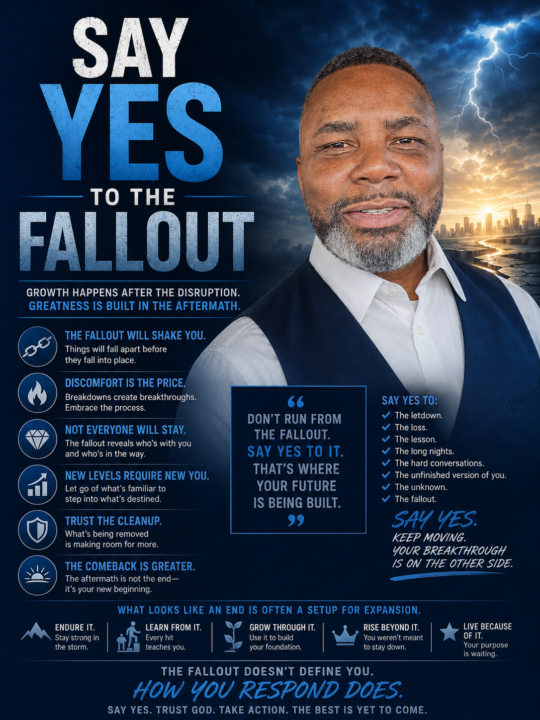
Say Yes to the Fallout
Life includes friction, mistakes, delays, and broken plans, and resisting that reality often adds a second layer of suffering. Saying yes to the fallout means you stop arguing with what already happened and shift your energy toward response. It is acceptance without surrender, you acknowledge the consequences, name what is within your control, and choose the next right action. This mindset reduces emotional spirals and prevents small setbacks from turning into days of avoidance. In leadership and personal growth, saying yes to the fallout means owning outcomes without excuses and learning without denial. You clean up what you can, repair what you damaged, communicate what changed, and adjust your approach so the pattern does not repeat. You also build resilience because you stop treating disruption as a personal insult and start treating it as part of the work. When you accept fallout, you move faster from setback to recovery, and your standards stay intact under pressure. Dr. M. V. Parker, DBA Founder and CEO MVP Training Solutions
1
0
May 26 •
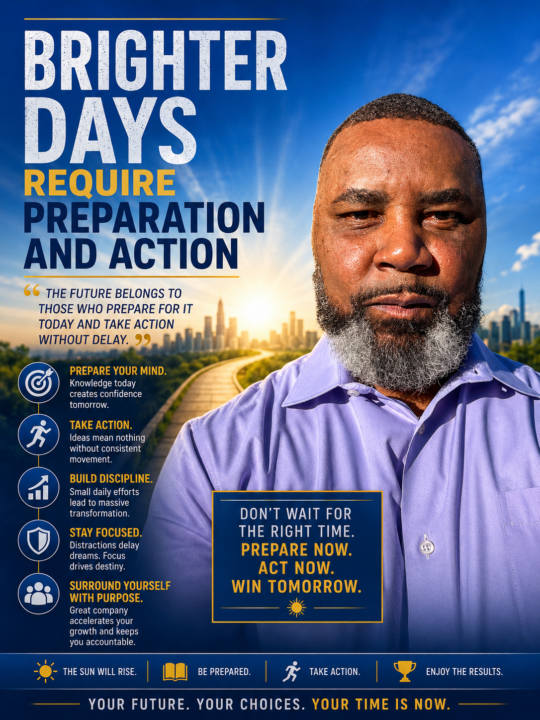
Brighter Days Require Preparation and Action
“The planets are lining up bringing brighter days, they’re all in line waiting for you” (Michael Jackson). MJ’s message offers hope to entrepreneurs who are in a hard season, reminding you that conditions can shift in your favor and momentum can return. Brighter days might look like a new customer segment opening, a partner reaching out, a market need becoming urgent, or a season where your work starts getting noticed. The point is not luck; it is readiness to recognize opportunity when it appears. When you hold hope with discipline, you protect your mindset without losing focus on the work. “They’re waiting for you” places responsibility back on the entrepreneur. Opportunity still requires action: show up consistently, stay visible, follow up, and keep improving your offer and delivery. Tighten your operations so you can scale without breaking trust, and keep your finances clean so growth does not become chaos. Brighter days often arrive through small signals first, so stay alert, stay steady, and move when the door opens. Dr. M. V. Parker, DBA Founder and CEO MVP Training Solutions
1
0
May 23 •
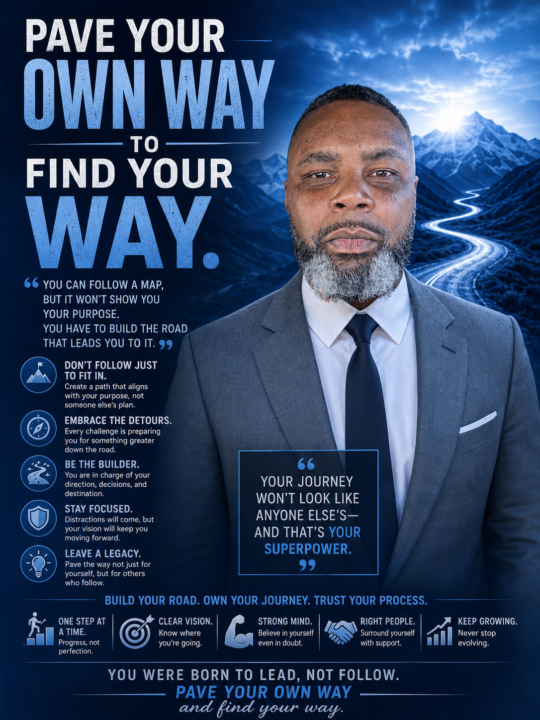
Pave Your Own Way to Find Your Way
Sometimes there is no clear roadmap because your goals, constraints, and timing do not match what worked for others. Waiting for perfect direction can become a form of avoidance, and it keeps you stuck in planning while the window for progress closes. Paving your own way means making the first decision with the best facts you have, accepting uncertainty, and learning through action. It is the discipline of moving forward without needing full approval, full clarity, or guaranteed outcomes. This approach requires structure, not chaos. Set a clear aim, run small tests, track results, and adjust based on evidence rather than ego. Seek input, but do not surrender ownership of the decision, since you will carry the consequences. Over time, your path becomes clearer because you created it through consistent choices, lessons learned, and standards enforced. When you pave your way, you turn uncertainty into direction through action. Dr. M. V. Parker, DBA Founder and CEO MVP Training Solutions
May 22 •
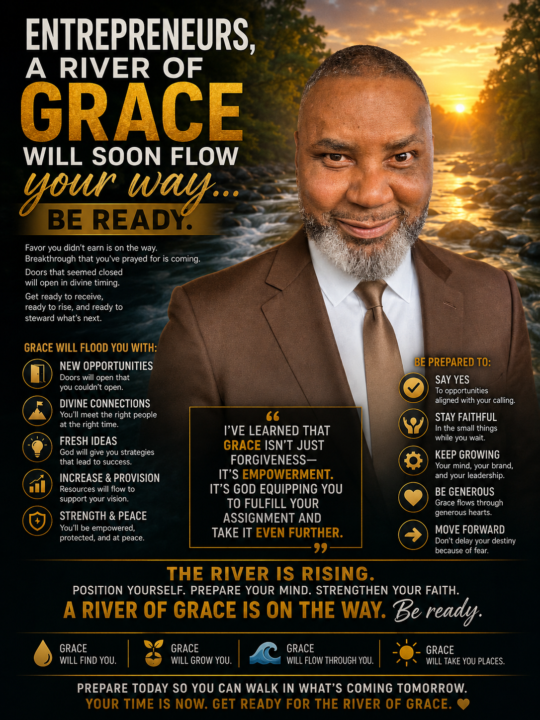
A River of Grace Is Coming, Be Ready
For entrepreneurs, this message is about preparation for an opening you did not force, a referral, a contract, a breakthrough client, a key hire, or a timely partnership. Opportunity often arrives fast and tests readiness, not hope. If your offer is unclear, your pricing is inconsistent, your onboarding is messy, or your delivery system is weak, grace can pass through your hands without turning into sustainable growth. Being ready means your business can absorb good news without collapsing under it. Readiness looks like disciplined basics. Know your target customer, keep a clear one-sentence value proposition, and maintain a simple sales process with follow-up and documentation. Keep finances clean, contracts ready, and delivery standards defined so quality stays consistent when demand rises. Build capacity through checklists, templates, and a small set of operating routines so you can move fast without losing control. When grace flows, preparation turns it into impact, stability, and long-term trust. Dr. M. V. Parker, DBA Founder and CEO MVP Training Solutions
1
0
1-30 of 243
powered by
skool.com/mvp-training-solutions-1047
MVP Training Solutions: a Skool community for executives and managers. Courses, templates, feedback, and live talks to apply leadership skills fast!
Suggested communities
Powered by