Activity
Mon
Wed
Fri
Sun
Sep
Oct
Nov
Dec
Jan
Feb
Mar
Apr
May
Jun
Jul
Aug
What is this?
Less
More
Owned by Tim
The only place on Skool to learn about Pawpaws! Free growing guide, Free seeds for a limited time!
Memberships
Earthcraft Systems
5 members • Free
Living Soil Community
1.3k members • Free
Virtual Journaling Lounge
28 members • $5/month
Whole Garden Life Club
13 members • Free
GroundUp Land Community
740 members • Free
Glamping Developers
219 members • Free
Camping Wilderness Skool
201 members • Free
Fig Skool
1.4k members • Free
Natural Gardening
412 members • Free
5 contributions to Oasis Builders
11d •
Foundation being laid down
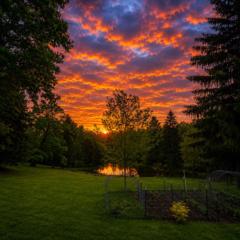
I added 12 new pawpaw cultivars to the orchard as the foundation of my premium breeding row: • KSU State Fair • KSU Chappell • Big Ben • Jim’s Nebulous • Lehman’s #5 • Corner Pocket • Lehman’s #11 • Grand Blanc • PPF 5-5 • Wabash • Allegheny • Bo Grease Biggins My goal wasn’t to collect the “most famous” cultivars—it was to build a genetically diverse collection. I wanted representation from several breeding programs and selection lines rather than a row full of closely related trees. There are still a few on my future wish list, especially Canopus and Pompers Choice, but I’m happy to let this row grow out and show me what each cultivar has to offer before adding more. For those of you with larger collections, what cultivar has impressed you the most in terms of fruit quality, productivity, or overall performance? Any hidden gems you think deserve more attention?

1 like • 11d
@Jon Shobe Jim is a cool dude! And grafting your own trees doesn’t stop you from visiting other growers and nurseries!
2 likes • 10d
@Jon Shobe see if he can get some pictures of the fruit from these selections. Part of the reason you want a grafted tree is to have known fruit quality, if you don’t know what the fruit is like it defeats the purpose.

🍀
18d •
We had serious storms and flooding here..
And I went out to check my garden area this morning, lots of mush in my garden beds now. We are expecting like 5 more days of rain in the next week. Not sure how my garden is going to like that! We were lucky that we live up in the hills, but the torrential rains turned our back yard into a pond, caused some of our back hill to slide down, and washed out a large portion of our driveway. The folks down in town got it way worse than we did. Gardening is always an adventure!
2 likes • 17d
Thats for sure, the challenges make life exciting. Glad you all are safe!
18d •
Before We Add More to the Compost
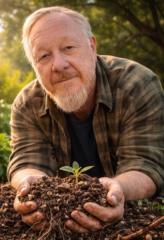
Compost is sometimes taught as a recipe. Add browns, greens and turn the pile. Wait. Those instructions can be useful, but they do not explain what is actually happening. Composting is managed decomposition. Bacteria, fungi, and other decomposers use organic materials as food and housing. Their activity is influenced by carbon, nitrogen, moisture, oxygen, particle size, pile structure, temperature, volume, and time. When those relationships are reasonably balanced, materials change. Leaves soften. Stems weaken. Colors darken. Larger pieces become smaller. Heat may build. The original materials become harder to recognize. When one part of the relationship is far out of balance, the process may slow or change. - Very dry material may decompose slowly - Waterlogged material may lose air and develop unpleasant odors - Dense material may restrict oxygen - Too much coarse carbon may slow active breakdown - Too much readily available nitrogen may create odor or excess heat - Small piles may never become hot - Cold weather may slow activity - A pile may still decompose without becoming a hot pile Heat is one useful observation, but it is not the only sign of life. Cold composting, active hot piles, vermicomposting, contained household methods, and slow leaf decomposition can all have useful places. They differ in materials, speed, labor, space, temperature, and intended outcome. Before adding more material, we can first read the process already underway. Look at one compost container, pile, worm bin, leaf pile, or patch of decomposing mulch. Notice its smell, moisture, texture, visible organisms, recognizable materials, and signs of change. Take a handful from below the surface. It should not be dripping wet or dusty dry for most aerobic pile methods. Record what you find before adding water, turning, or adding more material. Identify one regular household compost input and one available dry carbon-rich material. Examples might include vegetable scraps, coffee grounds or pulled weeds paired with dry leaves, shredded plain cardboard, paper towel spindle or pruned woody garden material.
Poll
10 members have voted
1 like • 17d
Just collecting weeds and grass as mulch, not composting atm
24d •
Chaos garden myth
The truth is scattered vegetable seeds in prairie between fruit trees is something once suggested as synergy or chaos gardening (the original theory actually uses seed bombs.) is not likely to be effective, although if you have the space available planting a mixture of vegetable starts , randomly into a cover crop that's terminated and then letting them self seed for several years has the possibility of producing locally adapted seed and plants. The seed bank built-up in the soil will generate it's own unique growing pattern, certain plants prefering , differing years weather. The whole scenario is likely to involve many wild plants and herbs, so selective weeding of the very invasive would be needed. Will it be productive? Or even produce a usable harvest? Probably not. But an interesting experiment nevertheless. Wilderness and chaos has a role in ecosystems, even though, the function is not obvious to us, it's there.
3 likes • 18d
@Jim Flach getting more people to connect with the land has always been the real goal right? As a species we grow more food than we really need to feed the planet…getting folks growing plants feeds the soul and community.
3 likes • 18d
@Jim Flach it may or may not take longer, remember growth is not always linear!
20d •
Making the best of what you have.
Every year has good points and this year maybe ideally suited for seed collecting, long dry periods make clean and ripe seed. I'm especially looking for wildflowers and tree seeds.
1 like • 19d
@Phillip Greenwood hope so too, heat waves are no fun!
1 like • 19d
@Phillip Greenwood thats good, they are native in my area. They definitely appreciate good soil. If you only have one youll need a second one for pollination or graft it with more than one cultivar(with compatible pollen shed)
1-5 of 5

Active 10h ago
Joined Jul 21, 2026