Activity
Mon
Wed
Fri
Sun
Aug
Sep
Oct
Nov
Dec
Jan
Feb
Mar
Apr
May
Jun
Jul
What is this?
Less
More
Owned by Steve
My name is Steve. I make great bread. And I am good at teaching others to make great bread too. Let's learn together and make some lovely bread.
Memberships
Skoolers
166.8k members • Free
Crust & Crumb Academy
1.1k members • Free
MiraclesOne ACIM Community
167 members • Free
Bijan’s studio
319 members • Free
6 contributions to Crust & Crumb Academy

⭐
🔥
Apr 26 •
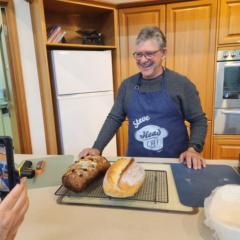
🍞 Stop Guessing About Bulk Fermentation
This is one of the most common places bakers get tripped up. Knowing when your dough has actually risen by 50%. Most people are waiting too long. This will fix that. Watch this 👇
6 likes • Apr 26
This is a great help, and it works, but it isn't perfect. Small dough pieces will absorb heat quicker than a larger dough piece, particularly if you are using a heated proofer of any kind. Dough temperature is critical. And even moreso when the dough is in a warmer of some kind, because a WARMING dough speeds up AS it is warming. And this means that a small dough sample can ferment more quickly, and rise much quicker, than the parent dough. This makes under proofing still a risk even when using a sample method. So while it is a useful guide, there is no substitute for learning to read your dough. Accurate timing of dough fermentation is a real skill, that can be assisted by all sorts of tools, but none are fool-proof.
⭐
🔥
Apr 1 •
April Member Roll Call: Let’s Actually Meet Each Other 🍞
We’ve got so many new faces in here and honestly, I feel like we talk in the comments all the time but I don’t really know who you are. And that’s on me for not doing this sooner. So let’s fix that today. New members, longtime members, everyone. Drop a reply below and tell us: 🏡 Where you’re from 🍞 What kind of bread you’re baking right now (or trying to learn) 🎯 One thing you’re working on getting better at I’ll go first: I’m Henry, based in Columbia, South Carolina. I’m in the middle of an Easter bread series right now and I’m constantly chasing better oven spring on enriched doughs. It never gets old. There are members in here from all over the country, some internationally too, and you’ve been talking to each other in threads without really knowing the person on the other side of the comment. Let’s change that. This isn’t just for the new folks. If you’ve been here since day one, I want to hear from you too. We grow as a community when we actually know each other, not just each other’s loaves. Drop your intro below. I’m reading every single one.

3 likes • Apr 3
@Ehsan Omara You remind me of me back 6 years ago. Once I tasted (lol) success with sourdough I was hooked! This is a great community space, and Henry Hunter is about the most dedicated community host I have seen on Skool. I am winding down gradually these days, but I still love interacting with all of you on this platform as well as on Facebook, and of course my live classes with WEA. 😁❤️

Mar 27 •
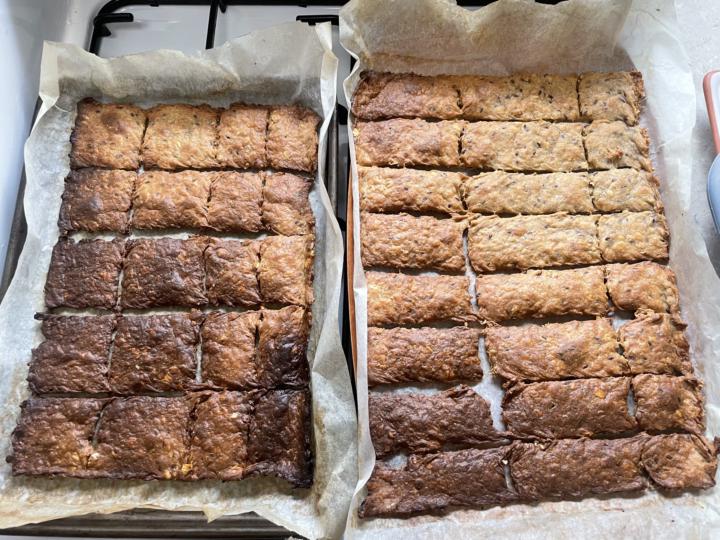
Knäckebröd ( Swedish Crispbread)
I baked this morning Swedish Crispbread. Thanks to @Steve Koschella for sharing this recipe.
1 like • Mar 29
Well done Ehsan. Next time bake them on a lower temperature, being so thin they can burn easily.
⭐
🔥
Feb 18 •
The Cream Pour: Why We Keep Pouring Things Over Dough
If you baked focaccia with us last Saturday, you already understand this concept even if you don't realize it yet. With the focaccia, we poured olive oil brine over the top before baking. It pooled in the dimples, seeped into the dough, and created that golden, crispy, flavorful crust. The oven transformed a simple liquid into something completely different. Saturday's cinnamon rolls use the same principle. Right before they go in the oven, you pour warm heavy cream around the rolls. Not over them. Around them. It sounds strange. It looks like you're ruining them. But here's what actually happens. The cream sinks down between and underneath the rolls. As the oven heats up, the cream combines with the brown sugar and butter that's already oozing out of the filling. That mixture caramelizes on the bottom of the pan, creating an almost sticky-bun layer underneath your cinnamon rolls. Two completely different breads. Same concept. Focaccia: olive oil brine creates a crispy, golden, flavorful crust. Cinnamon rolls: heavy cream creates a caramelized, gooey, sticky bottom. That's the kind of connection that makes you a better baker. When you understand the why behind a technique, you can apply it to anything. You stop following recipes and start thinking. On Saturday, you'll pour 180g (3/4 cup) of warm cream around the rolls right before they go in. The oven does the rest. Questions about the cream pour? Drop them below.

4 likes • Feb 18
@Sandy Chong Yes, we have them here in Australia. More of a cake-bun than a dessert, but VERY nice. British cuisine, and many of their baked specialties are way underrated in my view.
0 likes • Feb 20
@Sandy Chong It's easy. Just take a small amount of your flour and mix it with x5 the WEIGHT in water from the recipe. (eg. 50g flour with 250g water). Make the roux from that and use it back in the recipe. You might need to add more water to the dough during the mix. Tangzhong binds the water differently than in a normal mix, and Tangzhong recipes typically are +5-10% more hydrated than normal doughs, but it needs to be tested with every flour as it can vary.
⭐
🔥
Feb 16 •
This Saturday: We're Making Cinnamon Rolls
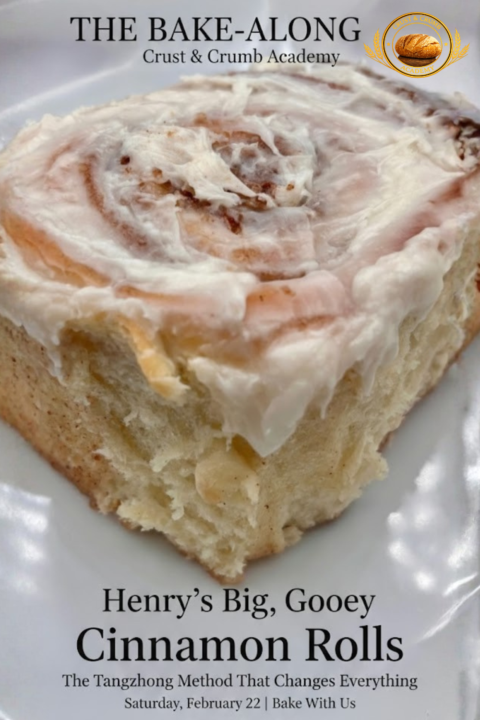
After last week's focaccia blew up (521 comments, 19 bakers, 100% completion), we're shifting gears. This Saturday we're baking Henry's Big Gooey Cinnamon Rolls. These aren't regular cinnamon rolls. Three things make them different. First, tangzhong. It's a Japanese technique where you cook a small amount of flour and milk into a paste before adding it to the dough. That paste traps moisture so the rolls stay soft for days, not hours. If you were here for the focaccia, you already understand the concept of adding something wet to dough and letting it transform during baking. Same energy, different bread. Second, the cream pour. Right before these go in the oven, you pour heavy cream over the top. It seeps down between the rolls, caramelizes on the bottom, and creates this gooey, almost sticky-bun layer underneath. Remember the olive oil brine on the focaccia? Same idea. We pour something over dough, and the oven does the rest. Third, the filling. Brown sugar, cinnamon, butter, and a secret weapon: cornstarch. It keeps the filling thick and gooey instead of running out during baking. Rolled tight. Cut clean. Twelve big rolls per pan. The kind you pull apart and they stretch with gooey strings of filling. And here's the part I'm really excited about. This recipe has two versions. Yeasted version: Uses instant yeast. Mix it today, refrigerate overnight, bake tomorrow morning. Straightforward and accessible. If you've never made enriched dough before, start here. Sourdough version: Your active starter replaces the yeast entirely. Longer fermentation, deeper flavor, that subtle tang that pairs perfectly with cream cheese frosting. If you've got a healthy starter, this is the one to try. Same recipe page. Same filling. Same cream pour. Same frosting. You just flip the toggle at the top and the ingredients and timing adjust automatically. No matter which version you choose, you're in. Everyone bakes together Saturday. Yeasted version: https://pantry.bakinggreatbread.com/recipes/henrys-big-gooey-cinnamon-rolls?variant=yeasted
9 likes • Feb 16
Tangzhong is a secret weapon! It is gradually becoming known but it is still a bit intimidating a concept for some. I am teaching a face-to-face class on hot-cross buns, using a hybrid leaven technique with tangzhong. They are awesome! I'll try to look in on your class on Saturday your time. Probably not a bake-along being in such different time zones, but to "meet" you and some of your members.
5 likes • Feb 16
@Henry Hunter Perhaps mention something often overlooked by many YouTube gurus and others. Not all flours are equal. I discovered this profoundly when I tried a North American recipe for sourdough scrolls. The hydration rate for the recipe the teacher was using was fine for the high orotein northern hard wheat she was using, but became a wet, impossible to roll mess for my Australian bread flour. Even two brands of flour from the same region can behave quite differently. I recently switched brands of flour and have had to adjust some of my own recipes because of the hygroscopic property differences. For an international audience, this should be discussed far more than it usually is. All recipes, particularly hydration rates, are SUGGESTED, and need to be tested. Just my 2c. 😁🍞❤️
1-6 of 6
@steve-koschella-1267
I LOVE baking bread and related products. And for the last 5 years I have been I LOVING teaching others how to create their own favourites!
Active 5d ago
Joined Feb 12, 2026
Adelaide, Australia