Activity
Mon
Wed
Fri
Sun
Aug
Sep
Oct
Nov
Dec
Jan
Feb
Mar
Apr
May
Jun
What is this?
Less
More
Memberships
🌾 From Oven to Market
64 members • Free
Sourdough Improvement
80 members • Free
Crust & Crumb Academy
1.1k members • Free
ML
My Lovely Loaves Bread Skool
115 members • Free
The Fermentation Society
16 members • Free
TMT Tribe - Gut Health Repair
201 members • Free
Cooking with Ollie
251 members • Free
242 contributions to Crust & Crumb Academy

⭐
🔥
2d •
🇺🇸 SATURDAY BAKE-ALONG: CROISSANT DAY 🥐🎆
Well, here we are. Bake day. And it landed on the Fourth of July, so let’s make something beautiful today. 🇺🇸 Most of you have your dough or your butter blocks resting in the fridge right now, which means the hard part is behind you. Today’s the payoff. We shape, we proof, we bake. Here’s the game plan: 🥐 Pull your dough, roll it out long, cut your triangles, and shape ⏳ Proof until puffy and jiggly. This is the make-or-break step, so don’t rush it. French folks, you’re looking at a couple hours. Sourdough, yours runs longer, 3 to 5, so be patient with it. 🔥 Egg wash, then bake to a deep mahogany. Pale is underbaked. Let that color build. Now, two things about the heat. 🎇 First, the real one. This heat wave across the country is dangerous, not just uncomfortable. Drink your water, stay cool, and check on the older folks and neighbors around you. Your bread can wait. You come first. Take care of yourselves out there. 🇺🇸 Second, that same heat is sitting in your kitchen. Your final proof has to stay under 78F or the butter melts and weeps out before the croissants ever hit the oven. Find the coolest room in the house. If your kitchen’s running warm, the fridge is still your friend, use it to hold the proof steady. Keep a close eye today, because in this heat they can over-proof faster than you’d think. This thread is home base all day. 🎆 Post your progress right here. Your shaped croissants, your proof, your first tray out of the oven, your crumb shots when you cut in. And if you hit a snag, butter leaking, dough fighting you, proof looking off, drop it in the comments and I’ll walk you through it. I’m around all day. Let’s bake, everybody. 🇺🇸🥐 Perfection is not required. Progress is. Henry ⭐🔥🇺🇸


1 like • 17h
@Ann Snow next time it will be rise
0 likes • 14h
@Dusty Commons thanks
⭐
🔥
2d •
CLARIFICATION POST — ROLLING OUT LAMINATED DOUGH
A minute ago I was reading someone’s question about rolling out the dough now I can’t find it or remember who asked it so I thought I would address it here and hopefully this is what you’re asking about. You roll in one direction, away from you and back, stretching the dough into a long strip. You don’t roll side to side across the width. When you roll across like that, you push the butter out the open edges and press your layers together, and keeping those layers separate is the whole game. That’s what builds the honeycomb. Between each fold, give the dough a quarter turn, then roll long again. Firm, even pressure, one direction at a time. Roll it long. Keep it cold. Let the layers stretch. Henry ⭐🔥

3 likes • 1d
Thanks for the advice

🔥
2d •
Beirocks/ Runza Tester Recipe Release
Sharing here because when I showed my Runza test. A fellow baker or two requested the recipe when it was released. Ta Da here it is. https://thatsourdoughgal.com/sourdough-bierocks-runzas-recipe/#growUnverifiedReaderId=7401540c-72b2-495f-81fe-6c10092f589d&growAuthSource=espLink&growSource=espLink
2 likes • 1d
It looks nice 😊 and I should try to make it Thanks for sharing the recipe

2d •
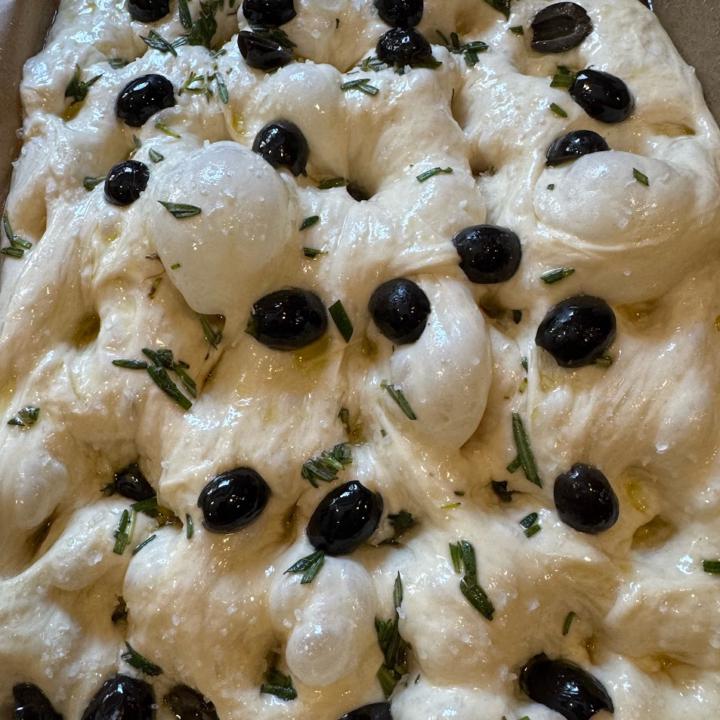
Focaccia
It’s the 4th of July and the forecast is for 104°F outside. The garden is full of fresh herbs. That means it’s time for Focaccia. This is a same-day recipe. Started at 6AM and out of the oven at 9AM, before the heat of the day. It’s great for a ‘Caprese Focaccia Sandwich’ with balsamic glaze. 9×13-inch (23×33cm) baking tray Total dough: 947 grams; Total flour : 500 grams; Water 80%; Instant yeast 1.4%; Honey 2%; Salt 2%; and Olive oil 4%. Ingredients: * 500g strong bread flour * 400ml warm water * 7g instant yeast (1½ tsp) * 10g honey (2 tsp) * 10g salt * 20g olive oil (1½ tbsp) * Toppings: Olive oil, fresh rosemary, halved olives or cherry tomatoes & flaky sea salt. Methods: 1. Mix the lukewarm water, honey, and yeast. Add the flour and mix until no dry flour remains. Add the salt and olive oil, then mix just until combined. Cover and rest for 30 minutes. 2. Stretch + fold every 30 mins (x3). 3. Generously oil a 9×13-inch (23×33cm) baking tray. Gently transfer the dough into the pan without punching out the air. Let it relax naturally instead of forcing it into the corners. Cover and let it rise for 1½–2 hours, or until doubled and very puffy. 4. Drizzle generously with olive oil. Coat the rosemary and halved olives in olive oil before placing them on top so they don’t burn. Using well-oiled fingertips, gently press dimples all over the dough without deflating it. Sprinkle with flaky sea salt. 5. Bake at 450°F (232°C) for 20–25 mins until golden. Tips: Keep your hands wet or lightly oiled while handling the dough, be gentle to preserve the bubbles, and don’t be shy with the olive oil, it creates that crispy, golden crust.
3 likes • 2d
It looks yummy 😋
⭐
🔥
2d •
Happy Birthday America
This beautiful tribute was done by my friend Sophie. https://www.instagram.com/sourdough_sophie?igsh=ZHkxaWoyZjA1amQ3

4 likes • 2d
It’s very nice
1-10 of 242