
Write something

⭐
🔥
8h •
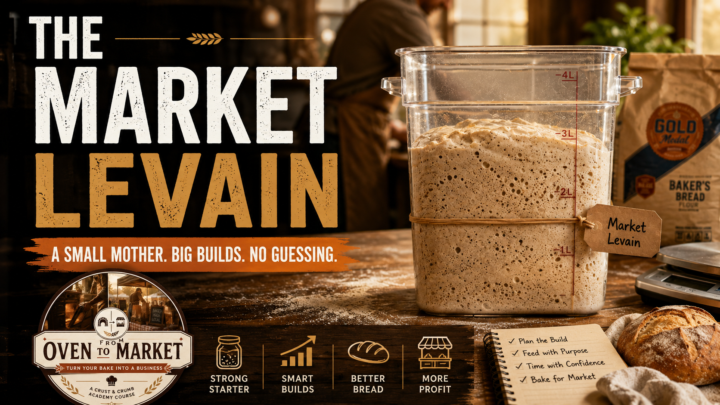
Most bakers treat their starter like a pet. Market bakers treat it like equipment.
That one shift is the difference between feeding by habit and feeding for 12 or 24 loaves without wrecking your week. I just dropped a free interactive lesson called The Market Levain: the exact math, feed ratios, and timing I use for market bakes, with a built-in calculator and my voice walking you through every screen. 👉 https://swift-linden-x4dj.here.now/ This is the kind of lesson we do every week inside From Oven to Market, the community where bakers turn their oven into a business. Here's the deal: join this week and you're in free, for life. After this week it's $5 at the door. 👉 skool.com/from-oven-to-market Tag one baker who's been talking about selling at the market. They'll thank you for it. ~Henry⭐🔥
⭐
🔥
7d •
Want your bread to spike your blood sugar less? Freeze it. 🍞
Here’s a trick backed by real food science. When you freeze your bread and thaw it later, or toast it straight from frozen, it can actually raise your blood sugar less than fresh-baked. The reason is a process called retrogradation. Stay with me, it’s simpler than it sounds. When you bake bread, the starches soften and open up. That’s what makes warm bread so easy to digest, and it’s also why it hits your blood sugar fast. But as bread cools, and especially when it freezes, those starches reorganize and tighten back into a more crystalline structure. That reorganization creates what we call resistant starch. Resistant starch does what the name says. Your body can’t break it down as easily, so it behaves more like fiber than sugar. Less of it turns into glucose. Lower glycemic hit. So the move is simple. Bake your bread, let it cool fully, slice it, and freeze it. When you want a piece, toast it straight from the freezer. You get the same bread you love, a little kinder on your blood sugar. One more reason homemade beats the mall. You control the whole loaf, start to finish. Perfection is not required. Progress is. Henry ⭐🔥

⭐
🔥
12d •
The Secret to Controlling Flavor in Sourdough
A Story About What’s Happening Inside Your Starter. Every sourdough loaf gets its flavor long before it ever becomes dough. Before shaping. Before proofing. Before baking. It happens in the jar. Most people chase flavor by changing recipes. Different flours. Different hydrations. Different techniques. But flavor isn’t hiding in the recipe. It’s already being decided inside your starter. Once you understand what’s happening there, flavor stops being a mystery and starts becoming a choice. https://youtu.be/gub1kAZVJ_Y
⭐
🔥
19d •
Three weeks into your starter and ready to throw it out?
If you're three weeks into a starter and ready to throw it out, read this first. A starter that doubles, floats, and smells tangy is not broken. It's almost there. The dome that collapses and the bubbles that hide under the surface are normal. Most people quit the week before it finally clicks. Feed it on a schedule, watch how long it takes to peak and fall, and bake with it when that float gets predictable. I walked through exactly how to read it here: https://www.youtube.com/watch?v=Ax0eF00are8. Who's still building a starter right now? Tell me what week you're on. Perfection is not required. Progress is. Henry⭐🔥
⭐
🔥
18d •
🎥 New Lesson: How to Freeze Your Bread the Right Way
If a loaf isn't going to be eaten within a day or two, the freezer is usually your best friend. In this lesson, we look at what actually causes bread to go stale, why the refrigerator often makes the problem worse, and how to freeze, thaw, and refresh your bread so it keeps as much of its original quality as possible. You'll learn: 🥖 Why bread goes stale ❄️ Why freezing works 🚫 Why the refrigerator isn't always the answer 🍞 How to freeze whole loaves and sliced bread 🔥 How to bring frozen bread back to life A simple skill. A big difference. 🎬 Watch the lesson here: https://youtu.be/eiepOzOVDgk 🛍️ Member Discount from ModKitchn Many of you ask how I store bread at home. One of the tools I use is the ModKitchn Fresh Bread Storage Bag. It's designed for countertop storage and freezer use, making it a great option for keeping your bread fresher longer. ModKitchn has generously offered Crust & Crumb Academy members 10% off. 👉 https://modkitchn.com/discount/BAKINGGREATBREAD10 Use code: BAKINGGREATBREAD10 Thank you to Morgan and the team at ModKitchn for supporting bread bakers and our community. Perfection not required. Progress expected. Henry⭐🔥 Crust & Crumb Academy
1-30 of 85
powered by
skool.com/crust-crumb-academy-7621
#1 Sourdough Community on Skool 🍞
Coaching, not judgment. Sourdough, starter, yeasted, enriched & every bread between.
✅ ProveWorth Certified ⭐⭐⭐⭐⭐
Suggested communities
Powered by