Activity
Mon
Wed
Fri
Sun
Jan
Feb
Mar
Apr
May
Jun
Jul
Aug
Sep
Oct
Nov
Dec
What is this?
Less
More
Memberships
Liberty Politics Discussion
1.1k members • Free
7 contributions to Liberty Politics Discussion

17h •
Why some in The West convert to Islam and how to reduce it.
People convert to Islam for a wide array of personal, emotional, social, and intellectual reasons that often intersect in complex ways. Many are drawn by the strong sense of community and belonging that Muslim networks provide, especially in Western societies where isolation and loneliness are common. Mosques and social circles act as welcoming hubs, offering support and friendships that feel immediate and unconditional. Others find the faith’s narratives compelling—stories that emphasize peace, justice, compassion, and purpose, particularly appealing to those searching for meaning amid uncertainty or personal crisis. Sympathy plays a role too: media portrayals of Muslims as victims of discrimination or geopolitical conflict can evoke empathy, leading some to explore and ultimately embrace the faith as an act of solidarity. Admiration for resilience in the face of suffering also attracts converts, as the steadfastness of Muslim communities enduring hardship can seem profoundly inspiring. The structured devotion—daily prayers, moral guidelines, and rituals—offers discipline and clarity that feel lacking in more secular lifestyles. For some women, modest dress like the hijab represents empowerment, identity, and self-respect, while traditional gender roles emphasizing family and homemaking align with personal values they feel are undervalued in modern culture. As Christianity declines in certain regions, Islam steps in to fill spiritual voids with a comprehensive worldview and ready-made community. Intellectual curiosity draws others through Islam’s rich theology, history, and contributions to science and philosophy, while spiritual seekers appreciate its direct path to fulfillment and a clear moral framework centered on charity, justice, and ethical living. Close relationships—romantic partners, friends, or mixed-faith families—often serve as gateways, with conversion smoothing social or familial harmony. For some, it marks a transformative new identity, a way to leave past struggles behind or rebel against mainstream norms. Political solidarity, fascination with the exotic, or even admiration for themes of strength and struggle (including interpretations of jihad) can motivate others, and in certain cases practical benefits like financial support or community aid factor in.

1 like • 14h
@Solar Flare I am quite religious in the sense that I believe that ethics and morality are absolute. It does not depend on culture or the individual. It is not relative or subjective. I don't claim to know exactly what the "rules" are but Judaism has a strong opinion on the matter. And so does Islam.
1d •
Baby formula
Is it true that the IDF found a stash of stolen baby formula? If yes, then why is this not all over the news?
2d •
Independent Kurdistan: A potential Israeli and Post-Theocracy Iranian ally?
A fully independent or confederally united Kurdistan is no longer a distant dream, but its realisation now hinges on two transformative regional shifts: the fall of Iran’s Islamist theocracy and the emergence of Israel as an open, decisive Kurdish ally. Should the Islamic Republic collapse and be replaced by a secular, liberal-democratic, and federally restructured Iran, Tehran would instantly cease being one of the Kurds’ four jailers. Ten to twelve million Iranian Kurds would gain genuine cultural, linguistic, and political rights overnight, along with control over their own security forces and a fair share of local resources. A democratic Iran would also lose all interest in propping up anti-Kurdish governments in Baghdad and Damascus; the Iran-backed militias that terrorise Iraqi Kurdistan and the logistical support that once reached Assad’s regime would dry up. Most importantly, a federal Iran could eventually enter a voluntary confederation with an independent Kurdistan, creating a vast, resource-rich, and democratically governed Kurdish-Iranian economic and security space stretching from the Mediterranean to the Persian Gulf. Israel, for its part, is uniquely positioned to turn this possibility into reality. Jerusalem already quietly supplies the Peshmerga and SDF with weapons, training, and intelligence, but a bolder policy is now feasible and necessary. By becoming the first country to grant formal diplomatic recognition to a sovereign Kurdistan (or at least to the KRG as a state), Israel would shatter the international taboo and make military aggression against the Kurds far costlier. Public Israeli air-defence early-warning systems, drone exports, and satellite intelligence could neutralise Turkey’s air superiority over Rojava and the KRG. Reviving and expanding the clandestine Kurdish-oil-to-Israel route would give Kurdistan an economic lifeline independent of hostile neighbours. Most crucially, Israel’s unmatched influence in Washington could push through binding U.S. security guarantees and legislation that finally treat the Kurds as strategic allies rather than disposable partners.

1 like • 1d
That sounds like a wonderful scenario.
3d •
How can The West fix Illegal Immigration and Assimilation issues.
I don't understand why European authorities have difficulty effectively addressing this issue. They could permit the use of lethal force if necessary to halt illegal immigration or prioritize mass arrests and deportations although these steps may be controversial. In recent years, many European countries have faced increasing pressure from public opinion regarding immigration, leading to a contentious debate about how to manage these flows. Some argue that allowing for stricter measures could deter illegal entry, while others advocate for more humane approaches. Alternatively, they might consider employing illegal migrants as cheap labor in regulated sectors where they can be monitored. This approach mirrors practices in Gulf states, where cheap laborers are kept separate from the main population in a highly controlled environment. Such a system allows these nations to meet labor demands without the complexities of integration. But, its extremely controversial. In Europe, acknowledging that human rights do not apply uniformly is controversial but brings to light the differing priorities of nations when it comes to immigration policies. Some argue that the rights of citizens should take precedence over those of illegal migrants, especially in contexts where public safety and social cohesion are perceived to be at risk. A more effective approach but extremely controversial for European states would be to distinguish between cheap laborers and unassimilated immigrants, separating them from the core population. This could involve placing these individuals in specific sectors, perhaps in industries that rely heavily on labor but are closely monitored, without granting the possibility of citizenship, as those in these categories may be less likely to assimilate. The focus should instead be on integrating educated and affluent immigrants, who are generally more likely to adapt to and embrace the culture of their new country. For instance, an immigrant engaged in academic or business pursuits often has the skills and background that align well with Western values and societal norms, making it easier for them to assimilate. This contrasts sharply with individuals performing manual labor, who may face barriers to integration due to language, education, or cultural differences.
2 likes • 2d
I don't believe in open borders but I also don't think we should be looking to Saudi Arabia for how to manage cheap labour. Afterall they still practice slavery. That said, I could probably be accused of being "racist against Muslims". I would prefer an immigration policy which favours immigrants from non-muslim countries. And religious and ethnic minorities. Overall I am pro-immigration but I think we should be "allowed" to pick and choose who we let into Australia. Any Muslims who come in should take some kind of test. Is it okay to harass gay people? Is it okay for a woman to work and have her own money and live independently? Is it okay to have sex out of marriage? Is it okay to eat pork and drink alcohol? Is it okay to harass Christians and Jews and Hindus for their religion? Of course they can just lie. But it should be made clear that there are certain cultural norms which are non-negotiable. Australian values of you will.
0 likes • 2d
@Solar Flare I would take persecuted minorities from the middle East. Then I would look to English speaking former colonies like India and Nigeria. I would take ex-muslims as they are also persecuted. I would take Indonesians because they are our neighbours (after passing the Australian values test). Then I would look at labour shortages and prioritise immigrants who have appropriate skill. I would probably take some Thai / Vietnamese / Burmese/ Cambodia / Lao even though these don't speak English and often don't have high education. I would provide incentives for new immigrants to settle in smaller towns outside Sydney and Melbourne.

Nov 3 •
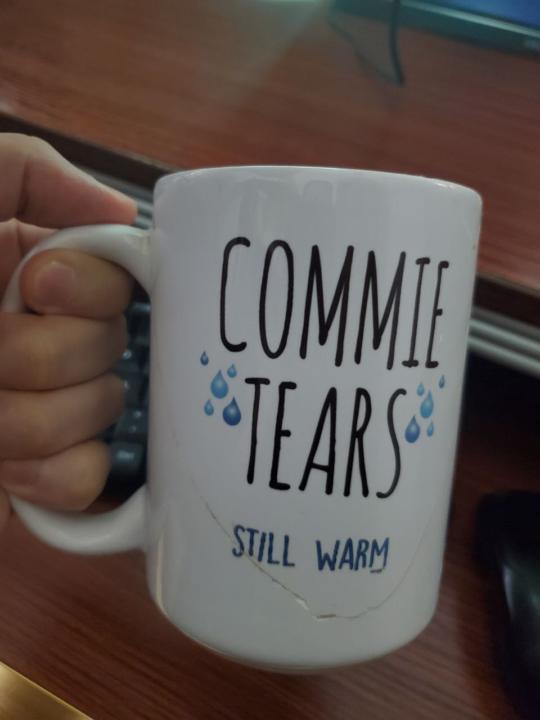
Welcome! Introduce yourself + share a pic
Let’s get to know each other! You can use this simple format: Hey, I’m from ____________. For fun, I like to ______________________. Here’s a pic of my myself or something I like.
2 likes • 3d
Hi, I am Shy Kitten from Melbourne Australia. For fun I like mathematics and python programming. Also improvised comedy.
0 likes • 2d
@Marco Caruana Sometimes. Not that often.
1-7 of 7

Active 3h ago
Joined Dec 8, 2025
Powered by