Activity
Mon
Wed
Fri
Sun
Jun
Jul
Aug
Sep
Oct
Nov
Dec
Jan
Feb
Mar
Apr
May
What is this?
Less
More
Memberships
Holistically, Realistically!
115 members • Free
Your First $5k Club w/ARLAN
28.5k members • Free
Digital Seller's Den
802 members • Free
Digital Income Society
83 members • Free
Oasis Builders
116 members • Free
Skool Scale Camp
4.9k members • Free
CPC ASMR Prompt Vault
371 members • Free
Pinterest Skool
4.5k members • Free
Influencer Growth Lab
2.6k members • Free
1 contribution to Oasis Builders
5d •
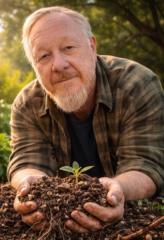
Bare soil is a warning sign.
In nature, soil does not stay bare for long. Something always moves in to cover because in nature, living systems protect themselves. That is one reason why dense planting matters in a guild. Dense planting is not just about squeezing more plants into a bed. It is about keeping the soil shaded, keeping moisture in place, feeding soil life through living roots, and reducing the open space where weeds usually move in. When soil stays covered, it tends to have fewer temperature swings, less water loss, and more steady biological activity. That matters because soil is not dirt. Soil is a living ecosystem. An effective guild helps build life in the system over time. Roots feed microbes with different root depths to open different parts of the soil. Leaves drop to become decaying organic matter or mulch. Mulch protects the soil surface and feeds decomposers who further cycle life to make nutrients available to plants. Flowers bring insects with different plant heights filling the space without every plant trying to occupy the same layer. This is where close spacing needs wisdom. Close spacing is not the same as crowding. Crowding happens when plants are fighting for the same light, airflow, water, and nutrients. Designed density happens when plants fill different roles and layers in the same space. This is why a chard, leek, lettuce, basil, flower, and mulch system can often work better than a single crop standing alone in bare soil. While one plant feeds us, a guild feeds us while also feeding the soil. Over time, that steady cycling of roots, leaves, mulch, microbes, and decomposers helps build organic matter and long-term fertility. The goal is not to create a bed that needs constant rescue. The goal is to create a bed that begins to recycle, protect, and feed itself. That is why food forests, polycultures, and effective vegetable guilds all follow the same basic pattern. Different layers with different roles placed tightly in one living system. Where have you seen dense planting work well in your garden, and where did it cross the line into crowding?
Poll
10 members have voted

3 likes • 2d
@Carla Giddeons ooo, auquaponics...I'll have to look into that. I admire your determination - you're an inspiration!
3 likes • 2d
@Carla Giddeons wow what a story! I’m glad your health is better. You have an amazing attitude ❣️
1-1 of 1

Active 37m ago
Joined May 8, 2026