Activity
Mon
Wed
Fri
Sun
Mar
Apr
May
Jun
Jul
Aug
Sep
Oct
Nov
Dec
Jan
Feb
What is this?
Less
More
Memberships
DDC Peer Consult Group
66 members • Free
Pre-Sale Prep
67 members • Free
The De-Escalation Academy
133 members • Free
Online Coaches And Experts
2.9k members • Free
28 contributions to The De-Escalation Academy

Dec '25 •
Saturday Call Summary
Holiday Family Discussion Management Doug discussed strategies for managing family gatherings during the holiday season, particularly focusing on how to handle potentially tense or political discussions. He emphasized the importance of being mindful of one's own behavior and considered when to intervene in arguments between family members. The group explored ways to de-escalate conflicts, such as using empathetic statements to acknowledge the other person's feelings and perspective. Vagal Techniques for Emotional Regulation Doug discussed techniques for managing intense emotions and conflicts, emphasizing the importance of using fewer words, speaking in a lower register, and slowing down to activate the myelinated vagal system, which promotes social engagement. He explained that speaking from the chest or belly rather than the throat can help calm both the speaker and the listener. Rina and Pegotty contributed by sharing personal experiences and observations, while Michael and Doug agreed on the effectiveness of these techniques in reducing perceived threats and fostering more positive interactions. Voice Modulation for Calm Communication The group practiced modulating their voices to create calming effects during family gatherings, with Doug explaining that 92% of communication is non-verbal and demonstrating how dropping one's voice and relaxing can reduce anxiety and influence others. Participants, including Pegotty, Rina, and Zahra, experienced firsthand the difference between speaking in a higher, intense register versus a lower, more relaxed tone, with Rina specifically noting how her voice affected her brother during a discussion about their mother's safety. The session concluded with an introduction of a new participant, Arief, who had recently received Doug's book. Voice Modulation for Conflict Resolution The group discussed techniques for managing emotions and de-escalating situations through voice modulation. Doug guided participants through exercises to experience the effects of speaking in different tones, explaining how raising and lowering one's voice can influence emotions and interactions. They explored how matching or dropping below an intense tone can help de-escalate conflicts, with Doug emphasizing the importance of matching intensity only when necessary and using a calm tone to prevent emotional contagion. The discussion highlighted the role of tone in nonverbal communication and its impact on perceived threat, with participants practicing these techniques and observing their effects.
2 likes • Jan 2
Doug, this is such a good example of how generous you are with your years of wisdom and understanding of how human beings work. I feel such gratitude for the hours I have spent in these and other discussions and appreciate the simple and practical strategies for connecting with and impacting those with whom we engage.
Jan 2 •
“Who am I choosing to become in 2026?”
“Who am I choosing to become in 2026?” provides an opportunity to stake out a new reality, supported by our newly defined identity and the emotions and beliefs that underpin it. One way I am answering this question for myself is by becoming someone who embraces every opportunity to strengthen friendships and enjoy the abundance of nature around me—hearing the sandhill cranes squawking loudly as they seek their tribe and start nesting, or watching the sky go from darkness to brilliance with coral-colored clouds at sunrise, or laughing with a good friend as we circle the ponds that are so plentiful and very walkable. Just as I was thinking about this, my phone dinged with a text from my dear friend Lorraine asking if I wanted to start walking again at 6 am this coming week – she said she was available every day except Monday. Without hesitation, I put “6 am Becoming connected to where I am” on my calendar for every day in 2026. The universe already answered with support for my becoming! Who are you choosing to become in 2026? Please share so we can all support you in listening the becoming you into existence! (and it beats any New Year's Resolution with an average lifespan of 1-week.)

Dec '25 •
Cognitive Empathy, Affective Empathy, Predictive Empathy
The perfect trifecta for vaidating emotions, and powerfully helping others to identify and own their own solutions for becoming the person they aspire to be. What a great conversation we had in the Saturday morning Doug Noll Q & A session. If you think there is a better way to spend your Saturday mornings, you might want to reconsider. These conversations can inspire you to approach everything in a new light! Check the calendar on https://www.skool.com/de-escalate to expand your effectiveness in listening to others, especially those you care most about!
1
0

Nov '25 •
When logic alone fails...
When someone is escalating, their brain isn’t rational—it’s reactive. You’re often talking to a brain that can’t access its higher functions yet. Before debating feelings or ideas, address the brain state. Calm the amygdala, re-activate the prefrontal cortex. That’s where the science lives. What is one tool you use to stop the debate, or a reminder that helps address the brain state?
2 likes • Nov '25
Been there at that juncture, and sometimes while I am knee-jerking, I can see myself shooting myself in the foot and totally derailing the intent of the interaction. I am so grateful for the ability to now run down through those layers of emotion to realize I am just feeling unheard and unappreciated. And then take a deep breath and get back on track!
1 like • Nov '25
@Stephanie Anderson Are you doing what you do because of your husband's brain-injury? Or did circumstances just converge?
Sep '25 •
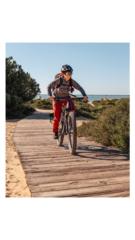
Excited to be here!
I'm a mental trainer and psychological counsellor working in the mountain biking industry, leveraging this sport to guide my clients to find their authenticity, improve their mental health and gain confidence through combining skills training with mental tools. As I'm always looking for new inspiration, I found Doug's method and I'm here to learn, exchange thoughts and practice! Loving the exchange until now, Roxy
1 like • Nov '25
@Roxy Wieschollek Welcome and I am fascinated that you are a pyschologicl counselor using mountain biking to help clients find their authenticity - at least that is how I am interpreting your intro. My first coaching focus was Mid-Life Adventure and I would take people on High Ropes Courses, Scuba Diving and Kayak trips to get them out of their comfort zone. I didn't have the tools you talk about or the tools offered by Doug Noll then, and now I would love to go back and engage in the same way - and perhaps that will be my last hurrah!!
1-10 of 28
@pegotty-cooper-1714
Co-founder Coach Training and Certification, serving clients in Divorce, now in 25 countries. MBA, CDC, Facilitator/Coach at the Unveristy of Tampa
Active 3d ago
Joined Aug 15, 2025
Land O Lakes, Florida
Powered by