Activity
Mon
Wed
Fri
Sun
Jun
Jul
Aug
Sep
Oct
Nov
Dec
Jan
Feb
Mar
Apr
What is this?
Less
More
Owned by Mark
God's word is an anchor for our souls. Whether you are new to the Bible, or an expert, join as Pastor Mark leads through the Bible book by book.
Memberships
The Wildlife Lens
34 members • Free
Everyday Legal Support
144 members • Free
Bullion Collective
68 members • Free
The SKOOL Directory
715 members • Free
Modern Millionaires AI Club
271 members • Free
Skoolers
191.9k members • Free
5 contributions to The Wildlife Lens

🔥
27d •
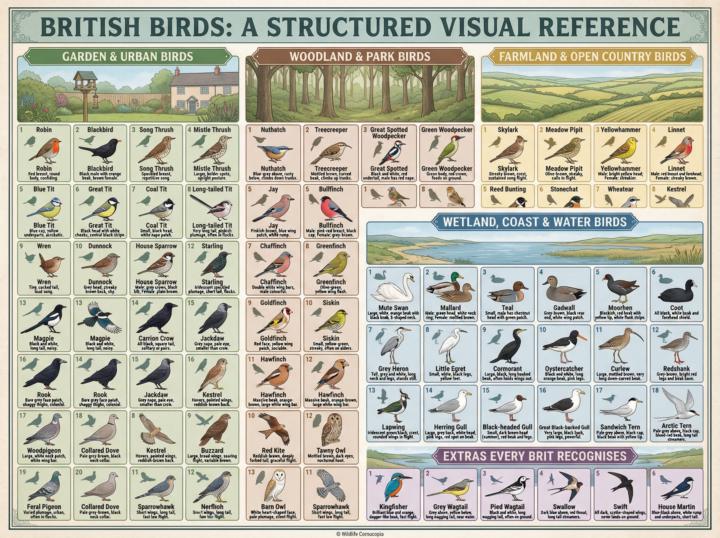
Guide to common British Birds
How many have you seen? This is a chart of 60 of the common British Bird, but have you ever asked, how many bird species are found on the UK mainland? This question sounds simple, but the answer depends on which version of “species count” you mean. Here’s the quick, no‑nonsense breakdown. 1. The official maximum number The British Ornithologists’ Union keeps the official British List. As of the latest update, Britain has 636 species recorded. This includes everything: vagrants, accidentals, offshore species, and reintroduced non‑natives. Great for trivia. Not very useful for real‑world birding. 2. The birds that actually breed here The UK has around 130 regular breeding species. These are the dependable, year‑in, year‑out residents and migrants that form the backbone of our birdlife. 3. The number that matters for mainland birders If you combine the regular breeders with the annual migrants, winter visitors, and the handful of scarce-but-expected species, you end up with a realistic mainland total of: Roughly 220–260 species you can actually encounter in a typical year. This is the number most birders, guides, and tour operators use when planning trips or setting expectations. 4. Why the numbers vary so much Because “How many species are found in the UK?” can mean three different things: - 636 – ever recorded (including extreme rarities) - 130 – regular breeders - 220–260 – the practical mainland list you can genuinely see

2 likes • 27d
How many have you photographed?
🔥
27d •
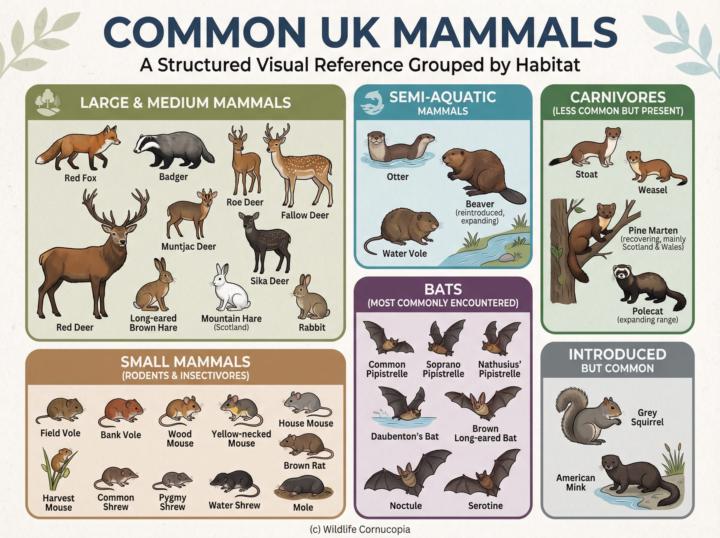
How many of these common UK Animals have you seen?
When people ask “What mammals do we actually have in the UK?”, the answer is surprisingly broad. Around 90 species occur across land, air, and sea, but only a subset are regularly encountered on the mainland. Here are the ones most people actually see or have a good chance of seeing. Tell us about you wildlife encounters!
2 likes • 27d
Great practice for wildlife photogs

Feb 14 •
Fairly new to bird photography, been a birder for 5 years
Hey y'all! I've been a birder for 5 years now and recently upgraded to the Nikon Z6 III which has got me really into bird photography. I've dabbled in bird photography before this, but never been quite this serious. Anybody else here big on birding? ~Caleb
2 likes • Mar 24
@Caleb Steuer Awesome pics. That first one especially is loaded with color and detail
🔥
Mar 24 •
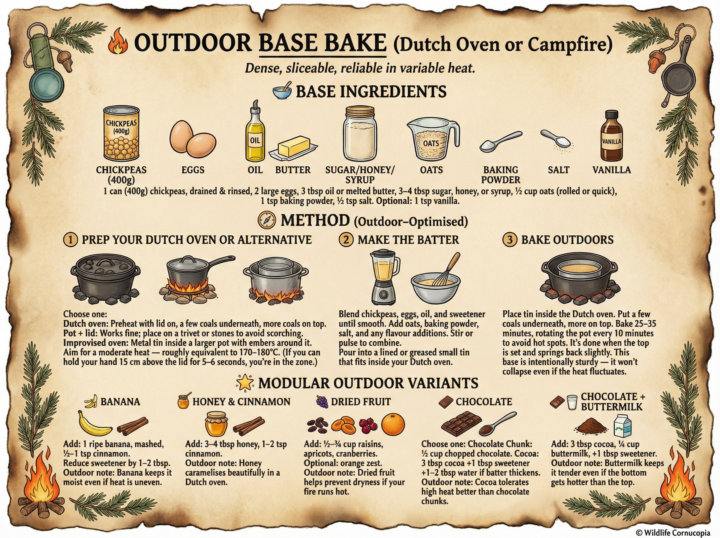
Using Chickpeas for Outdoor Baking
🔥 Benefits of Outdoor Baking with Chickpeas 🌾 1. They’re naturally stable in variable heat Outdoor baking is rarely even — coals shift, wind changes, pots get hot spots. Chickpeas handle this beautifully because they: - don’t rely on gluten structure - don’t collapse easily - set into a dense, cohesive crumb - tolerate slow, uneven heat without drying out Perfect for Dutch ovens, ember baking, or improvised setups. 💪 2. High protein + fibre = sustained energy Chickpeas bring: - plant protein - slow-release carbohydrates - fibre - micronutrients Ideal for long days in reserves, hikes, or photography sessions where you want something that actually keeps you going. 🥣 3. Moisture retention = forgiving bakes Chickpeas hold moisture exceptionally well, which means: - less risk of burning the bottom - less risk of drying out the top - bakes stay tender even if the fire runs hot This is a huge advantage outdoors, where precision is a luxury. 🧱 4. Dense, sliceable structure Chickpeas create a naturally firm, cohesive texture — almost like a blondie or energy bar. This makes them: - easy to slice - low-crumb (great for the bush) - packable - durable in backpacks or camera bags They’re the opposite of fragile. 🥫 5. Shelf-stable and easy to carry Canned chickpeas are: - cheap - widely available - long-lasting - no refrigeration needed - ready to use Dry chickpeas are even lighter if you want to soak/cook ahead of time. 🔄 6. Ridiculously versatile Chickpeas adapt to almost any flavour direction: - chocolate - banana - honey - cinnamon - dried fruit - nuts - coffee - citrus - spices You can build a whole expedition baking repertoire from one base. 🔥 7. They pair perfectly with oats Oats + chickpeas = - structure - chew - stability - slow-release energy This combination is ideal for outdoor bakes, especially when you want something between a bar, a cake, and a rusk. 🧭 8. They’re ideal for “one-pot” or “one-tin” cooking
1 like • Mar 24
Great info. Love chickpeas...
🔥
Jan 19 •
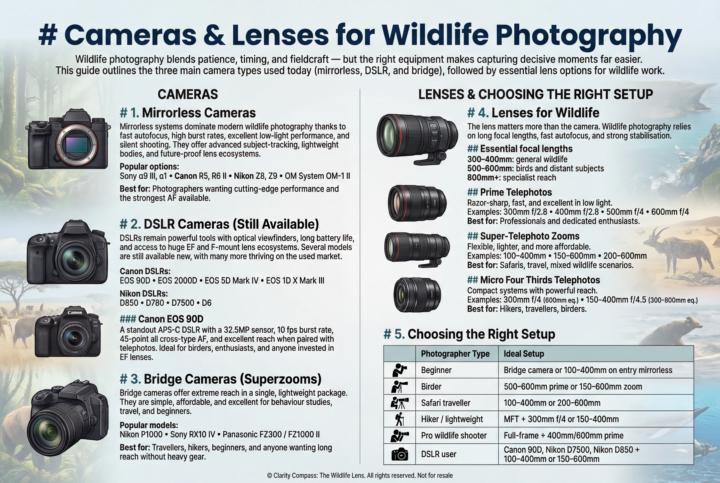
Cameras and Lenses for Wildlife
I was asked which cameras and lenses are best for wildlife photography. The truth is, there’s no single answer — every photographer has different needs, budgets, and shooting styles. What I can do is show you what’s available, how each option fits into the wildlife world, and what strengths they bring to the field. From mirrorless bodies to DSLRs and bridge cameras, and from versatile zooms to specialist primes, here’s a clear overview of the tools you can choose from.
1 like • Mar 24
@Colin Andersson-Hamill Great shot
1-5 of 5
@mark-tenniswood-6243
Hey I'm Mark, I'm a pastor with a BA degree from Wheaton College, and a M.Div. From Princeton Seminary. I love to study and teach the Bible.
Active 2d ago
Joined Mar 24, 2026