Activity
Mon
Wed
Fri
Sun
May
Jun
Jul
Aug
Sep
Oct
Nov
Dec
Jan
Feb
Mar
Apr
What is this?
Less
More
Owned by Gareth
Have fun, Find wildlife. Grow skills. Connect with people who get it. A warm community for naturalists and photographers who'd rather be out there.
MISSION AND ENGINE The mission: better businesses. The engine: Claude. The system: everything you need to start, build, teach, and scale business.
Memberships
Promotion Hub
54 members • $2/month
ProveWorth.com Community Proof
481 members • Free
KDP Publishing
916 members • Free
Print On Demand Launchpad
177 members • Free
Ink & Alchemy
27 members • Free
DJ + Music Producer Hub
9 members • Free
Skool Owners Network
190 members • Free
AI Artist Lab
533 members • Free
Pinterest Skool
3.7k members • Free
72 contributions to The Wildlife Lens

🔥
7h •
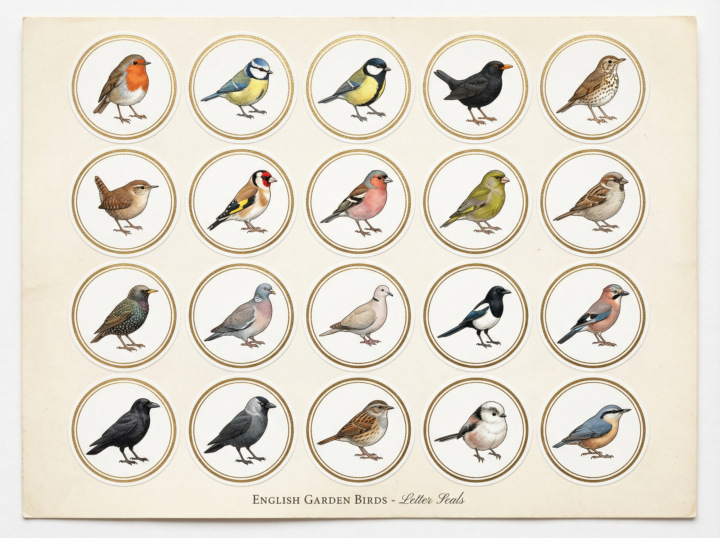
Letter Seals: Just for fun English Birds
A letter seal is a small decorative sticker or emblem traditionally placed on the back flap of an envelope. Before self‑adhesive envelopes became standard, people used wax seals or “lick‑and‑stick” paper seals to secure and beautify their letters. These seals didn’t replace postage — they were purely ornamental, adding charm, personality, and a sense of ceremony to everyday correspondence. Today, they’ve made a quiet comeback. You can print them at home, cut them out, and glue them onto envelopes for a nostalgic, handcrafted touch. Your first sheet — Popular English Birds — fits beautifully into that tradition, blending classic letter‑writing culture with The Wildlife Lens’s nature‑first aesthetic.
🔥
0 likes • 2h
@Miep Dewilde as we get older the retro memories get more fascinating, the creativity was awesome.
🔥
1d •
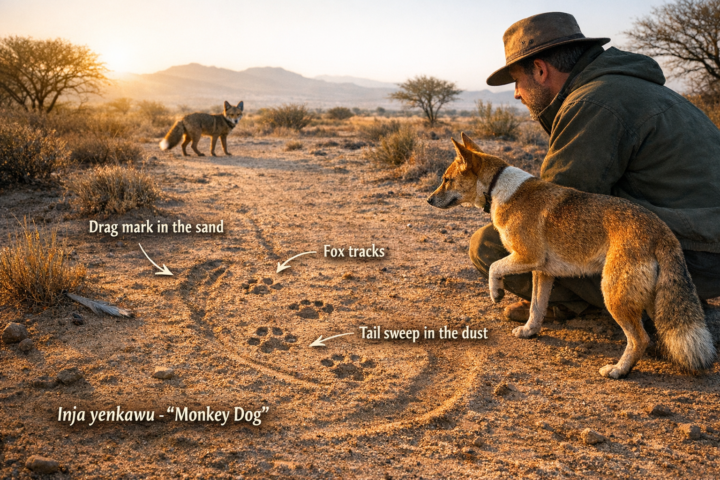
The Track in the Dust That Most People Would Miss
I was walking a quiet stretch of Karoo scrubland with Inja, the way you do when the morning is still deciding what kind of day it wants to be. The air was cold enough to make the acacia thorns shine. Inja stopped first — one paw raised, head tilted. Not at an animal. At a story written in the sand. A single drag mark, a few scuffed prints, and the faintest sweep of a tail. Most people would’ve stepped over it. But to anyone who grew up in South Africa — anyone who’s spent years travelling this continent — that little pattern is a whole conversation. It told us: - a Cape fox had passed before dawn - it was carrying something light - it paused twice to listen - the wind was behind it, not ahead In Zulu, the fox is sometimes called inja yenkawu — “monkey dog” — a reminder that every culture reads the wild through its own lens. And that’s when it hit me again: Most people see animals. Very few see the stories they leave behind. That’s why The Wildlife Lens exists — to help people SEE, UNDERSTAND, FEEL, and BELONG in the wild, even if they’re thousands of miles away. Because the wild is always talking. Most people just need someone to show them where to look. “What’s the smallest clue that ever stopped you in your tracks?”
🔥
0 likes • 23h
@Miep Dewilde wow... that's exciting to me... share photos if you have them
🔥
0 likes • 3h
@Miep Dewilde wow...
🔥
12h •
Homemade alternatives to Milk
I used to make plant milk long before it became popular in Supermarkets. Its a lot easier to buy a carton but their health benefits are not as good as homemade due to additives. Here are my recipes.

🔥
1d •
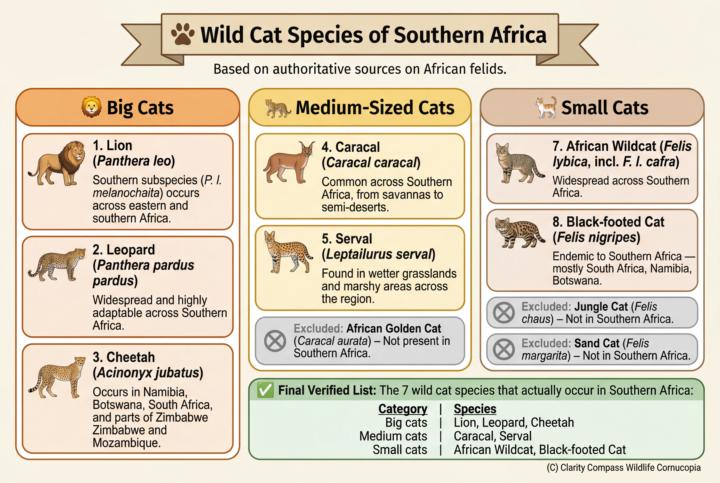
Wild Cats in South Africa
South Africa has seven species of wild cats, confirmed by the 2025 Mammal Red List of South Africa, Lesotho, and Eswatini coordinated by the Endangered Wildlife Trust (EWT) and SANBI. If you have been to a Zoo, a Wildlife Park or in a Reserve, tell us what you saw and where you saw it!
🔥
1 like • 12h
@Pat Van Schalkwyk Its always been a bone of contention. In the 90's I used to meet all types of South Africans here in England on the large "South African Braai days". I could never understand how so many Saffa's had never travelled much, or even knew the city they lived in properly. I have been fortunate to have been able to bring visitors to South Africa and also come over every two or 3 years. In the meantime I travelled throughout Europe as far as Türkiye regularly, usually for birds or the sun
🔥
1 like • 12h
@Pat Van Schalkwyk love it... I had the impression you do travel a lot
🔥
2d •
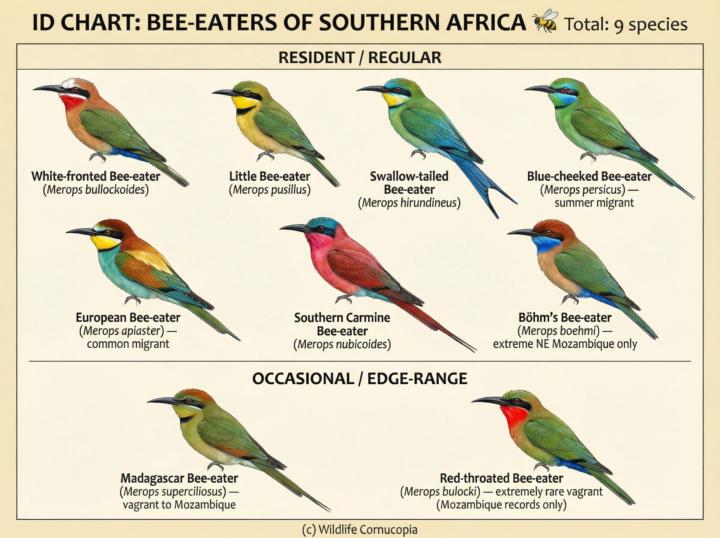
🐝 Bee‑eaters of Southern Africa
Bee‑eaters are sleek, fast‑flying aerial hunters built for life on the wing. Their long, pointed wings and graceful, swallow‑like flight make them some of the most agile insect catchers in the region. True to their name, they specialise in stinging insects — bees, wasps, hornets — which they skillfully disarm by striking the prey against a perch to remove the sting. They are unmistakable: slender bodies, long decurved bills, bright greens, blues, chestnuts, yellows, and in some species, elegant tail streamers. Their calls are soft, rolling, and musical, often heard before the birds appear overhead. Bee‑eaters thrive in open habitats — riverbanks, savannas, floodplains, woodlands, and sandy cliffs where many species dig nesting burrows. Whether perched socially on a branch or sweeping through the sky in loose flocks, they add colour, movement, and a sense of effortless freedom to Southern Africa’s landscapes.
🔥
1 like • 1d
@Miep Dewilde the bird is a Karoo Scrub Robin. Definitely worth seeing. As a child I lived near Addo in Port Elizabeth. We often visited it to watch the farmers feed the elephants with left over oranges.
🔥
1 like • 23h
@Miep Dewilde I had a great childhood... the bush was part of my DNA
1-10 of 72

🔥
@garethparkes
Over 56 years photographing all wildlife. 1000+ bird species. Teaching at The Wildlife Lens. Explore wildlife with me!
Active 2m ago
Joined Jan 13, 2026
INFP
Eastbourne