Activity
Mon
Wed
Fri
Sun
Aug
Sep
Oct
Nov
Dec
Jan
Feb
Mar
Apr
May
Jun
What is this?
Less
More
Memberships
OSINT Detective Skool
177 members • Free
5 contributions to OSINT Detective Skool

Feb 2 •
🧽 Content Removal: How to Remove Unwanted Content from the Web
🥀 Your past doesn’t have to haunt your digital present. Maybe it’s an intimate photo shared without your consent. Perhaps it’s outdated information that no longer represents who you are. Or it could be content that violates your privacy, defames your character, or infringes on your copyright. Whatever the case, unwanted content online can derail job opportunities, damage relationships, and cause immense emotional distress. 🦾 The good news? You’re not powerless. The internet may feel permanent, but there are proven pathways to reclaim your digital narrative. This guide cuts through the confusion and shows you exactly how to remove harmful content from search engines, social media platforms, and websites, step by step. Visit https://www.cultrodistro.com/tools/browsing for the direct links. 👙 Non-Consensual Intimate Content Stop NCII specializes in removing intimate images from partner sites including Pornhub, OnlyFans, and major social media platforms. They create a digital fingerprint of your images without viewing them, then share it with platforms for automatic detection and removal. Google offers several removal pathways: 📩 Personal Information - Remove doxxing content, financial information, contact details, and images containing personal data from search results. 📩 Legal Issues - Submit removal requests for content that violates laws in your jurisdiction, including defamatory or privacy-violating material. 📩Outdated Content - Remove information that’s been updated or deleted from the original source but still appears in Google’s cache or search results. ©️ DMCA Takedown Requests For copyright infringement, file a DMCA takedown notice directly with platforms (free) or through paid services. Include identification of your copyrighted work, location of infringing material, contact information, and a good faith statement. 👨🏻💼 Contact Website Owners Directly Use WHOIS databases to find website owner contact information. A direct removal request is often the fastest solution. For international domains, the IANA Root Zone Database provides information about top-level domain operators.


2 likes • Feb 2
Good lesson and reminder, thank you 😀
Jan 17 •
🥂 Thank You: ONE HUNDRED MEMBERS
We just hit 100 members. I’m building this on my own, so reaching this milestone genuinely means a lot to me. Thank you to everyone who joined, followed along, asked questions, and supported what I’m building here. More courses are coming soon. I’m actively working on new material and expanding the platform step by step. Before I decide what to build next, I want to ask you: 👉 What would you like to see next? Topics, formats, depth, anything goes. Drop your thoughts below. This community helps shape what comes next Appreciate every one of you. The best is yet to come. Cultro Distro

1 like • Jan 25
Can't wait!
Jan 14 •
🎬 Movie Tip: Red Sparrow (2018) — When espionage weaponizes charm.
📰 Quick News Flash A U.S. Secret Service agent assigned to protect Vice President JD Vance has been placed on administrative leave after an undercover video showed him divulging sensitive security information including travel plans, protective procedures, and shift details, all while on what he believed was a romantic date. The woman he was seeing was actually an undercover journalist connected with James O’Keefe’s media group, and the interactions reportedly began after they matched on 🔥 Tinder. The Secret Service has suspended his clearance, revoked access to secure facilities, and ordered anti-espionage retraining for all personnel as the investigation continues. 🎥 Why Watch Red Sparrow Now If this recent scandal caught your attention, Red Sparrow is an eerie and thrilling reflection of how emotional leverage can become a tool of intelligence. In the film: - A Russian intelligence trainee is trained in psychological manipulation and seduction, not guns, to extract secrets. - Espionage isn’t about bullets; it’s about trust, attraction, and vulnerability. - Agents use relationships and support to gain access to classified information and influence decisions. The tactics in the movie echo real-world vulnerabilities: - Romantic or friendly interactions used to collect sensitive info - Trust exploited over time through emotional closeness - Platforms like dating apps now replacing old-school café meetings 🧠 Takeaway Espionage isn’t just about codes and covert ops. Sometimes, it’s about a swipe right. Red Sparrow isn’t just a spy thriller, it’s a reminder that social engineering and human relationships remain powerful intelligence tools in both cinema and real life. 🍿 Watch it with today’s headlines in mind.

1 like • Jan 15
I already have plans for the evening 😀
Oct '25 •
🎬 Movie Tip: Focus (2015)
If you want to understand social engineering and OSINT in action watch Focus starring Will Smith and Margot Robbie. The film may look like a con artist romance, but Focus is a cinematic masterclass in human intelligence, psychological profiling, and information extraction through observation. You’ll see: - How body language reveals intent - How micro-details expose deception - How distraction and misdirection manipulate targets - How social context gives access to information others overlook Every great investigator knows: information isn’t always hidden, it’s performed. OSINT isn’t just about data. It’s about people.

1 like • Jan 14
Im just watching it and start understanding what you are talking about. Thank u for the tip!
Jan 7 •
⚠️ OPSEC LESSON: Attribution by Accident (Not Malice)
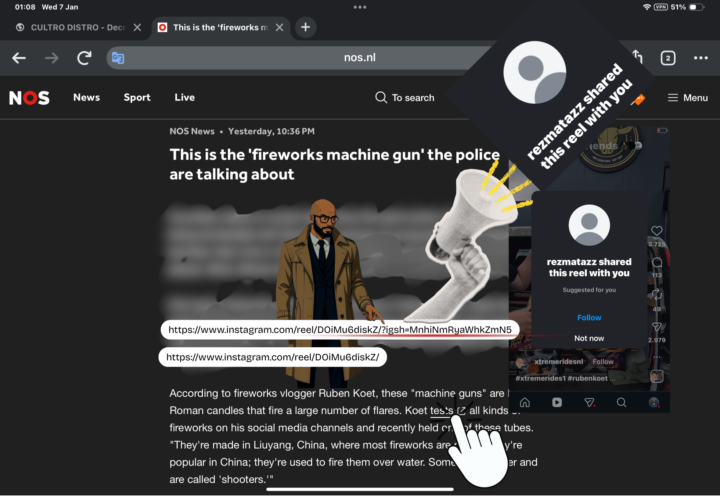
Today, NOS (Dutch state-associated media) published an article embedding an Instagram reel about dangerous fireworks. Let’s be clear from the start: - ❌ This was not malicious - ❌ This was not intentional - ❌ This was not dangerous in this specific case But it is instructive. What Happened? The embedded Instagram link opens with: “Shared by @username” This happens when: - A reel is shared directly from Instagram - The platform-generated URL retains a share attribution token - That URL is embedded without being cleaned As a result, a private user account becomes visibly linked to the dissemination of the content. Again: No intent. No wrongdoing. No immediate risk here. Why This Still Matters In this case, the topic was fireworks and public safety. Low sensitivity. Low risk. No real consequences. But the mechanism is the same mechanism that can become dangerous in other contexts. Think about investigations involving: - Corruption within the state - Corporate fraud - Organized crime or cartels - Militia or paramilitary groups - Intelligence services - Extremist or criminal networks - In those environments, attribution alone can be enough to: - Draw unwanted attention - Expose relationships - Identify intermediaries or sources - Create pressure, intimidation, or retaliation Not because someone did something wrong — but because they became visible. The OSINT & OPSEC Insight Social media platforms are not neutral pipes. They are attribution systems. When you share content directly from a platform: - The link may carry account-level fingerprints - Those fingerprints can travel far beyond your control - Third parties may publish them unintentionally This is not paranoia. This is how link analysis works. Practical Takeaway For everyday topics: - Usually harmless For sensitive research or investigations: - Potentially risky Best practice in sensitive contexts: - Strip tracking parameters - Use clean URLs - Screenshot with metadata removed - Describe content instead of linking - Assume anything public may be archived forever
1 like • Jan 11
Very useful post, thank you. Tell me please how screenshots with metadata might be harmful?
1 like • Jan 12
@Cultro Distro Thank you 😀
1-5 of 5