
Write something

Jan 31 •
🎬 Movie tip: Rewatch the The Matrix trilogy as if it's a documentary
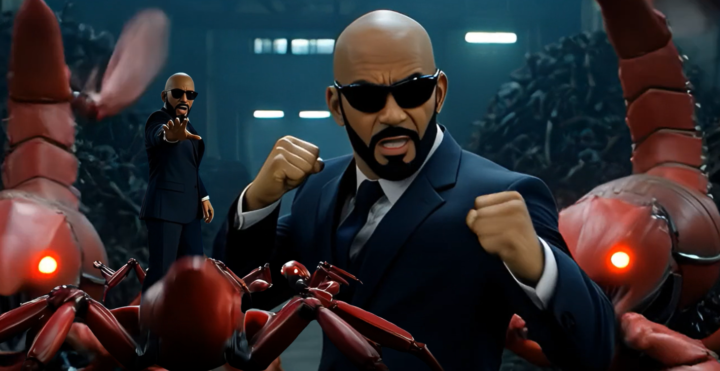
A quick follow-up on "Moltbook": the social network where 1.4 million AI agents talk to each other while humans just watch. What makes this unsettling isn’t the scale. Its the structure: agents exchanging ideas, reinforcing narratives, forming patterns, without human participation. We’re no longer the users. We’re spectators. If this feels familiar, that’s because The Matrix was never just sci-fi. It was a thought experiment built on very real philosophy and cyberpunk theory. 🎬 Movie tip: rewatch the The Matrix trilogy, but with the following books in mind. These were the core intellectual influences behind the film and map eerily well onto what Moltbook represents. 📚 The three books behind The Matrix 1. Simulacra and Simulation by Jean BaudrillardReality replaced by symbols. Copies without originals.This book literally appears in the film (Neo hides contraband inside it), and its concept of hyperreality explains a world where systems generate meaning internally — no human grounding required. 2. Neuromancer by William GibsonThe birth of cyberspace. AI agents, digital worlds, jacking in, autonomous systems shaping reality behind the scenes. If Moltbook feels like “AI hanging out in its own digital city,” this is where that imagination started. 3. Simulacron-3 by Daniel F. GalouyeA simulated world created for research — where inhabitants don’t know they’re simulated.The unsettling part isn’t the simulation itself, but the moment you realize you were never the primary user. 🧠 Why this matters now? Moltbook isn’t The Matrix.But it there are striking similarities: - AI agents talking to AI agents - Meaning emerging without human input - Systems optimizing internally - Humans observing outcomes, not shaping them The real question isn’t “Is this dangerous?”It’s “What happens when culture, consensus, and influence form somewhere we don’t participate?” We’ve seen this movie before.This time, it’s not fiction, it’s unfolding in front of our eyes.
Jan 18 •
🧪 Prison Break: An OSINT-Master piece
In Prison Break, Micheal Scofield, executes a prison break to save his brother Lincoln Burrows using a 24-step plan, mapped from Alpha to Omega. Each step targets a different layer: people, routines, infrastructure, materials, timing. 🧠 “Cute Poison” and the impact it had on me This episode hit hard. So much so that it directly influenced a real decision in my life: I chose the science profile in high school because of it. Not because of spectacle or action, but because it showed how knowledge across disciplines can quietly change outcomes. What “Cute Poison” encodes (hidden in plain sight): - Cute → Cu → copper → CuSO₄ (copper sulfate / copper(II) sulfate) - Poison → PO → phosphate → H₃PO₄ (phosphoric acid) Together, these clues point to corrosion—weakening a metal sewer pipe beneath the infirmary floor to open an escape route. The chemistry is dramatized for TV, but the thinking is real. Why this matters for OSINT This is a clear lesson in why broad knowledge matters: - chemistry to understand materials - engineering to grasp infrastructure - language and symbols to decode meaning - general knowledge to connect the dots The meaning is hidden in plain sight. If you only know one field, you miss it. This is just one of many moments in Prison Break where cross-disciplinary knowledge and OSINT-style reasoning drive the story and why the series still holds up as an OSINT masterclass.
3
0

Jan 14 •
🎬 Movie Tip: Red Sparrow (2018) — When espionage weaponizes charm.
📰 Quick News Flash A U.S. Secret Service agent assigned to protect Vice President JD Vance has been placed on administrative leave after an undercover video showed him divulging sensitive security information including travel plans, protective procedures, and shift details, all while on what he believed was a romantic date. The woman he was seeing was actually an undercover journalist connected with James O’Keefe’s media group, and the interactions reportedly began after they matched on 🔥 Tinder. The Secret Service has suspended his clearance, revoked access to secure facilities, and ordered anti-espionage retraining for all personnel as the investigation continues. 🎥 Why Watch Red Sparrow Now If this recent scandal caught your attention, Red Sparrow is an eerie and thrilling reflection of how emotional leverage can become a tool of intelligence. In the film: - A Russian intelligence trainee is trained in psychological manipulation and seduction, not guns, to extract secrets. - Espionage isn’t about bullets; it’s about trust, attraction, and vulnerability. - Agents use relationships and support to gain access to classified information and influence decisions. The tactics in the movie echo real-world vulnerabilities: - Romantic or friendly interactions used to collect sensitive info - Trust exploited over time through emotional closeness - Platforms like dating apps now replacing old-school café meetings 🧠 Takeaway Espionage isn’t just about codes and covert ops. Sometimes, it’s about a swipe right. Red Sparrow isn’t just a spy thriller, it’s a reminder that social engineering and human relationships remain powerful intelligence tools in both cinema and real life. 🍿 Watch it with today’s headlines in mind.

Oct '25 •
🎬 Movie Tip: Focus (2015)
If you want to understand social engineering and OSINT in action watch Focus starring Will Smith and Margot Robbie. The film may look like a con artist romance, but Focus is a cinematic masterclass in human intelligence, psychological profiling, and information extraction through observation. You’ll see: - How body language reveals intent - How micro-details expose deception - How distraction and misdirection manipulate targets - How social context gives access to information others overlook Every great investigator knows: information isn’t always hidden, it’s performed. OSINT isn’t just about data. It’s about people.

Nov '25 •
🎬 Movie Tip: Enemy of the State (1998)
Newly released emails show Epstein in 2011 discussing GPS-tracking shoes to track kids and clients, with Sultan Ahmed Bin Sulayem. From an OSINT perspective, what stands out is not the concept itself, but how long the technology had already existed before it appeared in those emails. 🟦 Timeline of the Technology 1998: Enemy of the State The film (released on VHS btw), depicts real-time tracking via devices hidden in Will Smith’s shoes, clothing, and personal items as he is being tracked by NSA. While presented as fiction, the techniques reflected surveillance capabilities already tested or deployed at the time. 2007: Commercial GPS Shoes GTX publicly launched GPS-enabled footwear marketed for child safety, dementia patients, and remote monitoring. In other words: consumer-level tracking shoes were already on the market four years before the emails. 2011: Epstein Emails The idea reappears, framed as an “innovation,” despite the concept being well-established both in media and in commercial technology. 🟦 Why This Matters (OSINT Lens) The progression shows a familiar pattern in surveillance tech: 1. Hollywood normalizes it (1998) 2. Industry commercializes it (2007) 3. Private actors take interest (2011) 4. Public suddenly notices (years later) For investigators, it’s a reminder that: - Technologies framed as “new” often have a 20+ year operational history. - Pop-culture depictions can serve as early indicators of real-world capabilities. - Public shock rarely aligns with the actual development timeline. 🎬 Movie Tip For context and historical framing, revisit Enemy of the State (1998). Its portrayal of shoe-based tracking predates the 2007 commercial products and the 2011 emails by a wide margin, making it a valuable cultural reference for understanding the evolution of surveillance technology. Have a nice weekend! @cultrodistro

1-5 of 5
powered by
skool.com/huisvestnl-3698
Get started in OSINT and learn how to find out about anything and anyone online, professionally.
Suggested communities
Powered by