Activity
Mon
Wed
Fri
Sun
Aug
Sep
Oct
Nov
Dec
Jan
Feb
Mar
Apr
May
Jun
Jul
What is this?
Less
More
Owned by Marc
A place for folks who really want to be badasses with nunchucks!
Memberships
The Lotus Vault™
28 members • Free
School of Weapons
27 members • $9/month
Free Skool Course
71.5k members • $1
JT Jazz Improvisation Lab
6 members • $29/month
Signal: Build From What Fits
107 members • Free
The Traditional Tai Chi Method
204 members • Free
Legacy Arts & Lifestyle
7 members • Free
Qi Gong & Martial Art As Yoga
44 members • Free
Next Level Table Tennis 🏓
964 members • Free
12 contributions to Qi Gong & Martial Art As Yoga
28d •
Rasmus or Kumar?
Hey Thomas, thought of you this week. Are you familiar with Sifu Mark Rasmus or his student Dinesh Kumar? (Hopefully I am spelling those correctly). Their work reminds me a bit of what I have seen you do in your community. Hope all is well, man.

Jun 13 •
Truth is Beauty
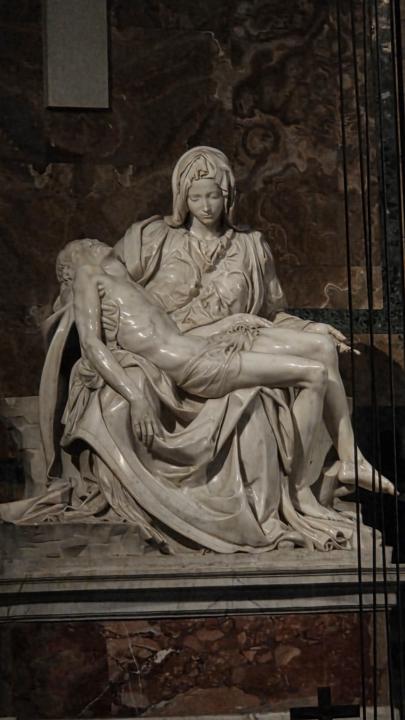
I was fortunate enough to visit my favorite piece of sculpture and witness first hand the incredible genius of Michaelangelo. He was 24 years old when he carved the Pieta out of a single block of marble. it is exquisite. If kungfu is a skill acquired, his kungfu is very, very strong. As a visual artist, I bow deeply before his vision of the grace and love of Mary and Jesus. What is your favorite piece of Art? Let us know in the comments.
1 like • 28d
The Pieta is also my favorite piece. I have never seen it in "person" though. Luck you.
May 31 •
I've been at this...
... for a while now. As I was putting together new classroom footage, it got me looking at my older stuff, these are clips from around '95 (I think?) to early 2000's - just some fun bits of footy that made it through the time machine. Always good to have some documents to go back to when you were in your youth. Let me know what you think, or better post some of your own that helps tell your story- I would love to hear/see it!

2 likes • 29d
Dude. So cool that you have been at this for so long. Such consistency! Makes me feel like a beginner (well.....I am). Also, given the time you mentioned that these were recorded, the video editing is really good! Hats off. Keep crushing!
May 12 •
Podcast is in the books...
I had a great conversation with newfound friend (and community member) Shaun Beastman Anderson over on his site at - https://www.skool.com/the-lotus-vault-3538/virilitas-podcast-ep-3-2 He has a great presence on Skool, well worth checking out- and we had a great and far ranging talk covering many topics. Have a look and post some reactions, I would love to hear what you all think.
2 likes • May 12
Just went to his page. Looks like you have to be a member first...so I requested membership. Looking forward to hearing. Thanks for the pointer, Thomas.
2 likes • May 12
@Shaun Beastman Anderson gracias. I will have a look around as soon as I am able. 🤜🤛
Apr 28 •
What do you want to learn?
I am in the process of getting my next set of programs together- I have ideas of what to present, but thought I would get some input from the community- What aspect is most important/interesting to you all? What would you like to see emphasized? Let me know in the poll, and in comments if you would like as well.
Poll
5 members have voted
0 likes • May 11
I agree with Michael - all of the above. That said, do you do any breathwork specifically for state control? (When I say 'state' I am referring to state-of-mind / mood / energy / happiness levels etc). Thanks, Thomas.
1-10 of 12
@marc-croteau-9907
Committed to getting close to maximizing my human potential through various disciplines including nunchaku, bodybuilding, meditation and more.
Active 1h ago
Joined Mar 5, 2026