Activity
Mon
Wed
Fri
Sun
May
Jun
Jul
Aug
Sep
Oct
Nov
Dec
Jan
Feb
Mar
Apr
What is this?
Less
More
Owned by Lindsey
Learn how to balance moods and hormones naturally with delicious foods, fun movement, and nervous system regulation.
Memberships
THE BRIDAL BODY BLUEPRINT
21 members • Free
HerFruit Club
25 members • Free
Strong Core Moms
51 members • Free
Free Skool Course
66.1k members • Free
Rewired & Regulated
1.8k members • Free
Manifestation Mastery Skool
330 members • $9/month
Super Hair Growth Community
85 members • Free
Recess
619 members • Free
Skoolers
194.7k members • Free
3 contributions to Crust & Crumb Academy

⭐
🔥
Feb 2 •
How to Color Your Zebra Bread (Without Artificial Dye)
Tips & Techniques Saturday we're making zebra bread, and the recipe calls for beetroot to get that pink color. But I know some of you are wondering about alternatives, so let's break down all your options. First, let me tell you how I handle beetroot, because it's easier than people think. My Beetroot Method: I buy fresh beets at the grocery store. Wrap each one in aluminum foil and roast them in the oven at 400°F for about 45 to 60 minutes, depending on size. Let them cool completely. Then I peel them (the skin slides right off when they're roasted), cut them up, and puree them in a Bullet or food processor until smooth. Here's the move: I put that puree into a ziplock bag and freeze it. Now I've got natural pink color ready to go all year long. When I need it, I thaw a bit and use a teaspoon or less to start. You can always add more. You can't take it out. The Process on Bake Day: Mix your whole dough first. Just before you go to your first proof, divide it in half. Shape the white portion on the counter first. Leave the other half in your mixer bowl. Now add the beetroot to that second half. Start with half a teaspoon. Mix it in using your mixer. Add more until you get the color you want. Two things to know: 1. Beetroot adds moisture. Your colored dough will get wetter. Add a tablespoon or two of flour to bring it back to the same consistency as your white dough. Do it a little at a time. 2. Beetroot stains everything. Handle your white dough first, then your colored dough. Don't cross-contaminate. Your hands, your counter, your towels, they will turn pink. Where to Get Beetroot: - Fresh beets: Any grocery store, produce section - Canned beets: Works in a pinch. Drain well, puree smooth. Less vibrant color than fresh. - Beetroot powder: Amazon, Walmart, Whole Foods, health food stores. Search "organic beet root powder." This is the easiest option if you don't want to roast. Mix 2 to 3 tablespoons with a splash of warm milk to make a paste.


3 likes • Feb 2
wow! this is so cool
⭐
🔥
Jan 29 •
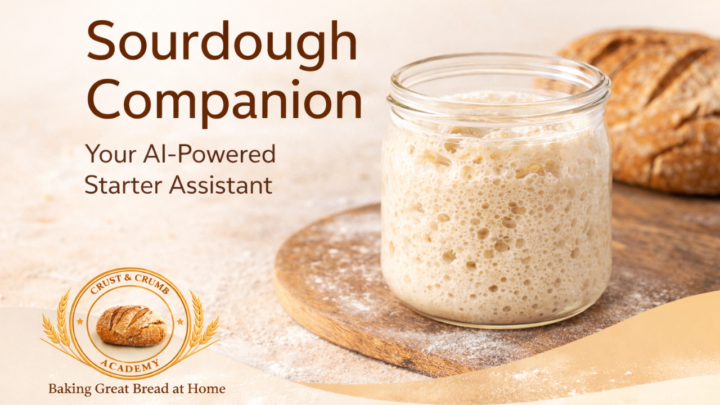
Just last night, I finished The Sourdough Companion.
Good Morning Bakers Lately, I’ve run into more bakers than usual who want to start making sourdough bread but don’t have a starter. They’re picking up bits of information from YouTube, some from TikTok (no less), and then asking me where they can get one. That makes it challenging to get them on a clear, confident path. The Three Groups I Keep Seeing Then there are bakers who do have a starter, but have questions like: - Should I keep it on the counter or move it to the refrigerator? - Can I change ratios? - What happens if I do this or that? - Is my starter actually ready to bake with? And then there are others with well-established starters who love keeping a journal and documenting every movement. Until now, I didn’t have one tool that fit all three scenarios. Introducing: The Sourdough Companion Just last night, I finished The Sourdough Companion. It’s not for every baker, only for those who would benefit from this kind of structure, and it’s already doing well in beta testing. It’s a solid, guided walkthrough for: - Brand-new bakers - Bakers with an existing starter - More advanced bakers who want tracking and insight It even includes a built-in scheduler that can send push notifications when it detects that it’s time to feed. Smart Help, Built Right In Based on: - The health of your starter, or - The amount of discard you have, The app will recommend: - Bread recipes, or - Discard recipes directly from the Recipe Pantry. It also includes: - Built-in FAQs - “Did You Know?” tips - Tutorial videos So it functions as a teaching tool, not just a tracker. Early Access & Feedback This is hot off the press. If you see something, say something. If you think there’s anything missing, let me know. And thank you to everyone who’s been demoing this for me, I appreciate it. 👉 https://starter-sorcerer.vercel.app/
4 likes • Jan 29
Wow!!!! @Henry Hunter !!! This is incredible! Very very impressive 👏🏽
4 likes • Jan 29
@Henry Hunter I haven't gotten that far, but if I run into a snag, I'll let you know.
⭐
🔥
Jan 28 •
"Would You Rather" Wednesday: Baking Style Edition!
"Would you rather always have perfectly baked bread but never get creative, or constantly experiment with mixed results? 🤔 Share your choice!"
6 likes • Jan 28
Experiment 10% Perfect Bread 90% Everything is too pricey to waste ingredients 😂
1-3 of 3

@lindsey-christian
Holistic Hormone Coach for Women
Helping women understand and support their moods and cycles all month long.
Active 10h ago
Joined Jan 20, 2026
INFJ
Cornelius, NC