Activity
Mon
Wed
Fri
Sun
Jan
Feb
Mar
Apr
May
Jun
Jul
Aug
Sep
Oct
Nov
Dec
What is this?
Less
More
Memberships
Break Into Tech Sales 💸
2.8k members • Free
Python & AI Builders
1.7k members • Free
Appointment Setting Clan
5.4k members • Free
High Ticket Sales | BOC™
2k members • Free
Breaking Into Corporate (FREE)
661 members • Free
Daily Sales Jobs
1k members • Free
SetterHQ
786 members • Free
AI For Professionals (Free)
9.7k members • Free
No Code Pakistan
752 members • Free
25 contributions to Energy Data Scientist

7d •
Energy Industry Report: Solar PV Companies in China --> Battery Storage
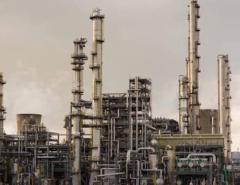
A new report has been uploaded in the Classroom section (6.2 - Industry Reports). The report focuses on Chinese companies that manufacture solar Photovoltaics. These companies are now expanding into the battery storage business. So far, they were only selling/manufacturing solar Photovoltaics. However, battery storage is exponentially growing in China and globally. The opportunities are massive for profitability. Chinese solar panel makers like Longi, Trinasolar, and JinkoSolar have made billions selling solar Panels. Solar power has grown so fast that electricity grids can't handle all the electricity being produced during sunny hours. The demand for battery storage is growing exponentially. So, these companies are now moving into combined solar-and-battery systems. So, they keep the solar business, but they also add battery development. This leads to cost reductions and increases their profitability. For the full analysis, visit Classroom → 6.2 Industry Reports. This report has been written based on the following sources below, which are available only if you have subscribed to them (e.g., Financial Times, Wall Street Journal, etc.). However, since you are a subscriber to this Skool community, I bring you the key points from these developments, without you having to subscribe to them. And: you get additional important details not included in the original articles. Sources: [1] Financial Times: https://www.ft.com/content/fb8d1b58-96fd-40af-803c-41fe87cab4f9 [2] The Economist: https://www.economist.com/special-report/2025/11/03/how-china-sparked-a-rooftop-solar-revolution-in-pakistan [3] Wall Street Journal: https://www.wsj.com/world/china-renewable-energy-paris-climate-accord-ff123bfc
0 likes • 7d
Europe wants to reduce dependence on Chinese manufacturers but still can't compete on price
12d •
New Industry Report on Natural Gas Prices November 2025
A new industry report has been uploaded. You can find it in the Classroom, at 6.2. This report is about European gas prices. It mentions that they have dropped to their lowest level in 18 months, falling below €30 per megawatt hour. The report identifies 3 key factors that have caused this drop. One has to do with traders' expectations about the war in Ukraine. Another has to do with the temperature in Europe this winter. A third factor has to do with the shipping costs of LNG from the U.S. This report is valuable for anyone looking to understand how geopolitics, weather, and global shipping affect energy prices , whether you're an aspiring energy trader, an investor tracking commodity markets, or simply someone who wants to understand market dynamics .
1 like • 12d
Thanks for the intel.

14d •
🚀 AI Engineer Seeking New Collaboration
Hi everyone, I am excited to join this community. I’m an AI Full-Stack Developer specializing in building scalable, intelligent applications powered by modern AI technologies. I’ve worked across the full product lifecycle — from system architecture and backend development to frontend interfaces and AI-driven automation. I’m currently looking for new opportunities where I can contribute my expertise in: - AI integration & LLM-powered applications - Full-stack web & mobile development - Automation, agents, workflows, and system design - MVP development and rapid prototyping I’d also love to collaborate with US-based professionals and teams working on innovative products and forward-thinking AI initiatives. If you’re building something exciting in AI, SaaS, or automation, I’d love to connect. 📌 Portfolio: https://oleksandr-zamrii.vercel.app/ 📌 Linkedin: https://www.linkedin.com/in/oleksandr-zamrii-3a6496361/
1 like • 14d
Very interesting. I will check .

14d •
Hello everyone! I'm new here.
Hi everyone, I’m a Senior Software Engineer with over 10 years of experience in the IT field. I’m currently working with a U.S. based client, focusing on building scalable and high-performance web applications. I’m excited to be here and look forward to connecting and learning with you all.
1 like • 14d
Great that you joined! It should be a tough but rewarding employment experience as you describe it!
14d •
The Oil Forward Contract Saudi Aramco - Sinopec Explained
The video below describes how the companies 'are thinking' before signing a forward contract. This video has also been added to the online course 5.19 in the Classroom. This process is very simple. This is also an interview question for energy + economics + finance roles of various levels. From commodities trading, to investment banking, and from energy consultants to energy quants and energy data scientists. It is a very popular question. Interview Question and an interesting case study to know: The Saudi Aramco - Sinopec crude oil forward contract. Beginner-friendly explanation (no 'scary' jargon used . No prerequisites needed). The video focuses on the forward contract that Saudi Aramco signed with Sinopec. The details of the contract are private so we are using example dates. On the 1st of December 2025 , the two companies signed a forward contract on crude oil , where Saudi Aramco agreed to produce and sell 250 000 barrels of crude oil and ship it from Saudi Arabia to China, where Sinopec is. The delivery date will be months into the future i.e. 1st of September 2026. Sinopec needs crude oil because it has refineries. These are facilities that use crude oil to produce diesel, jet fuel and other 'refined' products. Siniopec needs crude oil therefore. So they decided on the price of $77.5 / barrel. Here is how they decided on this price: a) They used machine learning to find a reasonable upper bound (maximum value) and lower bound on the spot crude oil price on the delivery date i.e. 1st of September 2026. b) In between these two bounds, they assume possible values for the spot price of crude oil. For each value they calculate the PnL index (profit and loss). PnL = (spot price - forward price)* quantity of crude oil.So if spot price on delivery date is $60/barrel and forward price is $77.5 , then we find the spread (difference) and multiply it with the 250,000 barrels of crude oil agreed in the forward contract. This is the PnL for the buyer (Sinopec) ,and it is negative (bad deal).The whole process is described in this video.

0 likes • 14d
Yes sir, this is definitely for investment banking and related roles. They usually take a case study and focus on the contracts. Exactly. So forward contracts on real case studies is foundational for working in commodities, trading, energy finance. Thank you for sharing.
1-10 of 25
@liam-smith-6568
Data Engineer , and AI. Combining with energy Mainly power
Active 7h ago
Joined Oct 14, 2025
Canada BC