Activity
Mon
Wed
Fri
Sun
Nov
Dec
Jan
Feb
Mar
Apr
May
Jun
Jul
Aug
Sep
What is this?
Less
More
Cancer Warriors
557
5.0
Free
Doing What You Know
40
$25/m
Evolve Now Social
2.8k
5.0
Free
Movie Lovers Club
142
Free
59 contributions to Doing What You Know

May 31 •
Totally Natural
🎙️ Let’s keep this totally natural—short, easy turns, just like we’re chatting in person. I’ll kick us off! Me: So, what’s the first thing you’re looking forward to doing in June 2026? 🤔


1 like • Jun 1
Looking forward to June
May 27 •
One of the Two is TRUE.
F.E.A.R. — Face Everything And Rise This is the "warrior" perspective. It suggests that growth only happens when you move directly toward the thing that intimidates you, using the fear as fuel for your character development. F.E.A.R. — Forget Everything And Run This represents the "flight" response. It is the choice to retreat into safety and avoid the discomfort required for progress. Which one are you?

1 like • May 27
Number 1. I can face fear now

🔥
May 1 •
Identifying the Struggle
"Don't wait for opportunities, create them!" Sometimes the "waiting" is a result of fear, sometimes it’s burnout, and sometimes it’s just not knowing the first step. Which of these three elements is the hardest for you to maintain right now: The Waiting (fear/stagnation), the Believing (mindset), or the Not Giving Up (patience)? Let’s support each other in the comments.
1 like • May 2
For me it's the waiting

Apr 29 •
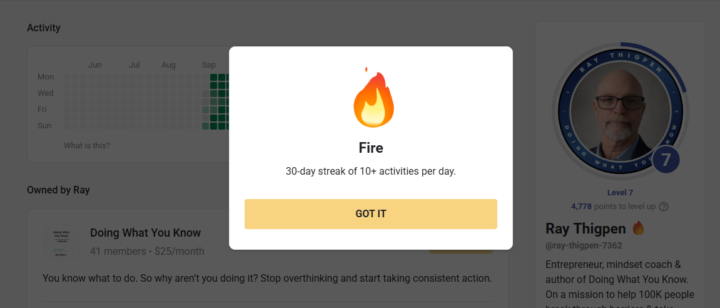
Got the fire back.
That little badge doesn’t come from motivation. It comes from showing up when you don’t feel like it… over and over again. 30 straight days of doing the work. I missed a day and lost it. No excuses. Just reset and went again. That’s the game most people don’t want to play. They want progress without consistency. But consistency is the whole deal. Stack the days. Miss one? Start again. Keep moving. That’s how you build something real. 🔥
1 like • Apr 29
Congratulations 👏🏾 🔥
🔥
Apr 29 •
Managing External Vibe
How do you handle the people around you who don't believe "Your day will come"? It can be exhausting to try and stay positive when everyone around you is just talking about market saturation, a bad economy, or why your idea is "crazy." What is your #1 tactic for "protecting your peace" and maintaining your own belief system when friends or family are projecting their doubts on you?
1 like • Apr 29
@Ray Thigpen I definitely agree 💯
1-10 of 59
Active 2h ago
Joined Sep 26, 2025
Zambia