Activity
Mon
Wed
Fri
Sun
Jul
Aug
Sep
Oct
Nov
Dec
Jan
Feb
Mar
Apr
May
What is this?
Less
More
Owned by Katerina
Learn to use AI strategically like an executive—build clarity, systems, and confidence in every decision.
Memberships
Business Synergy Sisterhood
5.1k members • Free
Skoolers
183.7k members • Free
61 contributions to Lucidium Executive AI Strategy

9d •
Be Skeptical
Here is a quick reminder to always be skeptical of AI’s responses. It’s extremely easy to get caught up in language that sounds confident, even if it’s wrong. If you tell AI something and it repeats it back to you, make sure every single part of it is really what you meant or wanted. AI will always give you some type of an answer, even if it makes it up, while pretending to fully understand your thoughts in just one output. After each paragraph, stop and ask yourself “does this align with my original ideas?” If it doesn’t, the AI should be corrected or your entire project could go completely off track. Have you noticed AI acting like it understood, but it was confidently off track?
1
0
18d •
Status of Lucidium Update
Hello! Thank you for being here. As you know, Lucidium has been in pre-launch since August of last year. During this time I’ve been researching and experimenting and sharing bits and pieces of my findings with you. The last few months have been extremely busy in my primary business and it consumed most of my time. During that time, I learned a ton about AI and some very successful and repeatable applications of AI agents. This has allowed me to write a full and complete curriculum for the 2026-2027 school year. I will be hosting live classes beginning in June, which will be available here in this Skool community. Additionally, I have changed the structure of this group into multiple tiers: Standard: Free. Gives access to discussion and free resources. Premium: $20/mo. Gives access to everything in free plus live and on-demand classes, projects, and workflows. If you are a paid member, you have been upgraded to premium for no additional cost, as a thank you for sticking with me through the start of this journey. I am very excited for this next chapter and I can’t wait to see what everyone achieves! Thank you for being here. Kat
0
0
Apr 23 •
AI Content Observation: What is wrong with this AD?
Today I came across this paid advertisement on Reddit. I read the first line, then skipped the entire thing. Then I thought about it: why did I skip this? It was made by AI, but it’s clean and professional looking. So why didn’t I bother to read the entire thing? It’s a relevant ad to me, I click these types of ads. So what was wrong with this one? Before I give you my take, I’d like to hear yours. Take a look at the image and let me know in the comments where the pitfalls of this ad lie 👇 . . . . . . . . . Okay, here is my observation: What’s working: - The blue background: eye-catching and unique. - The robot: cute, and eye catching - The headline: large and relevant to their audience What’s not working(and why it won’t convert as well as it could): - The subtitle is too small: I didn’t even read it and I don’t even remember what it said after analyzing it. The font size is also inconsistent - Too many check marks: they are overwhelming and people will skip them - A better thing to do would be to pick 3 highlights and use those. The rest of the check marks should be on the website, not the ad - The image doesn’t actually tell you anything about the product: twitter logos and graphs? What exactly is the robot doing? A better image would be the robot actually creating content, not just showcasing random dashboards. - No branding: This is important for both trust and conversion. I honestly have no idea what company put this ad out. Your branding should be on every piece of content so people can remember who you are later. People associate continuous exposure to your ad as a trust signal because it becomes more familiar to them every time they see it. Observing the content and products of other businesses is extremely important if you want to succeed. If you learn from the failures and successes of other’s, you lose less money and create more successes for yourself. Every time you skip an ad or piece of content, go back and look at it again. Ask yourself what you saw, what you missed, and why. This will make you more aware of your own habits, which helps you to understand the habits of potential clients.
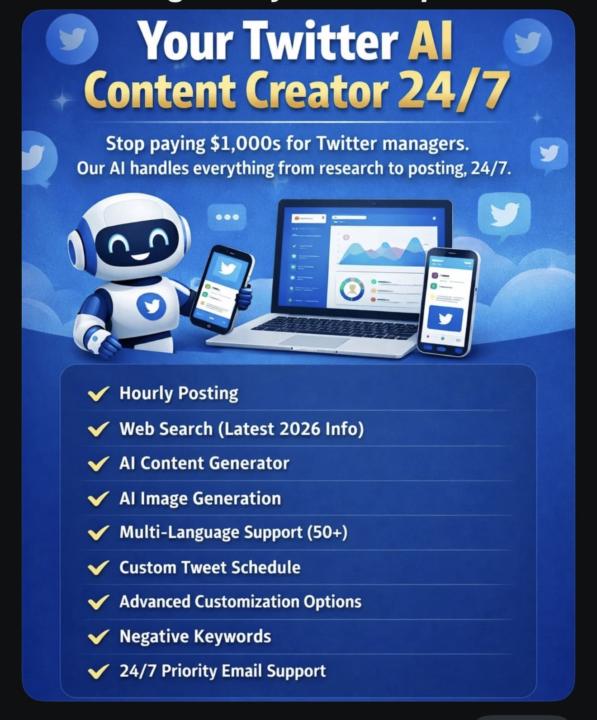
0 likes • Apr 24
@Vitalii Tytskyi I agree. AI fatigue is real and I’m starting to feel it myself. YouTube and Facebook are especially bad. Almost everything on those platforms is 100% AI generated and I don’t even think a human looks at it before it goes out most of the time. It’s becoming exhausting. I love to see AI used for creative ventures because it really expands what we are able to do as artists. However, it should definitely be used as more of a supplement in art and content creation, not a replacement for the human touch.
Apr 16 •
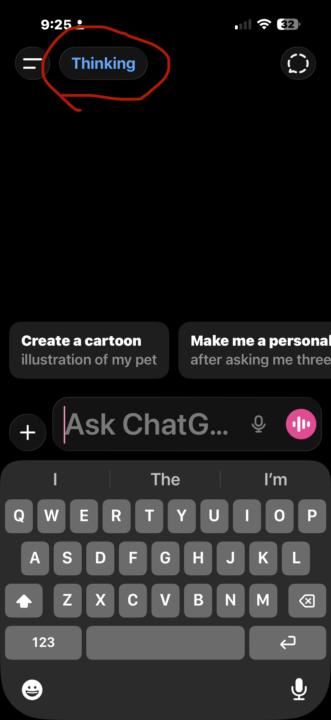
Extended Thinking Mode
There is a new settings menu in ChatGPT that allows you to configure your AI’s thinking effort. I switched mine to extended thinking and it has significantly improved my outputs. Try it out yourself and let me know how it works for you in the comments 👇
0
0
Mar 24 •
AI Hallucinates. How do we make up for it?
One constant, yet valid, argument against AI is how it makes things up. It's so confident in it's lies that we believe it. This can be a huge issue that could cost you your credibility. So how do I deal with this daily? I don't listen to AI. I don't read what it tells me. Instead, I skim the outputs and look for things that I don't know. Afterwards, I look those things up and find experts to learn from. Essentially it goes like this: 1. Ask AI a question. 2. Scan the outputs for new words, phrases, and information. 3. Google the new information and find human-led articles, studies, and videos related to it. Research should always be done manually to confirm that it's correct. You could theoretically speed things up by asking another AI to verify outputs, but you risk more hallucinations. So how exactly does this help speed things up if you still need to work manually? One of the most time-consuming parts of researching is figuring out exactly what it is you need to look for. AI brings that all together by searching both its training and the web for main ideas and presenting them in an easy-to-read format. So basically AI is for surface-level research: e.g. What main points do I need to know in order to move forward and really understand? Always verify anything AI tells you, it's far too confident in being wrong. What is your workflow when doing research with AI? Do you trust it? Or do you treat it with skepticism?
0
0
1-10 of 61

@katerina-difatta-3699
Educator, mathematician, AI communicator. I help people grow by mastering complex topics & turning struggle into lasting success.
Active 9d ago
Joined Aug 9, 2025