Activity
Mon
Wed
Fri
Sun
Apr
May
Jun
Jul
Aug
Sep
Oct
Nov
Dec
Jan
Feb
Mar
What is this?
Less
More
Owned by Josh
A learning platform for all things medicine in transport. Critical Care Air Transport is my specialty.
Memberships
Learn Emergency Medicine
48 members • Free
Skoolers
189.2k members • Free
3 contributions to Learn Emergency Medicine

9d •
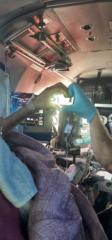
Do you have anything like this in your system?
Video from our YouTube channel: https://www.youtube.com/@LearnEmergencyMedicine
0 likes • 5d
In various communities around Canada there are private response units that are manned with advanced Care paramedics which respond to emergency events to offer assistance or provide initial care. While they don't have physicians joining on these units, on many of our air ambulance operations , Physicians will join the crew if specific skills are required such as central line placement, transvenous pacemaker insertion, chest tube placement... The number of skills that the smaller community physicians are less comfortable with.
30d •
Greetings from Canada!
I am an Advanced Care Paramedic from Alberta, Canada that has practiced 17years with origins in rural ground EMS(10yrs) and now fixed wing critical care for the past 7. I have a deep passion for continuing education and I'm privileged at work to be surrounded by many like-minded individuals. In the past, I have been an EMS instructor at one of the academies that I took my initial training through and presently I work with our work-place educator to facilitate training of our roster. I'm excited to join the learning environment here as we share our knowledge and experience.
0 likes • 19d
@Fredrik Hoff Nordum a couple easy picks are the noise; making things like lung auscultation basically impossible and in many cases other adventitious sounds such as from the airway. As well, connectivity to the world. There is no internet to allow easy lookups, and we are limited to a satellite phone which is reasonably unreliable.
Jan 30 •
Clinical scenario week 5:
Early in the morning, an ambulance is requested to a private residence after a colleague has been unable to reach the patient prior to work. When the door is opened by a family member, the patient is found lying in bed and appears significantly unwell. The patient is a 42-year-old male with a known history of type 1 diabetes mellitus. He is drowsy and difficult to engage but responds weakly to verbal stimuli. He appears pale and diaphoretic, with rapid, shallow breathing. A faint sweet odor is noted on his breath. His airway is patent, and he is breathing spontaneously. Respiratory rate is 24 breaths per minute. Heart rate is 110 beats per minute and regular, blood pressure is 115/70 mmHg, and oxygen saturation is 97% on room air. Capillary blood glucose is measured at 28 mmol/L. Further examination reveals no signs of trauma. The patient has dry skin and dry mucous membranes. According to family members, he has experienced nausea, abdominal pain, and reduced oral intake over the past 24 hours. He uses insulin daily, but it is unclear whether he has administered his usual doses during the past day. Questions 1. Which findings in this case suggest diabetic ketoacidosis, and why? 2. Which prehospital interventions should be prioritized to stabilize the patient prior to hospital arrival?
1 like • 30d
1. The hypergycemia, acetone-like breath, confusion and tachypnea all point toward a DKA state. 2. From a pre-hospital perspective, I would ensure ETC02 monitoring to get a better idea of the ventilator status of this patient. The described rapid but SHALLOW breathing have me concerned; typically a compensating patient should be tidalling deeply. I would have a BVM available to assist if further decline takes shape. Next, I would ensure 1 but preferably 2 sites of peripheral vascular access. These patients are typically very dehydrated and a crystalloid bolus of 1-2L is a good starting point but I would select a balanced fluid such as ringers lactate. There's a risk of inducing a hyperchloremic metabolic acidosis with NaCl 0.9%. Apart from that, symptomatic management of N/V would be a good consideration as this patient is described as obtunded and there's an increased risk of aspiration. Ondansetron 4mg IV would be my go-to in this case. In my flights environment I would be taking advantage of my POC blood analyzer to assess pH, electrolytes and with that the anion gap. From there insulin IVI, KCL(prn) and glucose supplementation would all be adjusted using those obtained values as a guide.
1-3 of 3
@josh-becker-1716
I'm a 17 year Advanced Care Paramedic practicing in the Critical Care Fixed Wing Environment and would love to share my knowledge and experience.
Active 4d ago
Joined Feb 24, 2026
Powered by