Activity
Mon
Wed
Fri
Sun
Aug
Sep
Oct
Nov
Dec
Jan
Feb
Mar
Apr
May
Jun
Jul
What is this?
Less
More
Memberships
The Ad Agency
95 members • Free
35 contributions to The Ad Agency

27d •
Distruptor Advertising
Here are a few examples of ads that stand out in unexpected ways. Don't confine yourself to the common... "you need eyeballs on your stuff." FIFA STORY OPEN TABLE Mall Banner

1 like • 17d
🤣❤️
Jun 15 •
YOU'RE USING THE WORST AI YOU'LL EVER USE
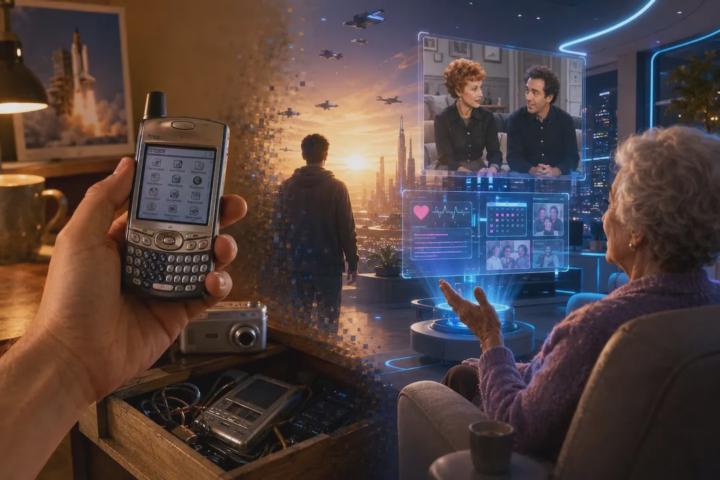
Stolen directly from Joel Comm... if you're not familiar with Joel, he's been an early adopter of just about anything and everything that 's techie and "scary". But he's just a "Joe Schmo" who has made a boatload and influenced many simply because he started speaking about the "new stuff" first. READ THIS ARTICLE... it may change how you view AI and why you should see the greater opportunity, while seeing the threat, too. Both can be true. _ _ _ _ In 2004, I was carrying a Palm Treo 650 in my pocket. Let me tell you, I felt like I had space-age technology. Email on a phone. A tiny web browser. A camera that took pictures you could almost identify. I showed it to my friends still carrying a flip-phone and they looked at me like I’d brought fire down from the mountain. That phone now sits in a dump somewhere, and my iPhone could run circles around it while simultaneously ordering dinner and translating a conversation in Mandarin. The Treo wasn’t just outdated. It became unrecognizable as a “smartphone” by any modern standard. I’m thrilled to welcome new subscribers every day! Welcome to those of you who recently joined as paid subscribers. And greetings to those of you who enjoy my writing and want to be the next to support! I keep thinking about that Treo. I did love that device. We Never See It While We’re In It I’ve been building things on the internet since 1995. That’s six technology revolutions: the web, search, social media, mobile, blockchain, and now AI. And every single one of them had what I call a “Treo moment.” A point where the technology felt so advanced, so clearly the pinnacle, that you couldn’t imagine what could possibly come next. The first time a web page loaded over a dial-up connection, I thought I was witnessing the future of communication. The first time Google actually found what I was looking for, it felt like someone had organized the entire internet just for me. The first time I posted something online and a complete stranger on the other side of the world responded, it was electric.
1 like • 30d
How 'bout "John Schmoe" or "Mike Schmoe" or "Joel Schmoel". Us "Average Joe's" get no respect.🤣 I like it...Hey Mikey!
May 18 •
If you haven't checked out Adlegends.ai, you should...
Milwaukee Adworkers had a get-together with Dan Metcalf and Vince Cook from Ad Legends. What they have dreamed up (and actually created) is nothing short of amazing — it's AI for the creative teams and brand ambassadors. Like putting the CD, AD and copywriter in the room, but adding a 4th "person" who has all of the answers, channels various legendary ad creatives and doesn't eat any of your pizza. The industry is changing — it always has. • The printing press, the radio, TV, desktop computer, the Internet, smart phones, social, streaming and now AI. These guys are on the cutting edge. You can get a free account trial (15 tokens) by checking out their demo > https://www.adlegends.ai/

1 like • May 19
I wanted to go, then I thought no. I like the part about the Za.😎🍕
1 like • May 21
@Mike Farley former #1 intern...fellow PiHiXi Alum...and The Legacy... I'm sorry I missed you four for sure. 🏆💡👑
May 7 •
School Girls Teach You Marketing
When I arrived outside my office today, I was met by a unique marketing pitch. Come with me and check out how awesome a few grade school girls and some sidewalk chalk can be... and how you can pick up on their brilliance!
1 like • May 8
Excellent reporting and message Chief! Love it.❤️ I was a co-creator of a "Street Painting Festival" fundraiser for ARTREACH Milwaukee back in '92 me tinks, and what a fundraiser. Over 300 artists and raised over 20K. I also wanted to do something like this with our artists from MARN last year, and I just ran out of steam. Love the BermaShave reference, look-it-up kids. #thepowerofchalkcompelsyou
Apr 3 •
Congrats to Joe Hausch! Mr. March!
He led all community members this past month... and all it took was +7 to win! What will he receive? Past winners have received $25 gift cards, old CA's, even a 1970's sci-fi squirt gun! Since @Joe Hausch is a friend and not far away... Joe wins a free lunch to any one of Milwaukee's fine Custard Stands... of his choosing! Where to, Joe?
Poll
2 members have voted
1 like • Apr 6
I am honored, thrilled, over-stimulated and very willing to accept this exceptional award and opportunity @Mike Farley! Excellent choices Mr. Mike, I love all of them. Gilles has been a favorite since my days at PiHiXi (the photo you posted is nutty, ironically Jameson is my daughter's middle name and she is a custard connoisseur), I was at Kopp's a few weeks ago. Leon's reminds me of summer, my Dad's Aunt and Uncle who used to live behind it and yet Adrian's in Burlington was on the tip of my tongue and tempting my uvula as a write in. (Can I say that?) But that's so far from your homebase in "The Burg"...what's up that way? I'll stick with Leon's for now. Thank you again for delicious honor, and to the rest of the "Skool Kids" out there, let's go! Chime in...and Win baby! Maybe we need a alt-meetup at the custard stand Uncle Mike?😎❤️🍎🏆🍾🍦🍨
1 like • May 6
How about when it gets above fifty here?
1-10 of 35
@joe-hausch-4235
Joe’s been called many things, mostly in this order: Artist, Entrepreneur, Designer, Inventor, Musician and optimist.
Active 6d ago
Joined Dec 12, 2024