Activity
Mon
Wed
Fri
Sun
Aug
Sep
Oct
Nov
Dec
Jan
Feb
Mar
Apr
May
Jun
What is this?
Less
More
Memberships
Owen Army
103 members • Free
30 contributions to Owen Army
Apr 6 •
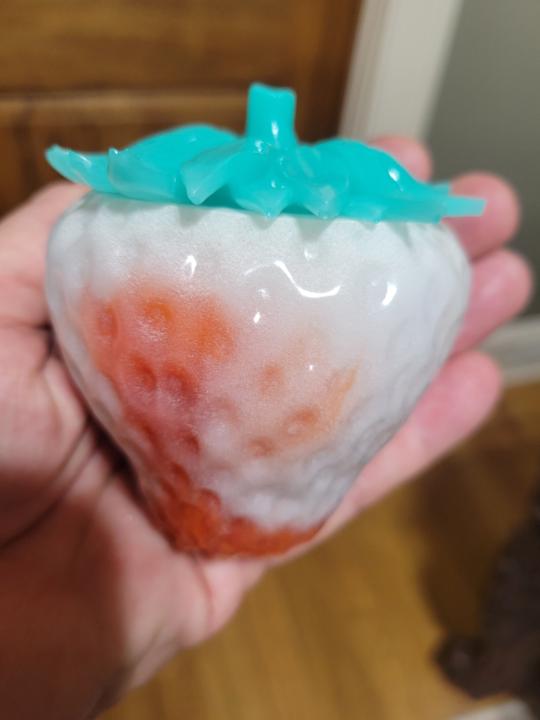
Making Epoxy Items for Charities & Nonprofits
This is what I do in my spare time at night. I make hundreds of epoxy items for volunteer hand outs and silent auctions for various nonprofits and charities. I will make over 500 items for the following charities this year: *Lake Lanier Association *Keep Hall Beautiful *Chattahoochee River Keepers *Paddle 4 Tomorrow *Banks County Chamber of Commerce *Senior Citizens Center
1 like • Apr 7
Nice work
1 like • Apr 7
You’re welcome. It’s really excellent you are doing a great service and helping more than you know. That’s agape love 💗. LOVE
Mar 29 •
A little update…
The past few weeks have been heavy. Not the kind of heavy people see… the kind you carry quietly. The kind that sits in your chest, follows you into your thoughts, and makes even the simplest things feel like a fight. Between what’s happening in Lebanon, the memories that come with it, the losses, the images that don’t leave… me at war in Iraq, various critical incidents I’ve dealt with at work….it caught up to me. More than I expected. And I’ll be honest… there were moments I didn’t want to get up. Moments where my mind was louder than anything around me. But here’s the part people don’t talk about. There’s no crowd when you’re fighting that battle. No recognition. No one sees the decision to get up anyway. No one sees you take that breath and push yourself back into the day when everything in you is telling you to shut it down. That’s the real fight. And the past few days, that’s exactly what it’s been for me. Quiet. Internal. Grinding. Running when I didn’t feel like it. Training when my mind was elsewhere. Forcing myself to move, to reset, to take back some level of control. Because I know what happens if you don’t. You don’t need motivation for that fight. You need discipline. You need to make the decision that you’re not staying in that place… even when it would be easier to. Some days it’s not about being at your best. It’s about not giving in. So if you’re in that place right now… understand this: Getting up counts. Taking a step forward counts. Choosing not to stay in the dark… that counts. I’m working through it. Still am. And if you are too… keep going.
2 likes • Mar 30
Yes Sir. Thank you very much for your service Sir. It’s gotta be difficult. So I’m diagnosed with PTSD as well. It’s not something that goes away with medication it’s a part of our life and we have to go through it every single day and a lot of people don’t understand that it’s process our brain goes into survival mode or flight mode or fawning. It’s a struggle but that’s why I care so much about the people who have been through something, to let them know it’s okay , we are Warriors and we fight with our minds firstly and today will come and go and I will stand ten toes down. NO FEAR
Feb 2 •
Time Management
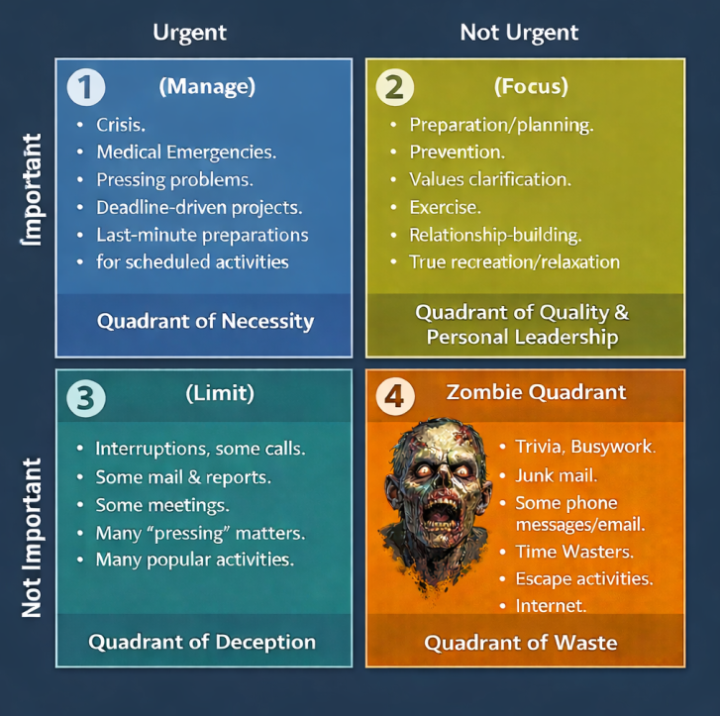
Time is one of our most valuable assets. You can't beg, borrow or buy more, so use what you have wisely. Below is an Eisenhower Matrix where tasks are broken out into a 4 quadrant matrix of Urgency and Importance. Manage emergencies (Q1), limit distractions (Q3), avoid the Zombies (Q4) and spend as much time as possible planning and building relationships (Q2). If you intentionally spend time in Q2, you will likely feel better, be more productive and find you have built deeper and stronger connections.
1 like • Feb 3
Interesting 🧐
Jan 17 •
Welcome Yaya Bojang to Owen Army!
Welcome Yaya Bojang to Owen Army! One of the guys I've been mentoring from the Gambia Africa recently joined Owen Army. He is a huge fan of We Fight Monsters and the mission Ben & Jess set out to accomplish. Yaya wants to make a difference in his country for his people and his family. This is a good place to learn.
0 likes • Jan 22
I’m available to do the job. Just let me know
1 like • Jan 22
Listening and reading
Jan 16 •
War Stories….are they your teacher or anchor..
I’ve been thinking a lot lately about war stories—mine and everyone else’s. I don’t hate them. I never have. They matter. They come from real places, real cost, real consequence. When shared with purpose, they teach restraint, humility, and respect for what violence actually takes from a human being. But I’ve also seen how easily they can turn into a loop. There was a time when I didn’t know who I was without my stories. They became proof. Credibility. Armor. I told myself I was honoring the past, but if I’m honest, I was often reliving it. Re-activating it. Feeding something inside me that didn’t want to be quiet. That’s not strength. That’s a lack of self-awareness. I’ve sat through countless trainings as a cop where most of the day was war stories. Some from overseas. Some from the street. Some from decades ago. Stories can be powerful—but when they’re self-serving, when they reinforce identity instead of building capacity, they miss the point. Experience without reflection is just memory. Self-awareness changes the question. Not what happened to me? But how am I relating to it now? I’ve learned that sometimes we don’t return to these stories because they still need to be told—we return to them because our nervous system recognizes the feeling. The certainty. The activation. The version of ourselves that once knew exactly who it was. But growth asks something different. It asks us to carry the past without becoming it. To remember without reliving. To teach without performing. The strongest people I know aren’t the loudest storytellers. They’re the ones who can sit quietly with their past without needing to explain it. They know who they are now. They’re not negotiating with who they were. I don’t want fewer stories. I want more conscious ones. Stories that serve purpose, not ego. Stories that point forward, not backward. Stories that end in responsibility, not applause. The past is a teacher. It was never meant to be a cage.
1 like • Jan 22
@Quentin Collins thank you brother.
1 like • Jan 22
Walking with Love. And God is love. He is my rock my everything I am available also to talk if anyone feels led to me don’t hesitate. I am absolutely available
1-10 of 30
Active 86d ago
Joined Nov 4, 2025
Powered by