Activity
Mon
Wed
Fri
Sun
Aug
Sep
Oct
Nov
Dec
Jan
Feb
Mar
Apr
May
Jun
What is this?
Less
More
Owned by Fria charlane
Helping WFH parents support their child’s learning with teacher-guided tips, resources, and routines. 🏡📚 Turning Home into a Learning Environment.
Memberships
The Thriving Child Method™
36 members • Free
ZeroInterestMastery Deal Room
85 members • Free
Creators
17.3k members • Free
Founders Freedom
5 members • Free
Skoolers
168.4k members • Free
Find My Doer™ VA Community
25 members • Free
Crochet Art for kids & adults
113 members • Free
Sweet Earth Sisterhood 💚🌱✨
42 members • Free
The Roam Free Network
14 members • Free
31 contributions to Home Learning for WFH Parents

Mar 9 •
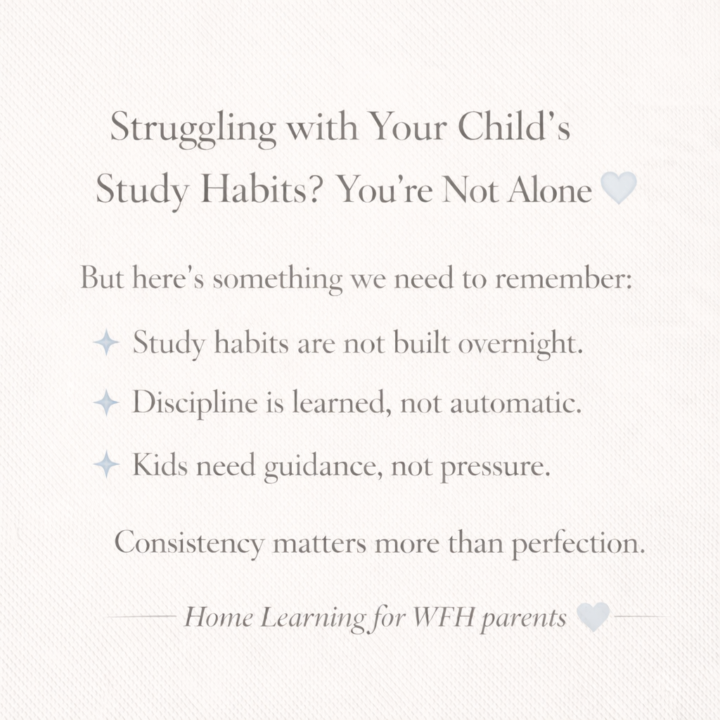
Struggling with Your Child’s Study Habits? You’re Not Alone 🤍
Some days, getting your child to study feels like a battle. You prepare the schedule. You organize the learning materials. You remind them gently… …but they still get distracted. They lose focus. They say “later” again and again. As a parent, it’s frustrating. As a working parent, it’s exhausting. But here’s something we need to remember: ✨ Study habits are not built overnight. ✨ Discipline is learned, not automatic. ✨ Kids need guidance, not pressure. Behind every distracted child is: • a developing attention span • a need for structured routines • and a parent trying their best Instead of asking “Why are they so lazy?” try asking “How can I make learning easier for them?” Small changes help: ✔️ Shorter study sessions ✔️ Clear routines ✔️ Breaks between tasks ✔️ A calm learning space Consistency matters more than perfection. You’re not failing as a parent. You’re raising a learner — and that takes time. This community is here to help you create study systems that work for your home, your schedule, and your child’s pace. We figure it out together. 🤍🩵🌱
2
0
Mar 6 •
🩵 You don’t need to be a teacher 🤍 to teach your child at home.
Many parents feel pressured when guiding their children’s learning 👩🏻🏫📚 💭 “I’m not a teacher.” 💭 “I don’t know where to start.” 💭 “I might teach the wrong way.” But here’s the truth 🤍 🩵 Your child doesn’t need a perfect teacher. 🤍 Your child needs a present and supportive parent 🫶🏼 Learning at home is not about mastering every subject. It’s about: 📘 Creating simple routines ✅ 📗 Guiding your child step by step 🌱 📒 Encouraging curiosity 🌿 📚 Celebrating small progress 🌟 Even simple bonding moments — reading together, helping with assignments, or talking about everyday experiences — already build strong learning foundations 🦋 You are more capable than you think 💎 With the right structure and support, home learning becomes lighter, clearer, and more meaningful for both you and your child 👩🏻💻👶 🩵 You’re doing better than you think. 🤍 And you’re not alone on this journey 🚀
0
0
Mar 5 •
Why Tutorials Matter in Helping Children Become Independent Learners
In today’s fast-changing world, children are surrounded by information everywhere — from school lessons to online resources. But information alone does not guarantee understanding. What truly helps children learn is guided support, and this is where tutorials become powerful. A tutorial is more than simply repeating a lesson. It is a focused learning experience where children receive guidance, strengthen their understanding, and build the confidence to solve problems independently. For young learners especially, tutorials can make a significant difference in how they understand and enjoy learning. 1. Tutorials Provide Individual Attention In a classroom, teachers support many students at once. Tutorials allow children to ask questions freely and receive explanations tailored to their pace and learning style. This personalized support helps address learning gaps early. Research from UNESCO highlights the importance of personalized learning approaches in improving student understanding and engagement. 2. Tutorials Build Confidence When children fully understand a concept, their confidence grows. Tutorials provide a safe learning environment where students can practice, make mistakes, and improve. Educational studies from Harvard Graduate School of Education emphasize that supportive learning environments play a crucial role in developing students’ confidence and academic growth. 3. Tutorials Encourage Independent Thinking Effective tutorials guide students to think critically rather than simply providing answers. When children are encouraged to explore solutions on their own, they begin to develop problem-solving skills and intellectual curiosity. Learning experts at Edutopia note that guided instruction and differentiated teaching help students develop deeper understanding and independence in learning. 4. Tutorials Strengthen Learning Habits Consistent tutorial sessions also help children build important habits such as focus, discipline, and responsibility toward their studies.
0
0
Mar 2 •
It’s been a while…
Life didn’t pause. I was building. I was learning. I was growing quietly. Sometimes the most powerful seasons are the ones no one sees. Balancing motherhood, career growth, and purpose-driven work isn’t always loud — but it’s always meaningful. And now? I’m back — clearer, stronger, and more aligned than ever. To every WFH parent trying to build something while raising someone… Keep going. The quiet progress counts. Home Learning for WFH parents 🩵
1
0
Feb 18 •
🚽🌱 Toilet Training: Progress Over Perfection
Toilet training is not a race. It’s a process. And just like learning to read or write, every child moves at their own pace. As work-from-home parents, it can feel overwhelming when we’re balancing meetings, deadlines, and potty reminders 😅 But here’s the truth: Children learn best through consistent and supportive environments — not pressure. 🩵 What Toilet Training Really Needs: ✔ Consistency (same routine daily) ✔ Calm guidance (not shame or frustration) ✔ Encouragement for small wins ✔ Patience during accidents Accidents are not failures. They are part of learning. 🌿 Gentle Reminders for Parents: • Watch for readiness signs (staying dry longer, telling you they’re wet, curiosity about the toilet) • Create a simple routine (morning, after meals, before bath, before bed) • Celebrate effort, not just success • Stay neutral during accidents — no scolding Sometimes progress looks like: ✨ Sitting on the potty without crying ✨ Telling you “I need to pee” (even if it’s late) ✨ Staying dry for 1–2 hours Small steps matter. You are not behind. Your child is not behind. You are both learning together. 🦋 💬 Let’s talk, parents: 👉 How old is your child? 👉 Are you currently starting, in the middle of, or done with toilet training? 👉 What’s one small win you’ve seen recently? Remember — consistency over perfection. Always. 🩵🏡👩🏻🏫🌿

1-10 of 31

@fria-charlane-ampaso-8547
👩🏻🏫Teacher | 👩🏻💻 WFH Mom
Helping parents support learning at home 📚
Simple Routines • Realistic Strategies 🙌🏼
👇🏼Support Parent Community
Active 10h ago
Joined Feb 4, 2026
Philippines 🇵🇭
Powered by