
Write something
Pinned

Feb 4 •
🌸 Welcome, parents! 🌸
Hi everyone 👋 I’m so glad you’re here! This space was created for work-from-home parents who are supporting their child’s learning at home — and doing their best every day 🩵 There’s no pressure to be perfect here. We’re all learning, sharing, and supporting each other step by step. 👉 To get started, I’d love for you to comment: • Your child’s age • One challenge or win you’ve had recently You’re very welcome here 🌱
Mar 9 •
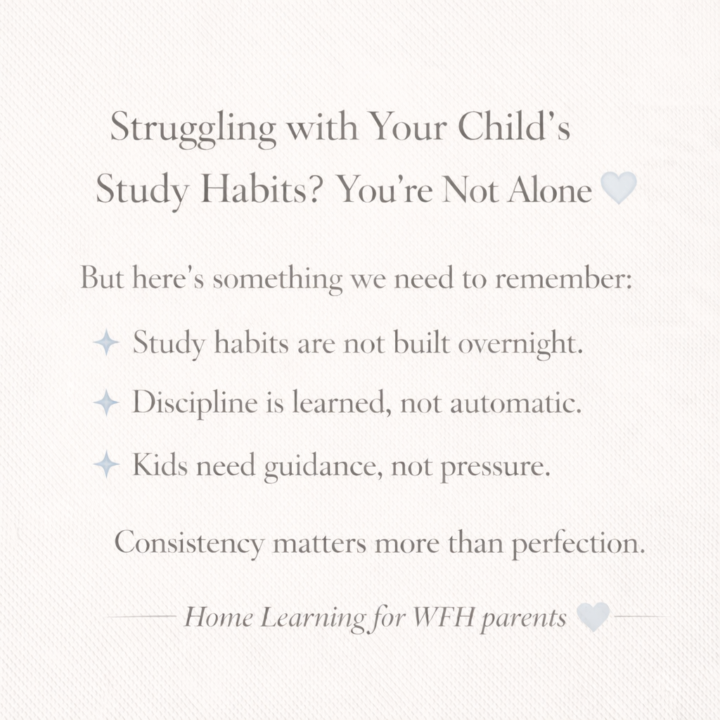
Struggling with Your Child’s Study Habits? You’re Not Alone 🤍
Some days, getting your child to study feels like a battle. You prepare the schedule. You organize the learning materials. You remind them gently… …but they still get distracted. They lose focus. They say “later” again and again. As a parent, it’s frustrating. As a working parent, it’s exhausting. But here’s something we need to remember: ✨ Study habits are not built overnight. ✨ Discipline is learned, not automatic. ✨ Kids need guidance, not pressure. Behind every distracted child is: • a developing attention span • a need for structured routines • and a parent trying their best Instead of asking “Why are they so lazy?” try asking “How can I make learning easier for them?” Small changes help: ✔️ Shorter study sessions ✔️ Clear routines ✔️ Breaks between tasks ✔️ A calm learning space Consistency matters more than perfection. You’re not failing as a parent. You’re raising a learner — and that takes time. This community is here to help you create study systems that work for your home, your schedule, and your child’s pace. We figure it out together. 🤍🩵🌱
2
0
Mar 6 •
🩵 You don’t need to be a teacher 🤍 to teach your child at home.
Many parents feel pressured when guiding their children’s learning 👩🏻🏫📚 💭 “I’m not a teacher.” 💭 “I don’t know where to start.” 💭 “I might teach the wrong way.” But here’s the truth 🤍 🩵 Your child doesn’t need a perfect teacher. 🤍 Your child needs a present and supportive parent 🫶🏼 Learning at home is not about mastering every subject. It’s about: 📘 Creating simple routines ✅ 📗 Guiding your child step by step 🌱 📒 Encouraging curiosity 🌿 📚 Celebrating small progress 🌟 Even simple bonding moments — reading together, helping with assignments, or talking about everyday experiences — already build strong learning foundations 🦋 You are more capable than you think 💎 With the right structure and support, home learning becomes lighter, clearer, and more meaningful for both you and your child 👩🏻💻👶 🩵 You’re doing better than you think. 🤍 And you’re not alone on this journey 🚀
0
0

🔥
Mar 5 •
News and your kids.
Just dropping some tips and help here on how you can support your kids (and yourself) during these times of geopolitical unrest. The most stabilising message a parent can offer is not political analysis but connection. Parents can support their child by saying "The world may be complicated, but you are safe, and we will make sense of it together." Five things you can do as a parent. 1. Don’t stay silent. If you don’t start the conversation, social media will — and it rarely reassures. Teach them how to hide, block and report things they see on socials. Teach them how to train the algorithm. Especially older children. 2. Focus on feelings, not politics. Ask how your teen feels before explaining what you think. I guarantee they've mentioned this to their teachers - I've heard it many times in the classroom. 3. Protect young children. Under-fives should be shielded from frightening images they cannot understand. 4. Limit exposure. Turn the news off. The breaking headlines don't need to be on repeat around the dinner table. Reducing constant war content is mental health protection, not avoidance. 5. Be the calm. Your emotional steadiness matters far more than you realise. If you need support with this or need more tips, I'm happy to help where I can. Book in a free call with me or send me a message. 🥰 https://calendly.com/nural-seker/new-meeting
1
0

Mar 5 •
Why Tutorials Matter in Helping Children Become Independent Learners
In today’s fast-changing world, children are surrounded by information everywhere — from school lessons to online resources. But information alone does not guarantee understanding. What truly helps children learn is guided support, and this is where tutorials become powerful. A tutorial is more than simply repeating a lesson. It is a focused learning experience where children receive guidance, strengthen their understanding, and build the confidence to solve problems independently. For young learners especially, tutorials can make a significant difference in how they understand and enjoy learning. 1. Tutorials Provide Individual Attention In a classroom, teachers support many students at once. Tutorials allow children to ask questions freely and receive explanations tailored to their pace and learning style. This personalized support helps address learning gaps early. Research from UNESCO highlights the importance of personalized learning approaches in improving student understanding and engagement. 2. Tutorials Build Confidence When children fully understand a concept, their confidence grows. Tutorials provide a safe learning environment where students can practice, make mistakes, and improve. Educational studies from Harvard Graduate School of Education emphasize that supportive learning environments play a crucial role in developing students’ confidence and academic growth. 3. Tutorials Encourage Independent Thinking Effective tutorials guide students to think critically rather than simply providing answers. When children are encouraged to explore solutions on their own, they begin to develop problem-solving skills and intellectual curiosity. Learning experts at Edutopia note that guided instruction and differentiated teaching help students develop deeper understanding and independence in learning. 4. Tutorials Strengthen Learning Habits Consistent tutorial sessions also help children build important habits such as focus, discipline, and responsibility toward their studies.
0
0
1-30 of 33
skool.com/home-learning-for-wfh-parents
Helping WFH parents support their child’s learning with teacher-guided tips, resources, and routines.
🏡📚 Turning Home into a Learning Environment.
Powered by