Activity
Mon
Wed
Fri
Sun
Mar
Apr
May
Jun
Jul
Aug
Sep
Oct
Nov
Dec
Jan
Feb
What is this?
Less
More
Memberships
Mind and Body Solutions
218 members • Free
17 contributions to Mind and Body Solutions

8d •
The type of carbs that protect against dementia (and the ones that don't)
It's not just about how many carbs you eat, but which ones. A large prospective study published in the International Journal of Epidemiology followed more than 200,000 adults in the UK for over 13 years and found that diets centered on low-glycemic foods (fruit, legumes, whole grains) were associated with a 16% lower risk of developing Alzheimer's disease, while higher glycemic diets were linked to a 14% increase in risk. The glycemic index measures how quickly carbohydrate-containing foods raise blood glucose levels after eating, with foods like white bread and potatoes scoring high, while whole grains and most fruits score lower. This finding shouldn't surprise us. Highly processed foods disrupt the gut microbiome, and there's a strong connection between the gut and the brain. They also create blood sugar spikes and crashes, and we now know that Alzheimer's disease involves disrupted glucose metabolism in the brain. The quality of your carbohydrates matters just as much as, if not more than, the quantity. This is yet another compelling reason to choose whole, minimally processed foods over their refined counterparts.

1 like • 5d
I have read that cooling in the refrigerator the potatoes and also white rice will reduce the glycemic index. Is this true? Thanks
26d •
5 Reasons Honey Should Be in Your Medicine Chest
1. Help Heal Wounds and Burns For minor cuts, scratches, and burns, honey can be applied topically to help speed healing. Honey acts as a broad-spectrum antibacterial agent and is known to lower prostaglandin levels while elevating nitric oxide end products, processes that help explain honey's wound-healing powers. Honey's unique formulation, including its acidity, hydrogen peroxide content, osmotic effect, and antioxidants, is responsible for a number of beneficial processes that stimulate and promote wound healing, such as: - Enhanced tissue growth - Increased epithelialization - Reduced scar formation - Stimulation of immunity Honey is so potent that, in a study of critically ill children with pressure injuries, the use of a Manuka honey dressing or gel reduced wound-healing time compared with standard care. In fact, the children treated with honey were 1.9 times more likely to have their wounds completely healed than those who received only standard care. 2. Soothe Coughs and Upper Respiratory Tract Infections Honey is regarded as highly beneficial for soothing irritating coughs in the ancient Indian medical system known as Ayurveda. Hippocrates also used honey for coughs. Modern research supports this use, with honey found to relieve cough symptoms more effectively than no treatment, placebo, or the antihistamine diphenhydramine. It also reduces cough duration more effectively than the asthma medication salbutamol. A systematic review and meta-analysis also found that honey was superior to usual care in improving symptoms of upper respiratory tract infections, including reduced cough frequency and severity. Among children with upper respiratory tract infections, honey was as effective as the over-the-counter cough medication dextromethorphan and superior to no treatment for nighttime cough relief. Furthermore, parents rated honey more favorably than cough syrup, leading researchers to conclude that "Honey may be a preferable treatment for the cough and sleep difficulty associated with childhood upper respiratory tract infection."
0 likes • 12d
@Mechelle Fisher thanks for the explanation!! I will definitely pay attention on that next time I see it.
16d •
What Wheatgrass, Chlorophyll & Sunlight can do for the Body
Chlorophyll is an alternative energy source for the human body. And actually, all animals have this ability. Because it goes into the mitochondria as a metabolite. It enables the mitochondria to capture sunlight energy, which photo-energizes the Krebs cycle in such a way that it produces significantly more ATP, which is sort of the energy currency of the body, without increasing oxidative stress. This is a new study that came out last year, which completely undermines our classical understanding of our bodies as able to live only by eating other things. Basically, we can, if we have adequate chlorophyll in our diet - wheatgrass being one of the best sources - directly capture the sunlight. Not only does it increase the production and efficiency of ATP in our body, but it also increases longevity, at least in the earthworm model, which is what they use it for. We will see animal studies and probably human studies soon. Basically, this reclassifies us from heterotrophs, which depend on other things, to photo-heterotrophs, which means we can actually take sunlight directly into our bodies. Keep in mind, it doesn't just mean the wavelengths that are, like you know, obviously the sunlight we see. Red, for example, is a wavelength that goes deep into our tissue as well. It can even penetrate the skull and enter our brain, energizing it.
1 like • 12d
That is why I feel so much better when I take some sun early in the morning. This article makes so much sense. Thank you.

Dec '25 •
Charcoal
Has anybody used Charcoal to detox? And did you have any side effects with it? Does it deplete you of all your vitamins and nutrients when you take it?
0 likes • 13d
Do you carry Cellcore at the office? Thanks
1 like • 13d
Does the office carry Cellcore

28d •
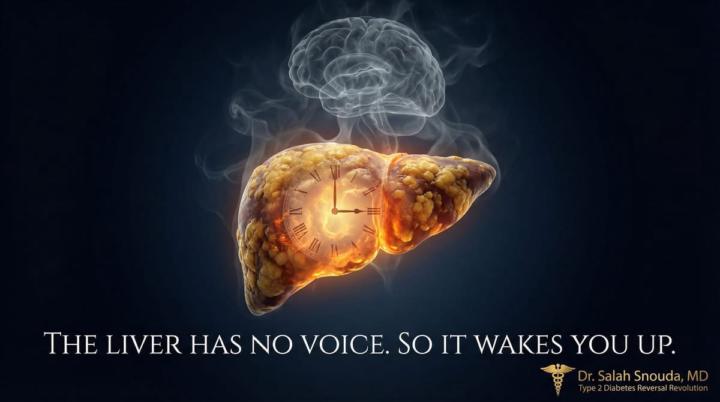
The Silent Scream of the Liver
"Why You Wake Up at 3:00 AM (The Mayday Call)" Your liver has no voice. It has no pain receptors. You could cut it, and it wouldn't scream. So when it is drowning in fat (don’t think “dietary fat”, think “fatty liver” from sugar/carbs/toxins!), it cannot call out to you. Instead, it calls the Adrenals. And they wake you up. THE STORY It’s 3:03 AM. You jolt awake. Heart pounding. Sheets damp. Mind racing with anxiety. You think: "Did I hear a noise? Is it stress? Is it menopause?" No. It is a Rescue Mission. While you were sleeping, your blood sugar crashed. A healthy liver would simply release some stored fuel to smooth it out. But your liver is Fatty. It is congested. It is sluggish. It failed to deliver the fuel. Your brain sensed the crash and screamed: "MAYDAY! WE ARE GOING DOWN!" It smashed the emergency button for the Adrenal Glands. The Adrenals responded by flooding your veins with Adrenaline and Cortisol. This chemical surge forced your liver to dump sugar to save your life. But it also hit you like a shot of espresso in the dark. You are not "just awake." You are in a chemical "Fight or Flight" panic, lying in a safe bed, because your liver couldn't do its job. THE SCIENCE Most doctors will check your ALT and AST enzymes. If they are "normal," they say your liver is fine. They are waiting for the building to collapse. We look for the smoke. If you have the "3 AM Wake Up" AND "Brain Fog," your liver is the root cause. The toxins it failed to filter are clouding your brain. The adrenaline it triggered is ruining your sleep. THE CALL TO ACTION Sleeping pills won't fix this. They just silence the alarm while the fire burns. You must drain the fuel. 1.Cut the Fructose: No juice, no soda, no fruit after dark .2.Cut the Alcohol: It shuts down the rescue team. 3.Start the Fast: Give your liver the night off so it can catch up. Your liver cannot scream. But it can wake you up. Are you listening?
1 like • 13d
Great information to know. Many thanks!!
1-10 of 17

@elizabeth-barker-1725
Hello everyone, happy to be here. Good health for all. Blessings.
Active 5d ago
Joined Oct 21, 2025
West Houston
Powered by